








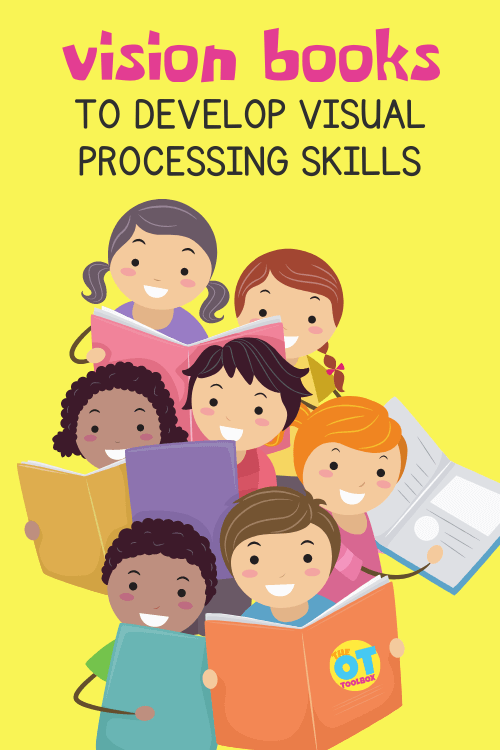
Educational and clinical specialists have released a comprehensive resource highlighting top-tier vision books and workbooks designed to support the development of visual processing skills in children. Aimed at occupational therapists, educators, and parents, the newly highlighted collection focuses on addressing critical visual deficits that often impact classroom performance, reading readiness, and daily functional tasks.
In clinical and educational settings, the seamless integration of visual processing with motor skills is widely recognized as a foundational element of learning. Experts emphasize that many daily tasks—ranging from reading and writing to copying text from a chalkboard and participating in physical play—depend heavily on how efficiently the eyes, brain, and body work together. When children experience difficulties with visual tracking, scanning, discrimination, eye-hand coordination, or visual attention, their academic and motor performance can suffer significantly.
To help practitioners and families identify and address these underlying challenges, specialists have curated a specialized selection of vision resources. These materials are frequently incorporated into occupational therapy interventions, home programs, and classroom support centers. While these workbooks do not replace a formal, individualized evaluation by a developmental optometrist or qualified vision professional, they offer structured, play-like practice that bridges the gap between clinical intervention and everyday functional tasks.
The curated selection emphasizes resources that target specific visual domains. For instance, visual motor workbooks help children coordinate visual input with hand movements through tracing, shape copying, pattern completion, and drawing exercises. These foundational tasks directly support handwriting, scissor use, and construction play. Meanwhile, visual perception workbooks target the brain’s ability to interpret what the eyes see, aiding children in recognizing letters, organizing math problems, and navigating cluttered visual environments.
Among the featured resources is An OT and Optometrist Offer Activities to Enhance Vision!, co-authored by Lois Hickman and Rebecca Hutchins. This publication serves as an accessible introduction to vision deficits and their functional impacts, featuring a practical checklist of red flags for educators and therapists to monitor. The book provides versatile activities categorized by function level, making it suitable for clinical, home, and school environments.
For practitioners focusing specifically on foundational eye movements, resources such as the Visual Tracking Exercises Book by Bridgette Sharp and Bridgette O’Neil offer beginner-level training using numbers, shapes, and varied fonts to build left-and-right awareness. Conversely, advanced materials like Advanced Visual Scanning Exercises cater to older students preparing for heavy desk work and chapter book reading, helping them build visual endurance and reduce instances of skipping lines.
Other specialized books target specific learning hurdles, such as Brain Training for Reversals, which addresses common letter confusion involving characters like b, d, p, and q through multi-level worksheets. For enhancing visual discrimination—a critical skill for reading, math, and comprehension—specialists point to dedicated geometric pattern books and widely available "spot the difference" publications. Additionally, digital resources like the Visual Closure Workbook provide targeted practice to help children visualize complete images from partial information, supporting reading fluency and written work.
Experts note that the ultimate goal of utilizing these vision books extends far beyond the completion of a worksheet. By connecting visual exercises to meaningful functional tasks—such as writing on designated lines, locating a homework folder, or reading continuously across a page—children can successfully carry over these acquired skills into everyday school and play routines, fostering long-term confidence and academic participation.