






When surveying the current landscape of scientific knowledge regarding human potential, the traditional definitions of giftedness and genius face a profound reckoning. Psychological science increasingly demonstrates that possessing an unusually high IQ or displaying exceptional ability during childhood does not automatically chart a direct course toward historical eminence. Instead, scholars in the field of talent development argue that early intellectual promise represents merely a raw baseline—one that requires an intricate combination of formal education, opportune circumstances, relentless motivation, and critical psychosocial factors to transform into sophisticated expertise and, in rare instances, true genius.
Among the prominent voices shaping this modern understanding is Rena F. Subotnik, an American psychologist widely recognized for her extensive scholarship in giftedness, talent development, and specialized education. Subotnik’s work challenges the conventional assumption that high cognitive scores equate to lifelong achievement. Rather, she contends that true eminence—a term often utilized by researchers to describe historical genius—is forged through a developmental process where initial raw potential is continuously refined, tested, and expanded over years of deliberate effort and environmental support.
Notable Geniuses Who Defied Early Expectations
The disconnect between early indicators of talent and adult achievement becomes starkly apparent when examining historical figures who shaped civilization. While luminaries such as Marie Curie, Wolfgang Amadeus Mozart, and Pablo Picasso were conspicuously gifted from a very young age, the historical record reveals that the majority of exceptionally gifted children do not ascend to the level of global geniuses. Some certainly achieve notable professional success and local renown, yet they never cross the threshold into paradigm-shifting eminence.

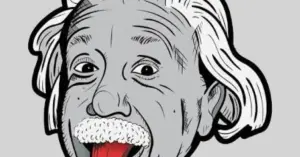
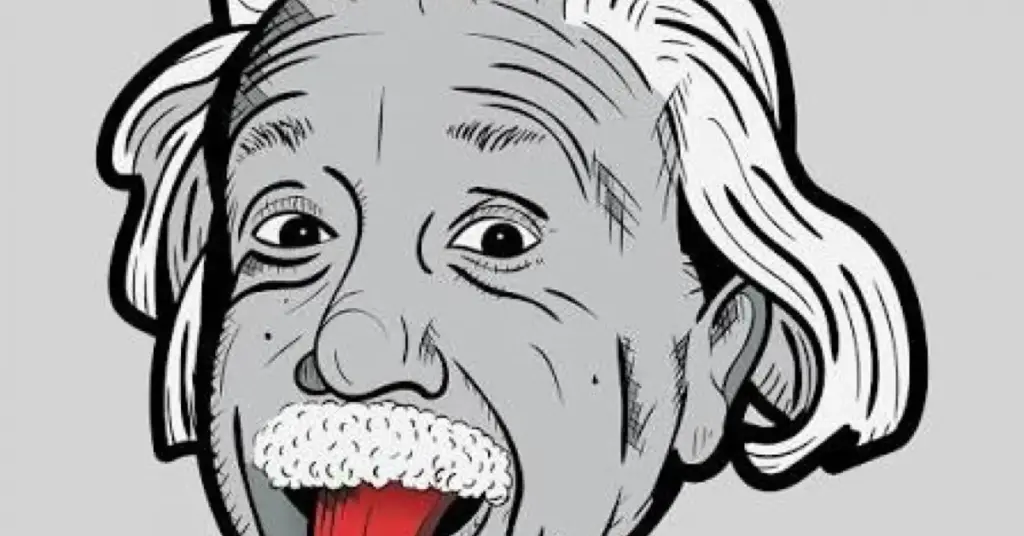
Conversely, history is replete with examples of individuals who reached the pinnacle of genius status later in life despite showing little to no extraordinary promise during their formative years. Thomas Edison, whose inquisitive mind later revolutionized modern technology, struggled profoundly with conventional schooling and was frequently misunderstood by his early educators. Albert Einstein, despite displaying early mathematical curiosity and aptitude, famously failed the general portion of the entrance examination to the Swiss Federal Polytechnic when he was just sixteen years old.
The early lives of other cultural titans further dismantle the myth of predictable precocity. William Shakespeare received only a standard grammar-school education until his mid-teens, at which point he was forced to withdraw from formal studies to assist his family through financial hardships. Crucially, historians have uncovered no credible evidence of extraordinary literary precocity during his childhood. Yet, despite these modest and interrupted beginnings, Shakespeare ultimately emerged as arguably the greatest playwright in human history.
Leonardo da Vinci navigated an even less conventional educational path. Born illegitimate, his instruction was restricted primarily to ordinary spoken and written Italian rather than the classical Latin, Greek, philosophy, and advanced mathematics readily available to the children of the nobility during the Renaissance. Despite these educational limitations, da Vinci developed into one of history’s most celebrated painters and most diverse scientific minds, proving that rigid academic tracking is not a prerequisite for monumental achievement.
Defining a "Genius" in Modern Psychology
A central challenge in psychological research is separating the concepts of giftedness and genius, which are frequently conflated in the public imagination. Historically, both categories became deeply enmeshed with the advent of standardized IQ testing, an approach that contemporary scientists now recognize as fundamentally flawed. A child scoring 160 on an intelligence quotient test is undeniably and extraordinarily gifted, yet researchers and educators do not automatically classify that individual as a genius.
Albert Einstein is universally regarded as a genius not because psychometric researchers measured a high score on his cognitive assessments, but because his radical insights fundamentally transformed humanity’s understanding of space, time, and physical reality.
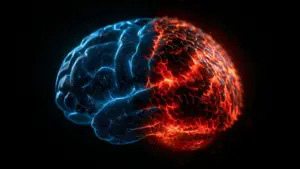
Aside from specialized studies examining Einstein’s brain—which revealed an unusual degree of anatomical connectivity between the brain’s two hemispheres—the field of neuroscience offers surprisingly little direct insight into the biological underpinnings of "genius" itself. This knowledge gap exists for the obvious reason that the designation of genius is almost always retrospective. Virtually no one is recognized or officially categorized as a genius during their active lifetime. Consequently, the most robust academic literature exploring this phenomenon stems from two overlapping psychological domains: exceptional creativity and high-level intelligence.
Investigations into the cognitive profiles of highly creative individuals indicate that they do not necessarily possess fundamentally different brain machinery or anatomical structures compared to the general population. Instead, research suggests they excel at coordinating two normally competing mental processes. Highly creative thinkers possess the rare ability to let their minds roam freely enough to generate unconventional and unexpected ideas, while simultaneously maintaining sufficient executive control to recognize which of those nascent concepts are actually worth pursuing and developing.
Historical Context and the Evolution of the Term "Genius"
The environmental catalysts that allow creative brilliance to flourish have long fascinated cultural historians. In his book The Geography of Genius, author Eric Weiner explores how creative brilliance erupted across specific geographic locations and historical epochs—ranging from ancient Athens in 450 BC and Renaissance Florence to modern-day Silicon Valley. These unique hubs provided fertile ground for intellectuals to engage in stimulating intellectual exchanges with like-minded peers and ambitious rivals, all within a society that actively valued their cultural or scientific contributions and provided necessary financial and institutional support.
The etymology of the word itself reflects a significant shift in human perception. The Latin term genius originally referred not to an individual possessing exceptional intellectual capacity, but rather to a guiding or generative spirit associated with a person. Over centuries, the meaning of the word migrated, shifting from describing a person having a guardian genius to describing a person being a genius.
Deconstructing the Myth of the "Mad Genius"
Popular culture has long nurtured the romanticized archetype of the "mad genius"—a figure depicted as brilliant yet deeply eccentric, emotionally unstable, socially unconventional, and constantly hovering near the fragile boundary between profound inspiration and psychological deterioration.
Despite the persistence of this stereotype in literature and film, numerous psychological authorities report that while highly creative scientists and artists do tend to be exceptionally open to experience, unconventional, self-confident, deeply driven, and fiercely independent, they are often somewhat less conscientious in the conventional sense of administrative order. However, researchers emphasize that severe mental disorders or debilitating clinical conditions generally interfere with, rather than facilitate, the rigorous creative process.
What truly allows genius to flower is not neurosis, but its psychological opposite: ego strength. In the view of cultural critic and author Joan Acocella, ego strength encompasses ordinary, steadfast virtues such as tenacity and, above all, the psychological resilience required to survive repeated disappointment and professional rejection.
The Role of Serendipity and Opportunity
The trajectory of groundbreaking discovery is frequently shaped by unforeseen fortune, as illustrated by the career of Sir Alexander Fleming, the visionary scientist who discovered penicillin. Fleming chose to attend St. Mary’s Hospital Medical School in London partly because, as a teenager, he had played water polo against its team and forged personal connections with some of its members. While studying there, Fleming developed exceptional marksmanship skills, prompting his supervisor to encourage him to remain at St. Mary’s to participate on the institution’s rifle team.
Encouraged by these social and athletic ties, Fleming remained at the hospital to pursue bacteriology. Then came the historic accident that altered medical history. A stray mold spore contaminated one of his open bacterial cultures—an event that many laboratory researchers would have dismissed by simply discarding the spoiled dish. Fleming, however, noticed something peculiar: the surrounding bacteria were failing to grow in the proximity of the contaminating mold. He carefully investigated the anomaly, and penicillin was successfully realized. Fleming’s personal likability, professional charm, and the supportive network around him ensured that doors remained open, allowing him to step through when opportunity presented itself.
The Complexities and Realities of Eminence
Not all historical geniuses mirror Fleming’s affable disposition. Geniuses are frequently complex individuals who may not always be easy to get along with or conventionally pleasant. They possess human flaws and behavioral shortcomings much like anyone else. Yet, they possess a compelling quality that compels others to take a sustained interest in their work and character. That intangible quality might manifest as personal charm, unwavering self-confidence, practical utility, persuasive communication, or the sheer, undeniable brilliance of the work they produce.
Scientific consensus underscores that genius cannot be reduced solely to psychometric test scores, unique brain architecture, or raw creativity, although each of these elements serves as a contributing factor. Within the scientific and artistic fields, genius often materializes as a sudden breakthrough—a conceptual lightbulb moment where a vital connection is forged that no other observer had previously made, much like Isaac Newton watching an apple fall from a tree. Alternatively, it can represent the slow, patient development of an individual endowed with talent and distinct personality traits who single-mindedly refines their craft across a lifetime.
A prime contemporary example is the literary career of Toni Morrison, whose linguistic originality, profound psychological depth, and unflinching engagement with history transformed American literature and ultimately earned her the 1993 Nobel Prize in Literature.
Ultimately, talent development experts suggest that life frequently presents individuals with unexpected opportunities. Catching that opportunity demonstrates that a person is gifted, but converting it into a lasting, paradigm-shifting contribution is what elevates an individual into the pantheon of geniuses. Giftedness remains raw potential; genius is determined entirely by what an individual chooses to do with it.