







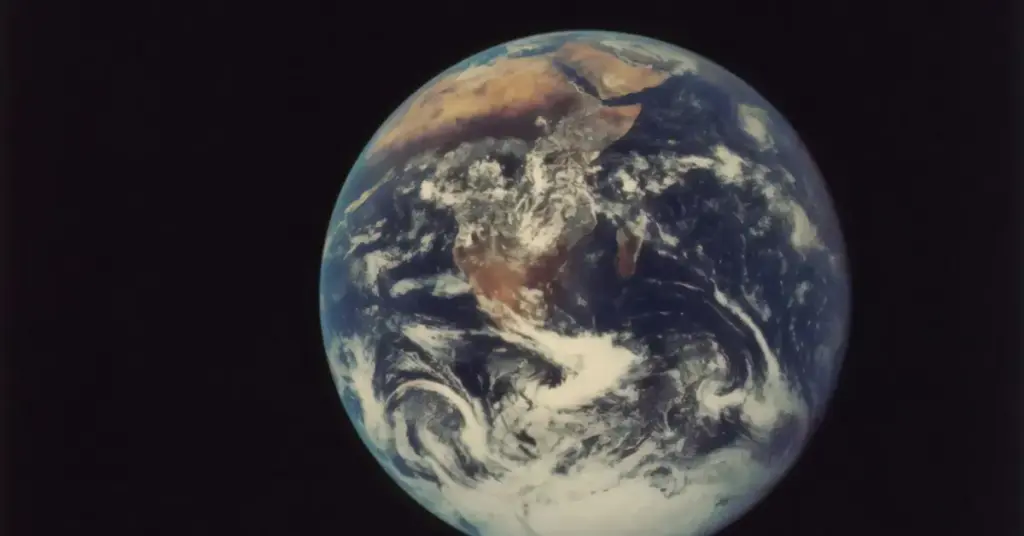
Perhaps our sense of global belonging is entirely a matter of perspective. If one were to zoom out far enough to view the Earth from a distance, the image presented would be one of profound complexity—a sprawling, interconnected colony. We see humans building vast infrastructure, laboring collectively, and laying the foundations for homes where they hope to live in safety and peace. From this vantage point, we appear as a singular species, spinning on our axis in a cold, heedless universe, inherently united by the shared necessity of protecting one another on the only planet we have ever known.
Yet, zoom back in—focusing on the surface of our world—and that sense of unity is jarringly interrupted. A closer inspection reveals a reality far more fractured: violence directed at individuals based on their geographic location, the systematic destruction of homes and schools, and the tragic erasure of communities. It is a world where people are killing other people, often in the name of the very groups they claim to belong to. It is all a matter of perspective, and therein lies the central crisis of our modern age.
For the vast majority of human history, our ancestors lived in small, tightly knit groups: families, clans, and tribes. The concept of "global belonging" was largely irrelevant to those who lived their entire lives within a few miles of their birthplace. Pre-industrial humans had a relatively limited impact on their planetary home, yet their sense of belonging was likely quite intense, rooted in a daily, tactile exposure to both the providence and the cruel indifference of their immediate surroundings. For these early humans, the Earth was both a protector and a constant threat; living disconnected from the natural world was not a viable option.

Looking back through the lens of history, however, we see a long, recurring pattern of displacement, dispossession, and the disruption of belonging. Modern society’s struggles with these themes are far from novel. The irony, as noted by researchers, is that belonging to one group can frequently fuel the desire to destroy another. In her upcoming chapter, "Global Belonging: From Conflict and Exclusion to Untapped Potential," academic Kelly-Ann Allen examines this paradoxical tension. As Allen (2026) observes, "Conflicts and violence of this nature could arise from individuals who feel a strong sense of belonging rather than those who lack it, as one might assume."
Feeling Ourselves as Part of the Earth
For those who study the psychological underpinnings of belonging, there is a dangerous trap in assuming that strengthening ties within a specific group will automatically lead to a safer or happier world. Traditionally, social scientists have focused their research on belonging within dyads, triads, specific organizations, or small-scale communities. But this localized lens may be insufficient for our current era. What happens if we widen the scope to consider our collective home, Earth? Does the mere act of sharing a planet translate into a feeling that we all truly belong to it?
Global belonging is defined as the experience of ourselves as an integral part of the Earth—a deep-seated, psychological sense that the planet is a place where we belong. A genuine sense of belonging to the Earth should, in theory, encourage a stewardship for the planet and a compassion for our fellow humans. It should engender a natural concern for the safety and inclusion of others, even when our own personal security remains unthreatened.
It is important to clarify that feeling a part of the Earth need not displace or diminish our existing attachments to our nations, cultures, or local communities. These localized identities remain essential to the human experience. However, the physical reality of our environment is indifferent to human borders. The atmosphere does not distinguish where carbon dioxide emissions originate, nor does the climate crisis recognize the sovereignty of nations. At an existential level, we must strengthen our sense of global belonging, regardless of what political factions or those preaching fracture and disruption might have us believe. Our very survival may depend on it.
The Overview Effect
To grasp the potential for this cognitive shift, one need only look to the experiences of those who have seen the world from the outside in. When astronauts view the Earth as a whole from the vacuum of space, they often report a profound change in their perception of life. This phenomenon, which offers a powerful way to imagine the planet as a shared home, has been documented extensively since the dawn of the space age.
As described in Allen’s research, "This cognitive shift, termed the Overview Effect by Frank White in 1987 based on his interviews with astronauts, describes the awareness that emerges from viewing Earth as a shared home" (Allen, 2026, p. 242). This experience is frequently linked to a fundamental shift in personal values, an increased sensitivity to environmental concerns, and a stronger identification with humanity as a whole. It is a perspective that shrinks borders and emphasizes the fragility of our collective existence.
The question currently facing researchers is whether this type of deep-rooted belonging can be cultivated in the context of everyday life, or if it remains an experience limited to those who have physically transcended the atmosphere. Further, we must examine whether such a shift can create an enduring sense of global belonging that influences our daily choices, particularly during periods of intense war, political conflict, and widespread suffering.
Our belonging to family, culture, and country can, and should, coexist with the understanding that those outside of these constructs also belong to our shared humanity. Exclusionary nationalism, for instance, often comes at the cost of ignoring how others can possess an equal right to belong in the same spaces. We do not need the entire world to agree on the same political ideologies or cultural beliefs to recognize a shared destiny.
From the high vantage point of orbit, we might look like a cohesive, collective ant colony. Yet, zooming in reveals a reality where that global sense of belonging is not only threatened but often annihilated by conflict. The fundamental question for our future is what the world might look like if we cared enough for humanity to stop destroying our world and the people who inhabit it. Such a transformation in our perspective might be the only way to build the kind of world that the vast majority of us would truly want to live in.
Reference: Allen, K.-A. (2026). Global belonging: From conflict and exclusion to untapped potential. In R. B. King, H. W. Marsh, R. G. Craven, T. Dicke, & F. Guay (Eds.), The self in context: Pathways to flourishing, learning, and well-being (pp. 225–257). Emerald Publishing Limited.