


When people imagine modern robotics, the mental image is almost universally bound to the rigid, highly specialized machinery of an automated assembly line. These conventional systems demand exhaustive programming, immense computational power, and massive datasets to execute even the most basic physical tasks. Operating within strictly controlled environments, a traditional industrial robot will fail instantly if a single variable shifts out of place.
Yet a profound conceptual question has long driven forward-thinking engineers: What if machines could learn the way living beings do, through active exploration and adaptation rather than brute-force coding?
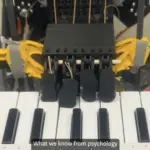
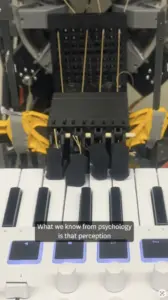
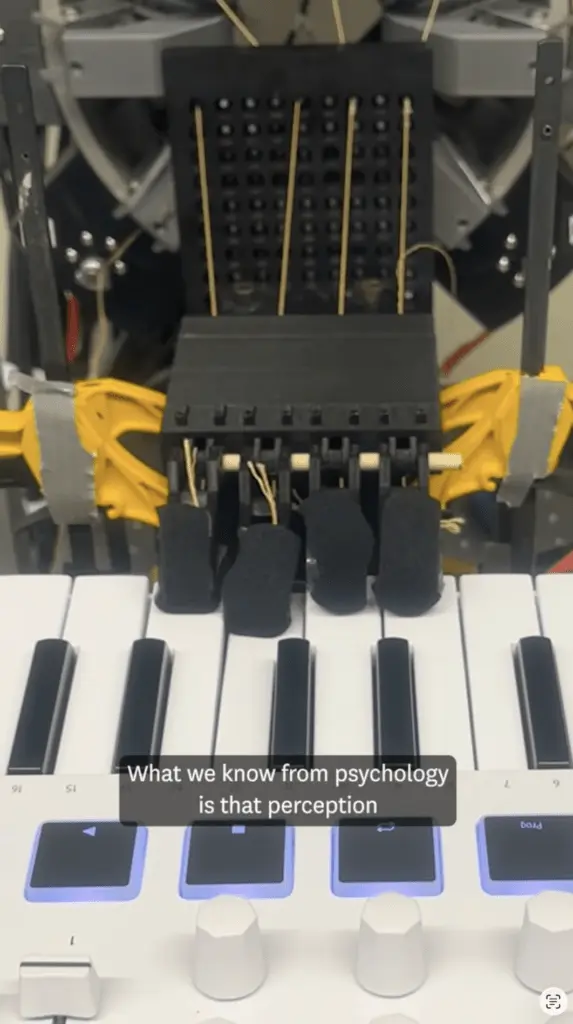
A recent breakthrough from researchers at the University of Southern California’s Viterbi School of Engineering has brought that question closer to reality. Engineers have developed a novel robotic system dubbed the "Musician Hand." This remarkably simple, tendon-driven mechanical hand achieved something that upends traditional robotics paradigms: after hearing a 30-note musical melody just once, it played the composition back flawlessly on a standard piano on its very first attempt.

The accomplishment required no weeks of tedious training runs, no multi-terabyte datasets, and no supercomputing infrastructure. Instead, the system achieved its capability through just two minutes of self-guided, exploratory practice.
While a piano-playing mechanical appendage might initially present as an impressive technical novelty, the broader implications for the future of assistive technology are profound. This research demonstrates that physical machines can learn rapidly from brief, real-world experiences and seamlessly adapt to unpredictable environments. In doing so, it lays the groundwork for a new wave of highly personalized, responsive assistive devices that could fundamentally improve the lives of individuals with physical and cognitive challenges.
How the Musician Hand Works: The Perception-Action Loop
The core innovation behind the Musician Hand is rooted in a fundamental biological principle known as the perception-action loop. Rather than being hardcoded to execute specific mechanical motions to strike precise piano keys, the robot was designed to teach itself the physics of its own body.
Living organisms do not come into the world with pre-compiled software for every possible physical interaction. Instead, infants and animals explore their environment through movement, observing the sensory feedback of their actions to build an internal model of how their bodies interact with the physical world. The USC Viterbi research team applied this exact philosophy to the Musician Hand, allowing the mechanism to explore its physical boundaries and capabilities during an initial, brief calibration period. By engaging in this self-directed exploration, the system quickly mapped out its tendon tensions, finger flexibility, and spatial positioning without human intervention.
This self-guided learning model stands in stark contrast to traditional artificial intelligence frameworks. Conventional AI models, particularly those driving autonomous vehicles or complex humanoid robots, require massive expenditures of energy and years of historical data to function reliably. In contrast, the Musician Hand achieved its sophisticated musical feat using remarkably efficient, low-power computing hardware running on a standard laptop.
Revolutionizing Physical Assistive Tech
The extraordinary efficiency and adaptability of this perceptual robotics model open up transformative possibilities for the field of physical assistive technology. Traditional prosthetic limbs and robotic orthoses often struggle with the unpredictable nature of daily human environments. Users frequently face steep learning curves as they attempt to master rigid, pre-programmed device controls that fail to account for the subtle variations in human movement, fatigue, or environmental obstacles.
By contrast, a system inspired by the Musician Hand could theoretically calibrate to an individual user’s unique physical capabilities and residual movements in a matter of minutes. Because the underlying software relies on efficient perception rather than exhaustive pre-training, these next-generation assistive devices could dynamically adjust to changing physical conditions throughout the day. Whether a user is adapting to muscle fatigue, recovering from an injury, or navigating an unfamiliar physical space, adaptable robotic supports could learn the user’s specific patterns in real time, offering a level of intuitive assistance that current prosthetic and orthotic technologies simply cannot match.
Beyond the Physical: Abstract and Cognitive Applications
The significance of this engineering milestone extends well beyond physical mobility hardware and robotic dexterity. The fundamental architecture of the system—leveraging efficient, real-time perception to instantly adapt to a user’s unique needs—holds the potential to reshape the design of software applications, specialized learning tools, and cognitive support systems.
In the realm of educational and cognitive assistive technology, the bottleneck has historically been the rigid nature of adaptive software. Traditional learning platforms rely on predetermined branching logic or broad statistical averages to determine how a user interacts with content. If a user’s cognitive processing style, learning pace, or communication method falls outside those rigid parameters, the technology often becomes an obstacle rather than an aid.
Applying perceptual learning principles to software design could enable digital tools to understand and mirror a user’s cognitive rhythm almost instantly. Instead of forcing individuals to adapt their workflows to match the constraints of an inflexible user interface or assistive program, intelligent software could continuously calibrate itself to the user’s cognitive patterns, preferences, and communicative habits. This dynamic responsiveness would make digital environments vastly more accessible for individuals with neurodivergence, cognitive impairments, or specialized communication needs.
The Future is Adaptable
For decades, the prevailing paradigm in robotics and artificial intelligence has operated on a restrictive premise: humans must adapt to the operational limitations of machines. Users must learn specific command syntaxes, operate within strictly defined spatial boundaries, and accept the rigid failures of systems that cannot cope with the unexpected.
The successful demonstration of the Musician Hand signals a definitive shift toward an era where machines can quickly, efficiently, and intuitively adapt to the human. By moving away from brittle, exhaustive programming and embracing the fluid dynamics of perceptual learning, the upcoming generation of assistive technology promises to transcend the role of mere tools. Instead, they are poised to become genuinely intelligent systems capable of understanding the nuances of how human beings move, learn, and live.
Source: USC Viterbi School of Engineering