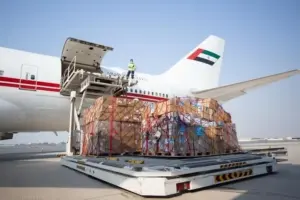





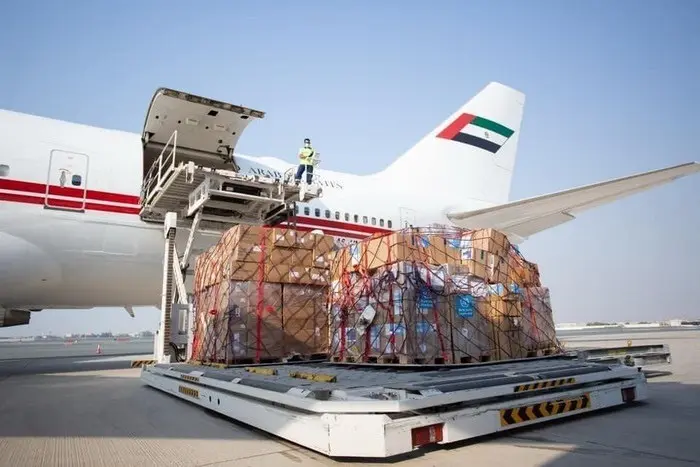
A specialized aircraft carrying 20 tonnes of essential World Health Organization (WHO) health supplies has successfully landed in Beirut, Lebanon, marking a critical step in the international effort to support the treatment of patients injured by the massive and destructive blast that shook the Lebanese capital on August 4. The emergency shipment contains vital medical commodities specifically curated to cover 1,000 trauma interventions and 1,000 surgical interventions, providing immediate, life-saving assistance for people suffering from severe injuries, fractures, and deep burns resulting from the catastrophic explosion.
The urgent cargo was airlifted earlier in the afternoon directly from the WHO’s sprawling logistics hub located in Dubai. This rapid deployment was made possible through the utilization of an aircraft generously donated by the Government of the United Arab Emirates, which continues to serve as a key and reliable partner to the WHO in global health emergency responses and humanitarian logistics. The swift coordination between international bodies and regional governments underscores the gravity of the crisis unfolding in Beirut and the immediate need to bridge critical supply gaps in local medical facilities.
Addressing the arrival of the humanitarian aid, Dr. Iman Shankiti, the WHO Representative in Lebanon, expressed deep solidarity with the nation. "Our hearts and prayers are with all those affected by this tragic event as we continue our mission to serve all people in Lebanon with life-saving and essential health care services," Dr. Shankiti stated. She further emphasized the collaborative nature of the ongoing response, noting that health officials are maintaining a constant dialogue on the ground. "We are working closely with national health authorities, health partners, and hospitals treating the wounded to identify additional needs and ensure immediate support."
The impact of the August 4 blast on Beirut’s healthcare infrastructure has been catastrophic, compounding an already fragile medical landscape. According to preliminary assessments, three major hospitals in the capital have been rendered entirely non-functional due to structural damage, while an additional two hospitals have sustained partial damage. This sudden and massive loss of medical facilities has created a critical gap in hospital bed capacity just as the city faces an unprecedented influx of trauma patients.
In response to the overwhelmed state of medical centers in the capital, injured patients are actively being transferred to hospitals across the entire country, with some being rushed to facilities as far away as Saida in the south and Tripoli in the north. Many of these regional medical facilities are already stretched to their limits. To alleviate this immense pressure, the WHO has announced plans to rapidly distribute the newly arrived medical supplies directly to priority hospitals across Lebanon that are actively receiving and treating patients wounded in the blast.
This latest emergency strikes Lebanon at a time when the country is already grappling with an accumulation of severe crises. The disaster occurs within the broader context of recent civil unrest, a crippling major economic crisis that has impoverished large segments of the population, an ongoing and challenging COVID-19 outbreak, and a heavy refugee burden that has strained national resources for years. Observers note that the legendary resilience of the Lebanese people has rarely been tested so severely as it is now, facing simultaneous shocks on economic, political, and public health fronts.
Amid these compounding difficulties, maintaining the continuity of the public health response, particularly regarding the ongoing fight against COVID-19, remains a paramount concern for both national authorities and international agencies. Ensuring that targeted assistance continues to reach the most vulnerable populations is a shared top priority for the Ministry of Public Health and the WHO, even as they pivot rapidly to manage the immediate mass-casualty aftermath of the Beirut port explosion.
The international community has mobilized swiftly to back domestic response efforts. Dr. Najat Rochdi, the United Nations Resident Coordinator in Lebanon, highlighted the unified front presented by international organizations working alongside local authorities. "With the emergence of new challenges due to the latest devastating event, the United Nations in Lebanon and partners have been mobilized to provide immediate humanitarian assistance to the Lebanese people in support of the Government’s response to this tragedy," Dr. Rochdi said. Highlighting the steadfast commitment of the international community to the nation’s recovery, she concluded, "We are in this together, and we are committed to supporting Lebanon in this very difficult time."