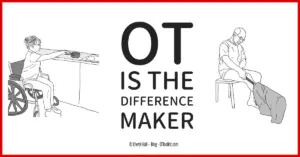








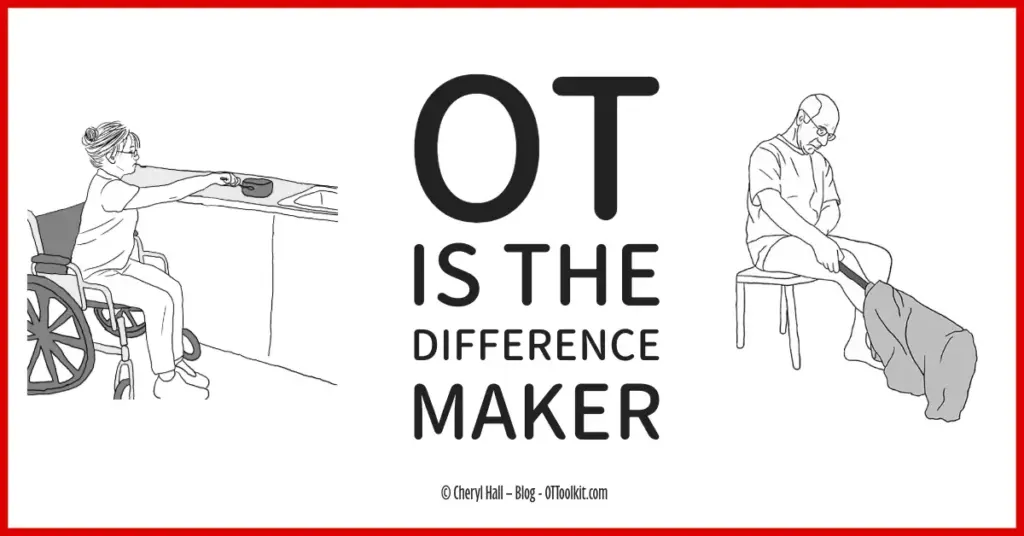
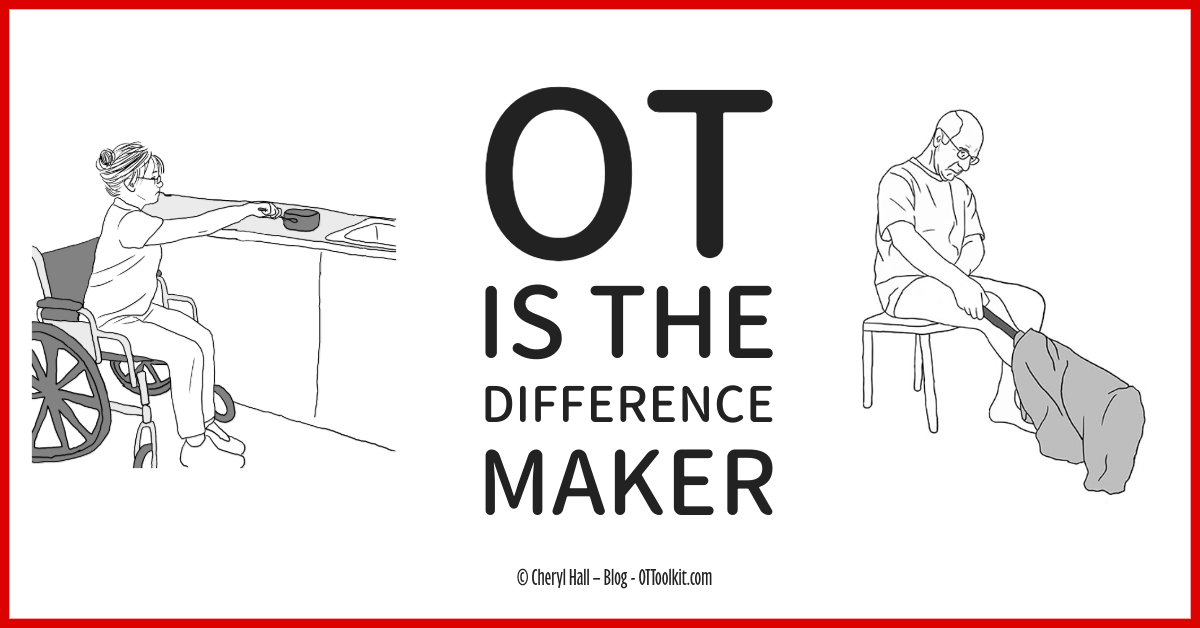
In the complex ecosystem of modern health care, where multidisciplinary teams are the standard for patient management, the specific role of the Occupational Therapist (OT) is often misunderstood or undervalued. While nurses, physicians, and physical therapists have clearly delineated roles that are easily recognized by both the public and fellow clinicians, occupational therapy frequently struggles with an identity crisis. The profession provides immense value, yet it faces an ongoing challenge in effectively communicating that value to the wider health care community. A recent reflection on the nature of these collaborative teams has prompted a shift in perspective: perhaps the most accurate way to define the role of an OT is as the "difference maker" on the team.
This definition is not merely a slogan; it is a clinical reality backed by the way OTs integrate into a patient’s life. Unlike other specialties that may focus strictly on the pathology or the physical impairment, occupational therapy focuses on the intersection of the person, their environment, and the activities that give their life meaning. By meeting patients exactly where they are in their health care journey, OTs can identify barriers to well-being that are often overlooked by the rest of the medical team. These interventions, while sometimes seemingly modest in scale, fundamentally alter the quality of a patient’s daily existence. Reflecting on years of clinical practice, it becomes clear that there are specific moments where the OT’s intervention provided a unique, essential service that no other member of the care team would have—or could have—provided.
Terminal Cancer and the Power of Laughter
The impact of occupational therapy is perhaps most visible in the most challenging of circumstances, such as end-of-life care. One particularly poignant case involved "Paul," a ten-year-old patient diagnosed with terminal cancer. By the time he was referred to occupational therapy, Paul was confined to a wheelchair and had become deeply withdrawn. His illness had cast a long shadow over his life, and the depression he experienced was as debilitating as his physical condition. Despite the efforts of a dedicated multidisciplinary team, every therapy session followed a predictable, disheartening pattern. The hour would begin with clinical goals and end with the crushing weight of his illness winning the battle. Paul was losing his spark, and the interventions aimed at his physical needs were doing little to address his spirit.
One day, acting on an intuitive desire to reach the boy behind the illness, the occupational therapist brought a simple grabber tool into the room. During the session, Paul’s mother stepped into the kitchen to wash dishes. Recognizing an opening for a moment of human connection, the therapist used the grabber to discreetly pick up a dish towel and handed it to the boy, whispering, "Hide it under the table." Paul’s demeanor shifted instantly; his eyes lit up, and a genuine smile replaced his usual mask of exhaustion. When his mother returned and began searching for the missing towel, the room filled with the sound of laughter—a sound that had been absent for far too long. Paul waved the towel in the air, delighting in his successful bit of mischief. That simple grabber, repurposed as a tool for play and connection, changed the dynamic of his remaining time. The therapist left the tool with him, and for the next two weeks until his death, Paul used it to tease his parents and siblings. His parents later reached out to express their profound gratitude, noting that the OT had provided their son with a final opportunity for fun and mischief, a contribution that went far beyond traditional clinical parameters.
Addressing the Loss of Function
Occupational therapy’s capacity to identify specific, unmet needs is also evident in the way practitioners help patients navigate life-altering physical changes. Consider the case of "Jack," a patient suffering from severe, uncontrolled diabetes. Following a surgical procedure to manage his condition, Jack was left with only his thumbs and half of his dominant index finger. As the OT worked with him to develop strategies for maintaining independence in his activities of daily living (ADLs), it became clear that Jack was carrying a burden of embarrassment that prevented him from fully engaging in his recovery.
Jack eventually confessed that he was struggling with a very specific, personal task. He felt unable to ask his doctors or nurses for help with his personal hygiene, specifically the act of nose-picking, which he found impossible due to his limited hand function. A less patient-centered clinician might have dismissed the request as outside the scope of "medical" necessity, but the OT understood that for Jack, this was a matter of dignity and autonomy. The therapist performed a thorough assessment of sensation, skin integrity, and circulation in the patient’s residual finger and consulted with the nursing and medical staff to ensure safety. Using standard splinting materials and Velcro, the OT constructed a custom device tailored to Jack’s specific anatomy. With a few minor adjustments, the device enabled him to regain control over this small but significant occupation. By validating Jack’s concern rather than dismissing it, the OT restored a measure of independence that had been lost, demonstrating that clinical care must include the mundane tasks that define a person’s comfort and self-respect.
Breaking the Cycle of Environmental Barriers
Sometimes, the "difference maker" role involves identifying environmental obstacles that have imprisoned a patient for years. "Dorothy," a 75-year-old patient living with severe rheumatoid arthritis, serves as a prime example. Upon arriving for an evaluation, the therapist found that Dorothy did not answer the door, but rather called out from within the apartment, instructing the visitor that the door was unlocked. After completing the evaluation, the therapist inquired why she didn’t open the door herself. Dorothy revealed that in the ten years she had resided in the apartment, the door had always been too difficult for her to operate. She had been forced to rely on neighbors to open the door for her, leaving it unlocked to ensure visitors could enter.
This was not a medical problem in the traditional sense, but it was an occupational one. Upon inspection, the therapist discovered that the magnetic seal on the door was extraordinarily strong, creating a level of resistance that was physically impossible for someone with severe arthritis to overcome. Using nothing more than common masking tape, the therapist covered approximately half of the magnetic surface, effectively reducing the resistance. Dorothy was able to open her front door by herself for the first time in a decade. To ensure the safety of the modification, the therapist contacted the apartment manager and consulted with the local fire station to verify that the door still met fire safety standards. Both confirmed the modification was acceptable. In an instant, the OT had returned a level of freedom and autonomy to a patient that no medication or physical therapy exercise could have achieved.
These cases illustrate that the value of occupational therapy is not always found in grand, high-tech interventions, but in the careful, observant application of clinical reasoning to the barriers a patient faces in their own environment. These needs—whether they involve the psychological benefit of play, the restoration of personal dignity, or the removal of physical barriers to independence—are the domain of the occupational therapist. They are the difference makers who look beyond the diagnosis to see the human being behind it. The next time a health care team needs a reminder of the unique, indispensable value of occupational therapy, these stories serve as a powerful testament to the difference that one dedicated professional can make.