




The World Health Organization has expressed deep regret following the official notification by the United States of America of its intention to withdraw from the global health body. In a comprehensive response released by the WHO Media Team, the organization warned that the decision serves to make both the United States and the broader global community less safe, threatening decades of collaborative progress in international public health.
As a founding member of the World Health Organization, the United States has historically contributed significantly to many of the organization’s greatest public health achievements. These landmark milestones include the successful eradication of smallpox, which remains one of the greatest triumphs in medical history, as well as vital ongoing progress against a wide array of other severe public health threats. Among these shared achievements are coordinated global efforts against polio, HIV, Ebola, influenza, tuberculosis, malaria, neglected tropical diseases, antimicrobial resistance, and food safety challenges, all of which have benefited immensely from American scientific expertise, financial backing, and logistical support.
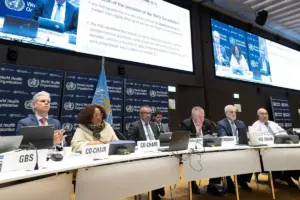
The formal notification of withdrawal raises critical procedural and operational issues that will now be formally considered by the WHO Executive Board at its upcoming regular meeting scheduled to start on February 2. Following that executive review, the matter will be brought before the broader membership at the annual meeting of the World Health Assembly in May 2026.
In addressing the reasons behind the departure, the WHO took note of recent statements from the government of the United States alleging that the health body had "trashed and tarnished" and insulted the nation, while also compromising its institutional independence. The organization firmly rejected these characterizations, stating that the precise reverse is true. Emphasizing its standard diplomatic and operational posture, the WHO stressed that, as it does with every individual Member State, it has always sought to engage with the United States in good faith, maintaining full respect for its national sovereignty and domestic governance.
The United States specifically cited what it termed "WHO failures during the COVID-19 pandemic" as a primary justification for its withdrawal decision. Washington’s statements pointed to allegations that the organization had obstructed the timely and accurate sharing of critical information and subsequently attempted to conceal those operational failures. While acknowledging that no international organization or national government managed to navigate every aspect of the crisis perfectly, the WHO firmly defended its comprehensive response to the unprecedented global health emergency.
Throughout the duration of the pandemic, the organization maintained that it acted rapidly, sharing all available information swiftly and transparently with the international community. Furthermore, it advised Member States strictly on the basis of the best available scientific evidence. The WHO clarified that while it recommended standard protective measures such as the use of masks, vaccines, and physical distancing, it never at any stage recommended mandatory mask policies, mandatory vaccination programs, or nationwide lockdowns. Instead, the agency supported sovereign governments in making the specific policy decisions they believed were in the best interests of their populations, emphasizing that ultimate authority and decision-making power rested entirely with national authorities.
Recalling the timeline of the initial outbreak, the organization noted that immediately after receiving the first reports detailing a cluster of cases involving "pneumonia of unknown cause" in Wuhan, China, on December 31, 2019, it formally asked Chinese authorities for more detailed information while simultaneously activating its internal emergency incident management system. By the time the first official death was reported from China on January 11, 2020, the WHO had already alerted the world through formal diplomatic channels, public statements, and social media platforms. It had also convened global health experts and published comprehensive guidance for countries on how to protect their populations and fortify their domestic health systems.
When the WHO Director-General formally declared COVID-19 to be a public health emergency of international concern under the binding provisions of the International Health Regulations on January 30, 2020—representing the highest level of formal alarm under international health law—there were fewer than 100 reported cases outside of China, and crucially, zero reported deaths outside the country. In the critical first weeks and months of the unfolding pandemic, the Director-General repeatedly urged all national governments to take immediate, decisive action to protect their citizens. During those early briefings, he warned that "the window of opportunity is closing," stressed that "this is not a drill," and famously described the novel coronavirus as "public enemy number one."
In the years following the acute phase of the crisis, the organization participated in multiple external and internal reviews evaluating the COVID-19 pandemic, including critical assessments of its own institutional performance. In response to these evaluations, the WHO implemented concrete steps to strengthen its internal operations and to actively support countries in bolstering their own national pandemic preparedness and response capacities. The surveillance, alert, and response systems that the agency developed and managed before, during, and after the emergency phase—which continue to operate on a round-the-clock basis—have played a continuous role in keeping all countries safe, including the United States.
Addressing another core concern raised in American statements, the WHO rejected assertions that it has pursued a "politicized, bureaucratic agenda driven by nations hostile to American interests." The organization emphasized that these claims are entirely untrue. Operating as a specialized agency of the United Nations governed collectively by 194 Member States, the WHO has always maintained, and continues to maintain, strict impartiality. It exists to serve all countries equitably, with absolute respect for national sovereignty and operating strictly without fear or favor.
Despite the withdrawal notification, the WHO expressed appreciation for the ongoing support and continued engagement of all its other Member States. These nations continue to work collaboratively within the established framework of the WHO to pursue practical solutions to the world’s most pressing health threats, encompassing both communicable and noncommunicable diseases.
As proof of this enduring multilateral commitment, WHO Member States last year successfully adopted the landmark WHO Pandemic Agreement. Once formally ratified by participating nations, this agreement will become a vital instrument of international law designed to keep the world safer from future pandemic threats. Furthermore, Member States are currently engaged in delicate negotiations regarding an annex to the agreement known as the Pathogen Access and Benefit Sharing system. If successfully adopted, this system will promote the rapid detection and transparent sharing of pathogens with pandemic potential, while simultaneously ensuring equitable and timely access to life-saving vaccines, therapeutics, and diagnostics for all populations.
Concluding its official response, the World Health Organization stated its sincere hope that the United States will, in the future, return to active participation within the body. In the interim, the WHO remains steadfastly committed to collaborating with all nations across the globe in relentless pursuit of its core mission and foundational constitutional mandate: ensuring the highest attainable standard of health as a fundamental, non-negotiable human right for all people.