








Educators, parents, and pediatric therapists are increasingly adopting a behavioral framework known as the "Size of the Problem" to help children navigate daily challenges, build emotional resilience, and develop critical executive functioning skills. The concept, widely utilized in both classrooms and clinical settings, provides children with a structured way to evaluate the magnitude of everyday hurdles and match their emotional reactions accordingly.
Developed as a cornerstone of social-emotional learning, the approach addresses a common hurdle for children struggling with self-regulation: the tendency to experience disproportionate emotional reactions to minor inconveniences. By teaching children to categorize challenges into distinct tiers—ranging from small daily frustrations to major emergencies—the framework fosters perspective-taking, self-awareness, and effective problem-solving.
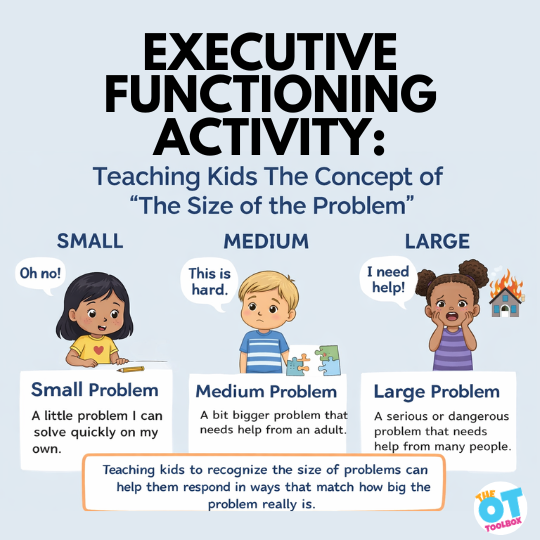
According to pediatric occupational therapy professionals, emotional regulation and executive functioning are deeply intertwined. When children encounter disruptions in their daily routines, their ability to pause, assess the situation, and select an appropriate coping mechanism relies on complex cognitive processes that develop gradually over time. The Size of the Problem framework acts as a concrete tool to make these abstract concepts accessible.
In practice, the methodology categorizes challenges into three primary tiers: small, medium, and big problems. Small problems are typically defined as minor inconveniences that can be resolved quickly and independently. Examples include dropping a crayon during art class, misplacing a television remote, or momentarily struggling to find an item at home. These situations generally call for minimal emotional disruption and simple, straightforward solutions, offering children ideal opportunities to practice independent coping strategies.
Medium problems encompass situations that may require assistance from a teacher, parent, or peer, but do not constitute an immediate emergency. Scenarios such as experiencing a disagreement with a friend at recess, running slightly late for a scheduled departure, or needing an ingredient for a school project fall into this category. While these events often trigger feelings of frustration, disappointment, or mild upset, they can typically be resolved through communication and adult support.
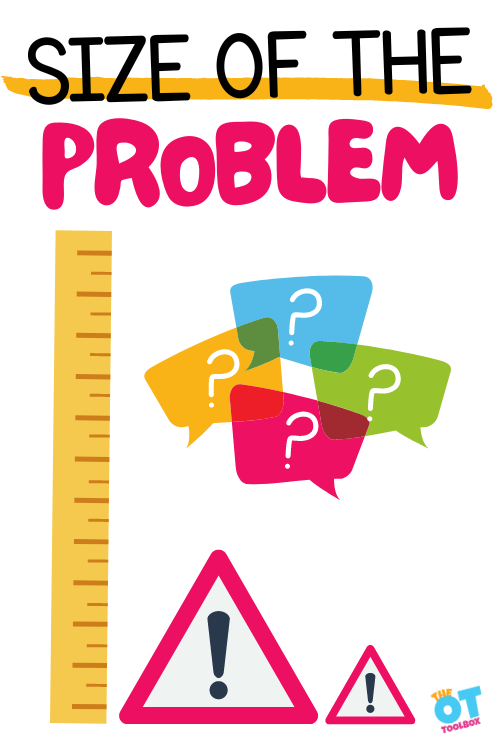
Big problems, conversely, involve safety concerns, significant life transitions, or genuine emergencies. These critical events demand adult intervention, emotional support, and intensive coping mechanisms. By establishing clear distinctions between these categories, the framework teaches children that not every disruption requires the same level of emotional investment or urgent reaction.
The implementation of this concept extends across various environments, most notably at home and in school settings. At home, everyday hurdles—such as misplacing a necessary piece of clothing before an activity or dealing with unexpected delays—provide organic opportunities for parents to engage in co-regulation. Experts emphasize that the goal of the approach is not to invalidate a child’s feelings, but rather to accept their emotional response while guiding them toward constructive problem-solving. Even when a child experiences intense frustration over a minor issue, such as losing a household item, caregivers can utilize the moment to teach flexibility and resilience.
In educational environments, the framework integrates seamlessly into positive behavioral supports and social-emotional curriculums. Teachers and school-based therapists frequently utilize visual aids, emotion check-ins, and dedicated calm-down spaces to help students assess academic or social hurdles. For instance, addressing a missing school assignment or resolving a playground disagreement through the lens of problem sizing allows students to practice responsibility and conflict resolution in a structured manner.
Specialists note that teaching children to identify problem sizes also significantly expands their emotional vocabulary. Instead of relying on broad terms like "mad" or "upset," children learn to articulate specific feelings such as disappointed, frustrated, nervous, or overwhelmed. This linguistic precision enables them to communicate their needs more effectively and select coping strategies that match the intensity of their internal state.
The approach relies heavily on visual supports and hands-on activities, particularly for younger learners and elementary students who benefit from concrete representations of abstract concepts. Sorting exercises, task cards, and interactive scenarios allow children to practice evaluating hypothetical situations and deciding on appropriate responses. Furthermore, educators and therapists frequently utilize children’s literature to highlight how book characters identify problems and execute solutions, reinforcing the concepts through storytelling.
From a clinical perspective, occupational therapists view the Size of the Problem framework as a comprehensive tool that targets multiple developmental domains simultaneously. Beyond behavioral management, the practice engages executive functions such as cognitive flexibility, working memory, and inhibitory control. When children learn to accurately gauge a situation and select a calibrated response, they enhance their ability to participate successfully in academic settings, maintain peer relationships, and navigate life’s inevitable uncertainties with growing confidence.