






Why do some skills seem to integrate into our repertoire almost instantaneously, while others remain elusive, resisting even the most dedicated and repetitive practice? For decades, the focus of learning science has been largely confined to the brain itself—examining synaptic plasticity, neuronal firing patterns, and the architecture of neural circuits. However, groundbreaking new research from Tohoku University suggests that the secret to mastering a new skill may not lie solely within the cranium, but in a sophisticated, bidirectional conversation between the brain and the rest of the body.
According to a study published in iScience on August 25, 2026, researchers have uncovered a critical mechanism through which the vagus nerve—the body’s primary internal communication highway—can be harnessed to accelerate and solidify motor learning. By stimulating this nerve in mice, the research team demonstrated that the body can effectively "signal" the brain to transition from temporary practice into permanent, durable memory, fundamentally altering the internal environment of the brain to facilitate lasting change.
The Vagus Nerve: A Conduit for Cognitive Enhancement
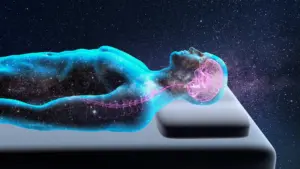
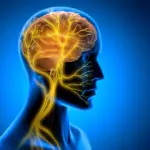
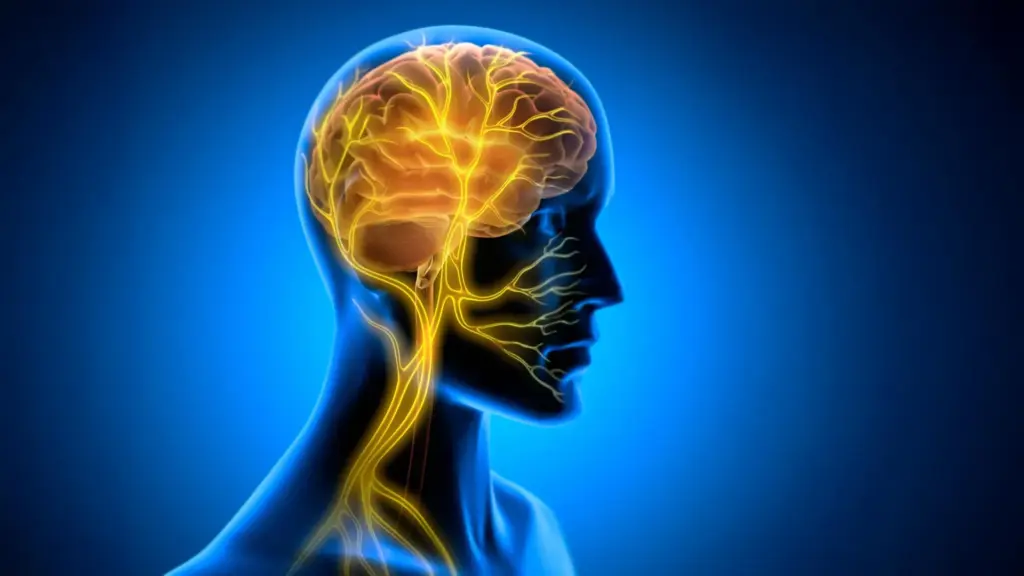
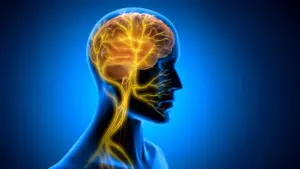
The vagus nerve is a colossal component of the autonomic nervous system, serving as a master regulator that carries sensory information from the heart, lungs, and digestive system up to the brain, while simultaneously delivering executive instructions back down to those vital organs. Because of its expansive reach, the vagus nerve has long been a target for medical intervention. Vagus nerve stimulation (VNS) is already a clinically approved therapy used to manage various conditions, including epilepsy and treatment-resistant depression, by modulating neurotransmitter activity and adjusting the brain’s overall excitability.
However, the Tohoku University research team, led by Professor Ko Matsui and lead author Junyu Chen, sought to explore a dimension of VNS that has remained largely overlooked in the context of cognitive enhancement: its impact on the physical environment of the brain, specifically the blood vessels. While previous studies have focused on how VNS triggers the release of neurotransmitters like norepinephrine or acetylcholine, the team hypothesized that the stimulation might also be orchestrating rhythmic changes in cerebral blood volume, essentially "priming" the brain to lock in new information.
To test this hypothesis, the researchers developed a specialized, miniaturized cuff electrode capable of being attached to the left cervical vagus nerve in mice. With this tool in place, they monitored the subjects during a specific motor learning task known as the horizontal optokinetic response (HOKR). HOKR is a cerebellum-dependent eye movement task that requires the animal to adjust its gaze to track moving visual stripes—a process analogous to the involuntary, rhythmic eye movements a human makes while staring out the window of a moving train.
The Strategic Timing of Stimulation
A pivotal aspect of the study’s findings centers on the precise timing of the stimulation. In many previous neuromodulation studies, researchers have applied stimulation during the training phase itself, hoping to boost performance in real-time. In this study, however, the researchers deliberately chose to apply VNS only after the training sessions were completed.
The results were striking. During the actual training period, the mice receiving VNS did not show any immediate, "superhuman" increase in performance. They learned at a rate comparable to their counterparts in the control group. However, when the researchers checked the subjects in the days that followed, the difference became undeniable. The mice that had received post-training VNS exhibited significantly stronger long-term learning outcomes.
This delayed effect suggests that the vagus nerve does not necessarily act as a performance enhancer in the moment, but rather as a catalyst for memory consolidation. It appears to trigger a physiological "window of opportunity"—a period after practice when the brain is particularly vulnerable to structural changes. By stimulating the nerve after the task, the researchers were able to harness this biological window, making the brain’s environment more receptive to the lasting, physical changes required for a skill to become permanent.
"The key point is that VNS was delivered only after training," Professor Matsui explains. "Our findings suggest that VNS may open a hidden window of opportunity for enhanced learning by making the brain environment more receptive to long-lasting change."
Rhythmic Vascular Movements and Learning Success
To understand how this stimulation was translating into biological permanence, the team utilized fiber photometry to observe the internal mechanics of the cerebellum, specifically the cerebellar flocculus—the region primarily responsible for HOKR learning. They were searching for signs of physiological change that coincided with the improved learning performance.
What they discovered was a two-phase vascular response. Upon the application of a single round of VNS, the local blood volume in the cerebellar region underwent a brief, transient decrease, followed by a delayed rise. When the stimulation was repeated, these fluctuations stabilized into rhythmic oscillations.
The correlation between these vascular rhythms and learning success was profound. The researchers observed that the mice exhibiting larger, more pronounced blood volume oscillations were generally the same subjects that displayed the most significant improvement by the fifth day of the experiment. This suggests that the vagus nerve is not just sending a digital signal to the brain, but is instead inducing a rhythmic, physical shift in the brain’s metabolic landscape. By altering the flow of blood and the volume of vessels in specific regions, the body may be providing the metabolic resources necessary to support the energy-intensive process of synaptic strengthening and neural rewiring.
"Our brains may be more strongly influenced by the body than we imagine," says lead author Junyu Chen. "By tuning the brain’s metabolic environment, including rhythmic vascular movements, we may eventually unlock capacities that would otherwise remain latent."
Broadening the Scope of Brain-Body Communication
The discovery that the brain’s ability to "learn" is so intrinsically tied to its vascular environment—and that this environment can be tuned via the vagus nerve—opens a vast frontier for future research. The study provides a compelling piece of evidence in the growing body of literature that seeks to break down the "brain-in-a-vat" paradigm, moving toward a more holistic view of the nervous system as a fully integrated extension of the body’s internal organ network.
While the current study focused on motor learning in mice, the implications for human health and education are significant. If researchers can refine stimulation protocols to target these specific vascular rhythms, it could eventually lead to new therapeutic approaches for individuals struggling with motor skill recovery following brain injuries, or perhaps even enhance learning in neurotypical populations.
However, the team is careful to note that this is only the beginning of a much larger investigation. Future work will need to look at how these stimulation protocols can be refined to maximize their efficacy and, crucially, to understand the precise molecular mechanisms that bridge the gap between rhythmic vascular changes and long-term neural plasticity.
As the scientific community continues to map the two-way communication pathway between the body and the brain, the hope is to gain a deeper, more granular understanding of what actually constitutes "lasting" learning. By deciphering how the body dictates the conditions under which the brain creates memory, researchers are not just observing the learning process—they are beginning to understand how to open the door to it. For now, the research serves as a reminder that the secret to becoming an expert at a new skill might not just be "more practice," but rather ensuring that the body is in the right physiological state to let that practice take root.