








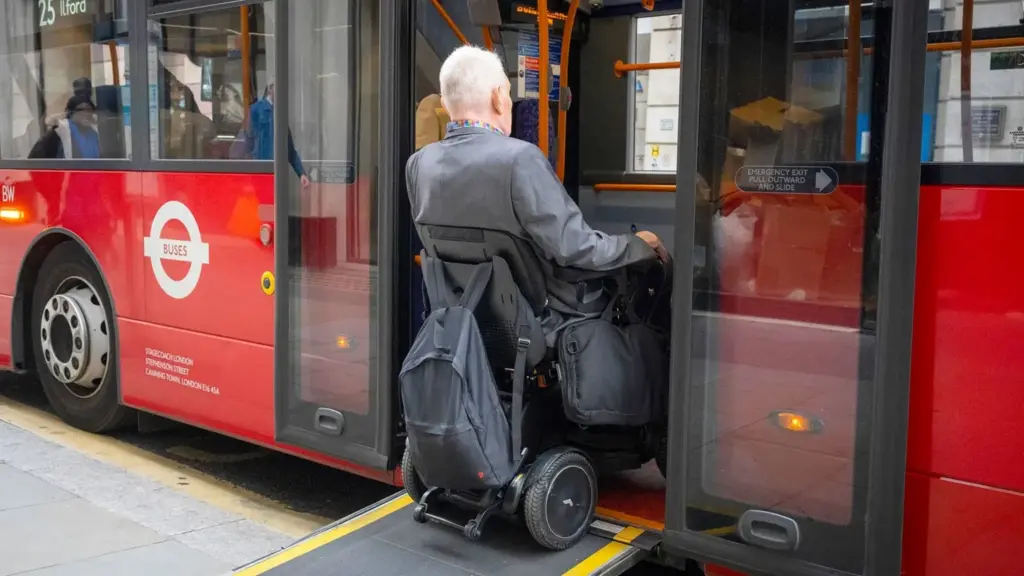
Starting April 1, disabled people across England will be able to travel by bus for free at any time of day, marking a major milestone in public transportation accessibility. Previously, free bus passes were restricted to off-peak hours on weekdays—specifically between 09:30 and 23:00. This long-standing limitation made it difficult for pass holders to commute to standard morning jobs, attend early professional appointments, or participate in late-night social and cultural events. The removal of these time limits will benefit an estimated one million people nationwide, effectively turning bus travel into a true full-time lifeline for disabled citizens who rely on public transportation for their daily independence and economic participation.
The policy follows a successful trial in Greater Manchester’s integrated “Bee Network” and responds directly to years of persistent campaigning by disability rights organizations, including Scope and Transport for All. Advocates have widely celebrated the move for eliminating an unfair “postcode lottery,” a system where pass validity heavily depended on local municipal rules rather than national standards. However, organizations emphasize that while this is a monumental victory, it remains only one step forward. Campaigners note that eligibility requirements across various regions still require broader standardization to ensure true equity for disabled travelers regardless of where they live in the country.
To make the program permanent and nationwide, the £60 million scheme is being funded jointly through the Department for Transport and the Department for Work and Pensions. Government officials frame the reform as an essential workforce and cost-of-living initiative. This investment joins existing transit measures, such as the nationwide £2 single-fare cap, and successfully brings England in line with similar 24/7 concessionary transit programs that are already operating successfully in Scotland and Wales.
Global Takeaways: How Other Countries Can Make Accessible Commuting Possible
Making daily commuting accessible and affordable for disabled citizens requires a comprehensive combination of thoughtful policy design, advanced digital systems, and targeted public investment. The UK’s latest initiative highlights the intricate ecosystem required to make barrier-free public transportation a reality on a national scale.
Why Was the UK Able to Do It?
The implementation of the nationwide 24/7 free bus travel policy for disabled residents was made possible through a convergence of sustained political pressure, regional pilot programs, and coordinated central government funding. For years, disability advocacy groups documented the economic and social barriers created by off-peak restrictions, proving that limited transit access directly contributed to underemployment and social isolation among disabled adults.
The success of Greater Manchester’s “Bee Network” trial provided a tangible blueprint, demonstrating to policymakers that lifting time restrictions did not destabilize transit operations or overwhelm bus capacity. Furthermore, the collaboration between the Department for Transport and the Department for Work and Pensions illustrates an understanding that accessible public transit is fundamentally linked to employment retention and poverty reduction. By pooling financial resources at the national level and aligning with existing frameworks like Scotland and Wales, the government created a sustainable funding model backed by a £60 million investment.
Does It Depend on Existing Infrastructure?
Yes, heavily. Free transit passes only work if the public transport network is physically and technologically accessible to begin with. Financial concessions lose their value if the passenger cannot physically board the vehicle or navigate the transit environment.
A successful nationwide transit pass relies heavily on vehicle accessibility, including low-floor buses with functional boarding ramps, designated wheelchair spaces, and clear audio-visual announcement systems for passengers with sensory impairments. Additionally, integrated ticketing technology and smart pass readers are essential to process concessionary cards seamlessly without creating bottlenecks or administrative burdens for bus drivers. Infrastructure readiness also extends to bus stops and interchange hubs, which must feature real-time arrival information, adequate lighting, step-free access, and tactile paving to support passengers with diverse mobility needs before they even step onto a vehicle.
What Is Needed to Make Commuting Affordable for People with Disabilities?
Achieving true affordability and accessibility in public commuting requires a multi-layered approach that goes beyond simply waiving fares. First, governments must implement standardized, nationwide concessionary schemes that eliminate regional discrepancies and the frustrating "postcode lottery" that leaves pass validity dependent on local council budgets.
Second, funding structures must be guaranteed through long-term public investments rather than short-term grants, ensuring that transit operators can maintain service levels without penalizing vulnerable populations. Third, policymakers must actively consult with disability rights organizations and daily transit users during the design and rollout phases of any transport reform to identify unforeseen operational barriers. Finally, companion and carer travel policies must be integrated into transit concessions, ensuring that individuals who require physical or personal assistance are not financially penalized for traveling with support.