






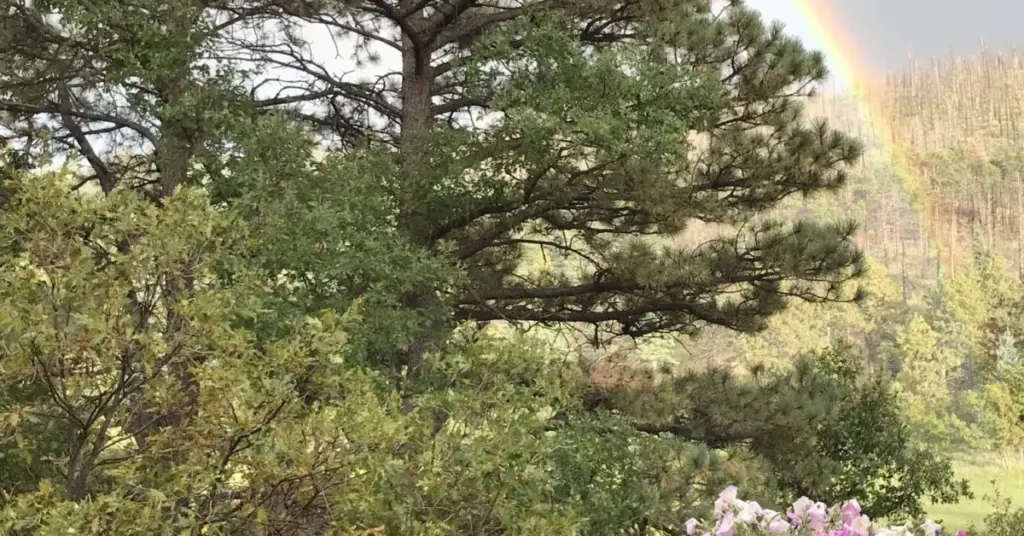
For years, a familiar morning ritual defined the daily routine of one observant walker and neighborhood watcher. Armed with an eye for detail, she routinely studied the subtle changes in neighborhood architecture, the local pond, and the evergreen trees surrounding her family’s mountain cabin. These walks served as a vital anchor, keeping her energized and emotionally balanced. Without them, she noted, her physical and mental well-being quickly soured.
For a long time, her routine included bringing her Facebook friends along for the journey. She regularly posted photographs taken during her strolls, accompanying them with a simple, straightforward caption: “morning walk.” However, as the cultural and political climate shifted, so did her perspective. A few months ago, she made a deliberate change to those daily captions, replacing the familiar phrase with a new one: “morning prayer.”
The evolution of her social media posts did not happen in a vacuum. The idea came to her, as many transformative thoughts do, during a lunch meeting with a close friend. Her companion was visibly distraught about the current state of the country, expressing a deep sense of despair and feeling that traditional acts of political resistance had become entirely futile. During their conversation, her friend remarked that prayer felt like the only meaningful option left to her. Reflecting on the exchange, the writer realized she had been harboring the exact same sentiment.

Musing on the conversation over the following days, she decided to make a deliberate shift. She would begin turning her daily nature photographs into visual prayers and sharing them publicly with her online network.
Initially, the transition was accompanied by a lingering sense of discomfort. She worried that openly sharing prayerful content might cause her to be perceived as a religious eccentric. This hesitation reflects a broader cultural tendency among many liberals, who too often choose to hide their personal spirituality out of a sense of moral politeness or social restraint. Yet, looking closer at her immediate social circle, she realized that most of her like-minded friends are regular churchgoers for whom a broader religious and spiritual community remains an essential pillar of their lives.
While she does not consider herself an overtly prayerful person in the traditional sense, prayer has nonetheless been a constant, if evolving, thread throughout her life. Her foundational experiences with religion began early, spending her formative years in Catholic schools from the first grade through the completion of high school. As a child, she attended church services almost every Sunday and frequently during weekdays, faithfully carrying a small white leather prayer book until she reached an age where she felt she was simply too cool for it. During Mass, her mind often wandered into daydreams, yet she unfailingly followed the prayers, finding the rhythmic cadence deeply meditative.
Despite years of formal religious education, she remains quick to dismiss any notion that she is qualified to engage in deep theological discussions. Instead, she prefers to draw from the lived wisdom of the many holy women she is fortunate to count among her friends. These relationships have taught her that prayer can take formal structures, but it certainly does not need to. They demonstrated that while prayer can serve as an essential component of a formal religious service, it equally exists far outside the walls of organized religion—and perhaps that is precisely where it resonates most strongly for her.
Her newly minted morning Facebook prayers initially took modest forms. During the colder months, when stepping out for extensive walks was impractical and nature wore a monochromatic winter coat, her subjects were limited to sunrises viewed from her balcony. The unfolding dawn felt inherently like an act of grace and divinity. Soon, she began supplementing the morning posts with snapshots of evening sunsets or the glowing moon, transforming them into evening prayers.
As spring finally arrived, the visual palette expanded dramatically. Her photographs shifted to capture blooming irises and roses, rippling ponds, and trees bursting with fresh buds. On days when the natural world offered an abundance of sights, she even found herself adding an afternoon prayer to account for the spillover of beauty. Now, as the seasons turn once again, those daily offerings sparkle with the rich, warm gold of autumn.
For the writer, these photographs provide a designated opportunity to pause, draw a deep breath, offer gratitude, ask for guidance, express sorrow, or simply tend to whatever her spirit requires at that moment. Friends and followers on social media are given the choice to engage with the posts or simply scroll past them. She is not issuing a directive telling others that they must pray; rather, she is transparently sharing the specific elements of the natural world that inspire a prayerful state within her.
History and personal observation have taught her that organized religion does not always equate to goodness and virtue. In fact, throughout human history, religion has frequently been invoked to justify the exact opposite. However, she believes that the act of prayer itself belongs to everyone. Her daily documentation of nature’s beauty provides an accessible, grounding reason to pause, inhale deeply, and give thanks.
This quiet ritual, she notes, offers a vastly superior alternative to inhaling the digital venom and hostility that so frequently flood modern computer and smartphone screens.
The true impact of this subtle shift in her online presence became sharply evident recently. A former student reached out via a direct message to express her sincere gratitude for a photo of a flower the writer had just posted alongside a prayer caption. The image had struck a poignant chord, vividly reminding the former student of her mother, who had passed away a couple of years prior. The message arrived in the evening, leading to a warm, unexpected virtual conversation that lasted right up until the writer prepared for bed.
Reflecting on the exchange, the former student remarked on how glad she was that they had reconnected. The writer echoed the sentiment, telling her she felt the exact same way.
To the writer, that meaningful interaction felt like a direct answer to a prayer. She drifted off to sleep that night carrying a trifecta of comforting memories: the enduring presence of a beloved mother, a blossoming peony, and a treasured former student. The following morning, when the temptation to linger in bed and embrace laziness arose, she chose a different path. Instead, she dressed, stepped outside into the crisp morning air, and headed directly to the local park with her phone in hand, eager to see what new prayers the day had to offer.