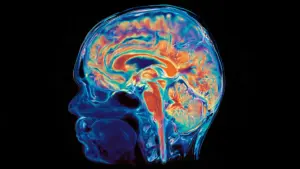
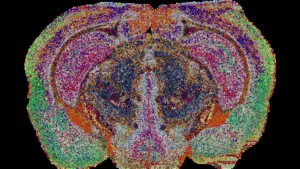






An unusually detailed and revelatory examination of a human brain has provided what researchers are calling some of the most compelling evidence to date that clearing amyloid plaques—a hallmark of Alzheimer’s disease—can offer a tangible protective effect against the secondary, more destructive processes that drive cognitive decline. The findings, presented at the 2026 Alzheimer’s Association International Conference and simultaneously published in the journal JAMA, offer a rare, side-by-side comparison of how different regions of the same brain respond to therapeutic intervention.
The study, conducted by researchers at the Perelman School of Medicine at the University of Pennsylvania, centered on a unique "natural experiment" occurring within the brain of a deceased patient who had participated in a long-term clinical trial for an anti-amyloid therapy. By analyzing tissue where the drug successfully cleared plaque and comparing it to adjacent areas where the plaque remained, scientists were able to observe the direct consequences on tau protein—the second major protein abnormality that serves as a primary driver of brain cell death and memory loss in Alzheimer’s patients.
A Rare Opportunity to Observe Disease Dynamics
The regions of the brain that had been effectively cleared of amyloid showed little to no buildup of tau tangles. Conversely, neighboring areas that still contained persistent amyloid deposits exhibited significantly higher levels of tau, alongside clear evidence of ongoing neurodegeneration and inflammation. This spatial contrast provides a rare window into the mechanics of Alzheimer’s pathology, suggesting that the removal of amyloid is not merely a superficial cleanup of protein deposits, but a strategy that may successfully interrupt the cascade of damage that leads to clinical dementia.
"Seeing both disease patterns side-by-side in the same brain gave us a rare opportunity to understand how amyloid removal affects other proteins that contribute to Alzheimer’s disease," said Dr. David Wolk, co-senior author of the study and co-director of the Penn Memory Center. "The findings provide some of the clearest human evidence to date that anti-amyloid therapies may limit the accumulation of tau and slow the brain changes that lead to memory loss and cognitive decline."
The Interplay of Amyloid and Tau
To understand the significance of this finding, one must look at the two primary "culprits" in the pathology of Alzheimer’s: beta-amyloid and tau. Beta-amyloid proteins collect in the extracellular space between neurons, forming the characteristic sticky plaques that are a primary target of modern immunotherapy. Tau proteins, however, behave differently; they accumulate inside the neurons themselves, forming abnormal tangles that disrupt the cell’s internal transport system and ultimately lead to cell death.
For years, the prevailing hypothesis in the scientific community has been that amyloid buildup serves as the "trigger" or the necessary environmental condition that facilitates the development and spread of tau tangles. While this relationship is well-documented in laboratory models, establishing a causal link in the human brain has proven notoriously difficult. Direct human evidence has remained scarce, largely because it is rare for patients who have undergone anti-amyloid treatment to donate their brains for post-mortem analysis.
The "Goldilocks" Case Study
The researchers at Penn were able to bridge this knowledge gap thanks to the donation of brain tissue from a former clinical trial participant. The patient, who was in his fifties when he was diagnosed with mild cognitive impairment due to Alzheimer’s disease, had enrolled in a trial for aducanumab. Over the course of four and a half years, he received 30 doses of the medication. He eventually passed away four years after his final dose, more than a decade after the onset of his initial symptoms.
Upon examination by the Center for Neurodegenerative Disease Research, specialists noted a striking, heterogeneous pattern of damage. The brain’s gyri—the prominent, raised ridges on the surface of the brain—had been largely cleared of amyloid plaques and showed remarkably low levels of tau. In stark contrast, the sulci, or the grooves between those ridges, still contained significant amyloid buildup. In these specific areas, the researchers observed significantly higher concentrations of tau tangles and localized neurodegeneration.
Dr. Edward B. Lee, a professor of pathology and laboratory medicine and co-senior author of the study, described the case as a "Goldilocks" scenario. "Many previous reports have shown either extensive amyloid clearance or limited clearance," Dr. Lee noted. "This case represented a unique scenario in which some regions cleared amyloid and others did not. It allowed us to directly compare what happened next in neighboring brain regions and better understand the relationship between amyloid, tau, and neurodegeneration."
Implications for Modern Alzheimer’s Therapies
The findings are particularly relevant in the current era of Alzheimer’s management, where the medical landscape has been transformed by the emergence of anti-amyloid medications. While early efforts like aducanumab faced challenges, newer, more potent drugs such as lecanemab (Leqembi) and donanemab (Kisunla) have since received full FDA approval. These medications share a similar mechanism of action to the treatment received by the patient in the study, making these results a potential indicator of how these modern drugs might be affecting patient outcomes.
However, the study also highlights a critical limitation in how the medical community currently evaluates success. Most clinical trials for Alzheimer’s are structured around 18-month windows. This study suggests that the protective benefits of amyloid clearance might take much longer to manifest, or that their impact on the disease’s trajectory is cumulative and long-lasting.
While the results are promising, the researchers remain cautious. The study is limited by its focus on a single individual, and it cannot definitively prove that the plaque clearance alone was the sole factor preventing tau accumulation, nor can it establish the exact threshold of amyloid removal required to achieve significant clinical protection. These are questions that will require further investigation in larger, more diverse cohorts.
Looking Toward Earlier Intervention
A significant takeaway from the research is the urgency of addressing Alzheimer’s in its earliest stages. Because amyloid is known to accumulate silently in the brain for years—sometimes decades—before a patient ever experiences a memory lapse or personality change, there is a growing consensus that intervention must occur as early as possible.
"Patients may accumulate amyloid for years before symptoms appear," said Dr. Christopher A. Brown, an assistant professor of Neurology and the study’s first author. "This case suggests that removing amyloid early may help limit the changes that ultimately damage brain cells. Ongoing trials will help determine whether starting treatment before symptoms begin can provide even greater benefit."
The focus for researchers now shifts to understanding the "why" behind the variation in treatment response. If scientists can identify why certain areas of the brain are more receptive to plaque-clearing therapies, they may be able to refine future treatments to be more effective across the entire brain. Additionally, the field is increasingly focused on whether clearing amyloid early enough can prevent the "tau cascade" from ever gaining a foothold, potentially shifting Alzheimer’s from a terminal, progressive disease to a manageable, or even preventable, condition.
As research continues, this case study serves as a vital touchstone, proving that even with the limitations of current medical technology, the path to slowing or stopping Alzheimer’s is becoming clearer. By linking the removal of one protein to the prevention of another, scientists are closer than ever to understanding the complex biological choreography of the disease—and finding ways to interrupt it before it can claim a patient’s cognitive health.