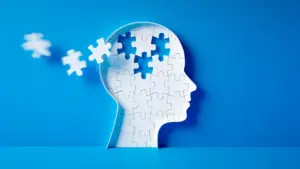






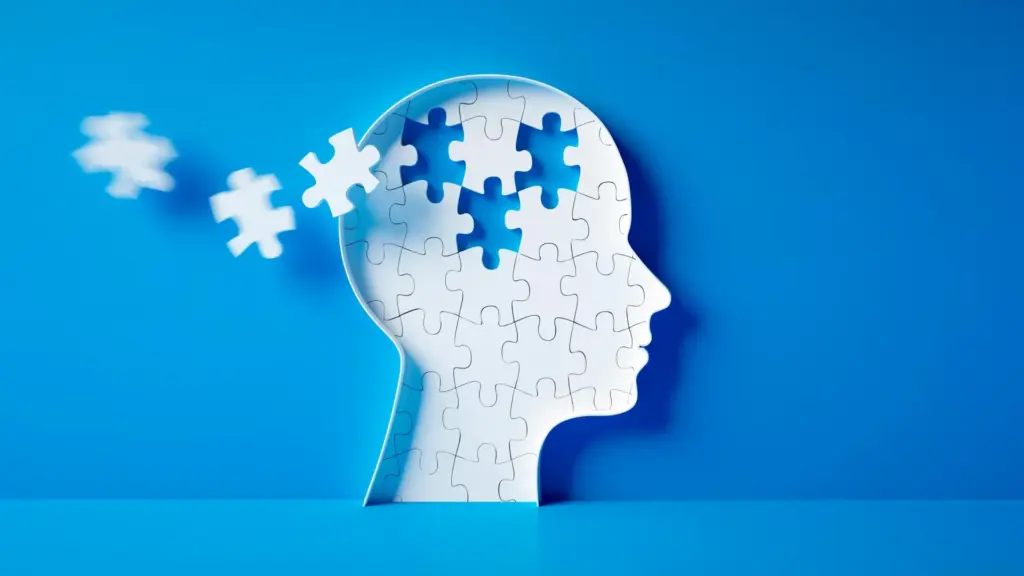
For generations, the narrative surrounding the aging brain has been one of inevitable erosion. As the years advance, we have been conditioned to expect a slow, steady decline in cognitive sharpness, characterized by forgotten names, misplaced keys, and a diminishing ability to absorb new information with the lightning speed of youth. However, a groundbreaking shift in scientific perspective is challenging this deficit-based model. Researchers at the University of Arizona are proposing that these changes may not represent a simple degradation of mental capacity, but rather a sophisticated, biological transition—a recalibration of the brain’s priorities to favor wisdom, pattern recognition, and the synthesis of a lifetime of experience over the rote memorization of minute details.
The study, published in Perspectives on Psychological Science, introduces what the researchers term the “adaptive aging hypothesis.” This framework posits that the aging brain is not merely “breaking down,” but is instead evolving to fulfill a different role in the human lifecycle. By drawing on extensive data from molecular biology and advanced brain imaging, the team suggests that the older brain is optimized for the transmission of expertise, social cohesion, and the extraction of meaning from the vast archive of memories built over a human lifespan.
A Natural Evolution of Priorities
“If we look at normative aging as a story of just decline, we are really missing the boat,” says Fabian-Xosé Fernandez, a coauthor of the study and an associate professor of cognition and neural systems at the University of Arizona. According to Fernandez, the older brain is not a dysfunctional version of its younger self; it is a specialized organ. While a young brain is built to act as a sponge, soaking up every granular detail of a new environment to establish a foundational understanding of the world, the older brain operates under a different set of directives. It is designed to prioritize the sharing of stored expertise, the deepening of social relationships, and the application of wisdom to complex, real-world problems.
This theory suggests that the brain undergoes a fundamental shift in how it processes information as a person transitions from early adulthood into their later years. By exploring the interplay between two critical brain regions—the hippocampus and the frontal cortex—researchers have begun to map exactly how this transformation occurs.
How the Brain Shifts From Memory to Meaning
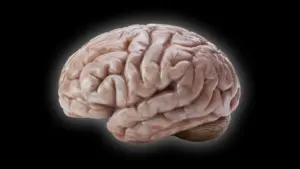
To understand this transition, one must look at the division of labor between the brain’s memory centers and its executive functions. The hippocampus, often synonymous with the formation of new memories, is essential for preserving the “nitty-gritty” details of life—the specific circumstances, the precise sequence of events, and the contextual minutiae of a single moment. It is the librarian of the brain, meticulously cataloging new data.
Conversely, the frontal cortex—the area associated with higher-order thinking, planning, and decision-making—is more concerned with the “gist” of an experience. It excels at pattern recognition, extracting broader meaning, and identifying the central message of a narrative. The adaptive aging hypothesis suggests that as individuals grow older, the brain naturally downregulates the reliance on the hippocampus and increases its reliance on the frontal cortex.
This shift is not a failure, but an optimization. As Fernandez notes, “One could argue you are developing your entire life, and development occurs in lockstep with the needs of your brain.” When an individual is young, they lack a knowledge base. They must absorb everything because they are still learning the rules of the world. By the time someone reaches their sixth or seventh decade, they possess a massive internal library. At this stage, the biological imperative shifts from gathering new data points to integrating those points into a coherent, meaningful whole. The brain stops trying to record every individual leaf and starts focusing on the shape of the forest.
Why Evolution May Favor Wisdom in Older Adults
The researchers believe this transition is likely driven by evolutionary forces. In early human history, the survival of the group relied heavily on the transfer of knowledge from the elders to the young. If an individual survived to old age, they became a living archive of survival strategies, social dynamics, and cultural wisdom. Evolution, therefore, may have favored a biological mechanism that preserves this information and facilitates its transmission through mentorship, storytelling, and guidance.
“Evolution may be saying that if you make it long enough, there’s a need to transmit this information, so we put into motion biological changes that enforce and protect your semantic and autobiographical memories,” Fernandez explains. By deemphasizing the retrieval of trivial details, the brain frees up metabolic and cognitive resources to focus on safeguarding the vast, accumulated “semantic memory”—the bank of concepts, words, and lessons learned over a lifetime. This enables older adults to act as stabilizers and mentors, providing the critical context that younger generations need to navigate their own experiences.
Why Healthy Brain Aging Is Different From Alzheimer’s
One of the most significant implications of the adaptive aging hypothesis is that it provides a clearer lens through which to distinguish between normal cognitive aging and neurodegenerative diseases like Alzheimer’s. For years, there was a tendency in clinical research to view Alzheimer’s as merely an accelerated or intensified version of typical aging. Fernandez and his colleagues argue that this is a fundamental misconception.
“When I was in grad school, people thought about Alzheimer’s as a more intense version of cognitive aging, but that is just not the case,” Fernandez says. “They are completely different.”
The biological distinction lies in the behavior of the brain regions involved. In healthy aging, the reduced emphasis on the hippocampus is a controlled, regulated process. In Alzheimer’s disease, however, this balance is destroyed by pathological processes, such as the accumulation of amyloid and tau proteins. Rather than the healthy, adaptive “de-emphasis” of the hippocampus seen in normal aging, Alzheimer’s often triggers a state of hippocampal hyperactivity. This dysfunction disrupts the neural circuits responsible for long-term memory and self-referential thought, effectively “scrambling” the brain’s ability to access its own history. Understanding this, researchers hope to move toward a more nuanced view of brain health that honors the natural, healthy progression of the aging mind while remaining vigilant against the pathologies that interrupt it.
Embracing the Hidden Strengths of the Aging Brain
The findings suggest that society must rethink its metrics for success in the later stages of life. When we test older adults using the same benchmarks applied to teenagers or young professionals—such as the speed of short-term memory retrieval or the ability to memorize lists of words—we are essentially measuring the brain against a yardstick that it has outgrown.
Fernandez argues that by forcing older adults to process information in a “hippocampal-centric” way, we may actually be working against the brain’s natural, adaptive trajectory. Instead, he advocates for an approach that values the strengths that emerge later in life: the ability to mentor, the capacity for deep empathy, the skill of synthesizing complex narratives, and the wisdom to apply knowledge to new social situations.
To unlock this potential, society could create more spaces for intergenerational interaction. By facilitating environments where older adults can share their expertise and younger people can seek guidance, we preserve knowledge that might otherwise be lost.
“People see older individuals and look at them as not being on par with younger individuals across a lot of metrics,” Fernandez observes. “The way I look at it is that you’ve got someone with a brain that has been active for several decades and has seen a lot. There is tremendous value there, and we don’t do a good job of unlocking it.”
The adaptive aging hypothesis paints a picture of a brain that is far more resilient and intentional than previously thought. As we age, we may lose the ability to capture every fleeting detail, but we gain the ability to see the bigger picture. In this light, the aging process is not a slow fade into irrelevance, but a deliberate transformation into a more refined, knowledge-centered existence. Recognizing these hidden strengths could redefine our approach to aging, moving the conversation from a focus on loss to a focus on the unique, essential contributions that only an older, experienced mind can provide.