








A significant milestone has been reached in the field of mental healthcare, as a novel, personalized approach to treating post-traumatic stress disorder (PTSD) has officially received FDA clearance. This new technology, developed by California-based Wave Neuroscience in close collaboration with researchers at the Texas A&M Health Institute of Biosciences and Technology, offers a beacon of hope for patients who have found little relief through traditional therapeutic pathways. By leveraging sophisticated brain activity measurements to guide targeted magnetic stimulation, the system represents a departure from the "one-size-fits-all" approach that has long dominated psychiatric care.
A Quantum Shift in Clinical Outcomes
The development of this technology comes at a time when the need for more effective PTSD interventions is critical. The prevalence of the disorder is substantial; an estimated 6% of the American population will experience PTSD at some point during their lifetime, with significantly higher rates observed among women and military veterans. The human cost of the condition is profound. In the United States, approximately 17.5 veterans die by suicide each day, and roughly 7% of the veteran population receives a formal PTSD diagnosis annually.
Early clinical trial findings for the new technology, known as Magnetic e-Resonance Therapy (MeRT), have been highly encouraging. According to data provided by Wave Neuroscience, patients participating in the trials experienced a 52% reduction in PTSD symptoms, with a remarkable 68% of participants achieving clinical remission. While the comprehensive findings are currently being prepared for full public release, researchers and medical professionals involved in the project believe this technology has the potential to fundamentally expand treatment options for millions of people worldwide.

Dr. Erik Won, the chief medical officer at Wave Neuroscience, describes the results as an inflection point for the field. Comparing the trial outcomes to existing literature on current standard-of-care medications, he highlighted the stark difference in efficacy. A 2020 review of PTSD pharmacotherapy indicated that patients typically reported improvements ranging only from 6.8 to 10.1 points on standardized symptom assessments, with remission rates peaking at approximately 10.9%.
"In comparison to that study, our FDA trial reported a 52% reduction in symptoms, so more than a four-fold increase in efficacy," Dr. Won said. "And more importantly, we saw 68% remission in our clinical trial. So, it’s really a quantum change, an inflection point in what we can offer to patients. From a clinical care perspective, that’s really meaningful." While these promising findings come from different cohorts and should not be interpreted as a direct head-to-head comparison, the scale of improvement is viewed by the research team as a significant clinical advancement.
The Mechanics of Precision Medicine
The MeRT system distinguishes itself through its unique ability to personalize treatment protocols using AI-assisted algorithms. Since PTSD was formally recognized as a diagnosis in 1980, treatment has largely remained confined to psychotherapy and the use of selective serotonin reuptake inhibitors (SSRIs), such as sertraline and fluoxetine. While these tools have provided a baseline for care, they frequently fail to address the underlying neurological manifestations of the disorder in a significant portion of the patient population.
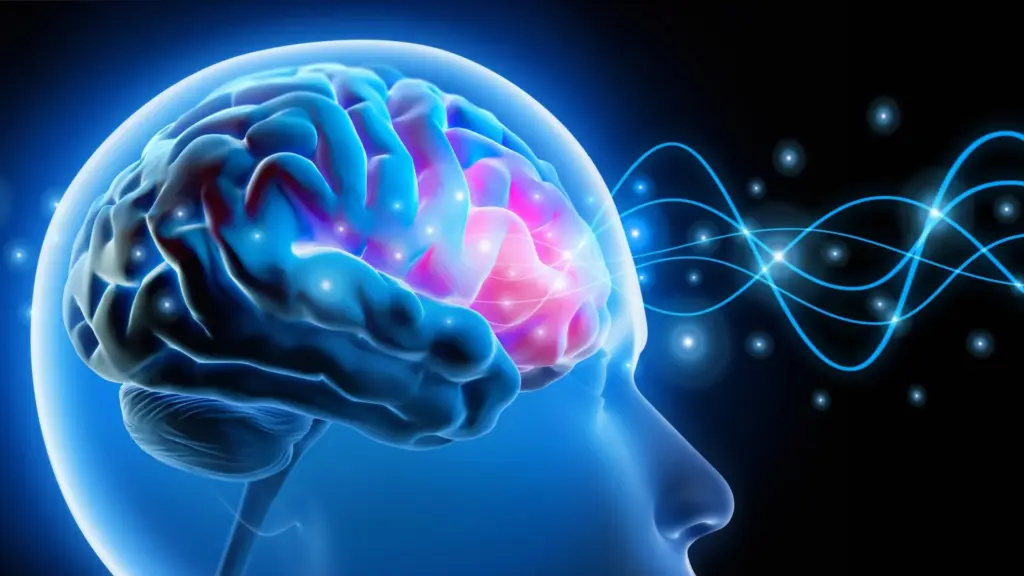
The MeRT process begins with an electroencephalogram (EEG) to record the patient’s specific electrical brain signals. This objective data is then processed through an AI-derived, multivariate algorithm to create a highly tailored treatment plan. This plan guides the application of transcranial magnetic stimulation (TMS), where a specialized coil placed against the scalp delivers precise magnetic pulses to stimulate specific areas of brain activity.
While TMS has previously received FDA clearance for treatment-resistant depression, the integration of individualized EEG mapping and AI-driven protocols is what sets the MeRT system apart. Dr. Kenneth S. Ramos, a physician-scientist at Texas A&M Health with deep expertise in precision medicine, served as a key architect in the research. Dr. Ramos has long advocated for adapting medical care to the distinct biological signatures of individual patients, moving away from the assumption that a standardized protocol will yield uniform results.
"Most clinical interventions for the treatment of PTSD do not work very well," Dr. Ramos noted. "So, this is a huge area where identifying interventions that could hopefully add quality of life to the people impacted by this disorder would be tremendously impactful."
To explain the difference between conventional TMS and the personalized approach of MeRT, Dr. Ramos offers a practical analogy: if traditional TMS is akin to placing a tarp over a leaking roof to manage the immediate water flow, MeRT acts as the identification and replacement of the specific damaged shingles causing the leak. By accounting for the 0.1% of genetic and biological variance that separates individuals, the researchers were able to tailor stimulation to the unique needs of each patient’s brain, leading to substantial reductions in symptom severity.
Accelerating the Path to Regulatory Clearance
The journey to FDA clearance for the MeRT system was marked by efficiency and interdisciplinary collaboration. In 2024, the technology received the FDA’s Breakthrough Device designation, a status intended to help promising medical technologies move through the regulatory review process more quickly without sacrificing the rigor of scientific evaluation.
Dr. Rick Silva, the executive director of clinical trials at the Texas A&M Health Institute of Biosciences and Technology, emphasized that the designation does not lower the bar for safety or efficacy, but rather streamlines administrative and communication hurdles. For a project that began during the height of the COVID-19 pandemic, the timeline was unusually swift. While medical device development and clinical evaluation typically span a decade, the Wave Neuroscience and Texas A&M team achieved clearance in just over two years.
"I’ve been involved in probably close to 1,000 projects in academic medical centers over the years at varying degrees of depth and detail," Dr. Silva said. "Patients are why I do what I do. It’s hard, and the failure rate is high, and it’s a lot of work. But when you get to a point where something is going to benefit patients, it’s very professionally gratifying and personally gratifying in many ways as well."
A New Frontier for Drug-Free Treatment
The clinical significance of this development is further underscored by the lack of non-pharmacological, FDA-cleared alternatives for PTSD. Dr. Israel Liberzon, a distinguished professor of psychiatry and behavioral sciences at the Texas A&M Naresh K. Vashisht College of Medicine, served as the study’s lead psychiatrist. He highlights that, until now, the only FDA-approved treatments for PTSD were medications, specifically SSRIs.
"It doesn’t mean that only two of them are used, but both are SSRIs," Dr. Liberzon explained. "This is the first time that in addition to the medication, we have a non-medication option. There is psychotherapy that people use for PTSD, but psychotherapies require a lot of effort. People must participate actively, and many drop out because it’s too anxiety-provoking. So now we have a unique alternative."
During the clinical trial, participants underwent five treatment sessions per week over a five-to-six-week period. Researchers observed that the improvements in patient well-being appeared to persist even after the active therapy sessions concluded, suggesting a durability of effect that is often elusive in traditional psychiatric treatment.
For the team at Wave Neuroscience and their partners at Texas A&M, the goal is to shift the paradigm of mental healthcare toward an objective, data-informed model. Dr. Leslie S. Prichep, chief scientific officer at Wave Neuroscience, noted that the clearance reflects decades of research into electrophysiological biomarkers. The company’s leadership hopes that by providing patients with objective imagery and measurable data regarding their brain function, they can also help reduce the social stigma surrounding mental illness. By treating the brain with the same diagnostic rigor as a broken bone, the hope is that patients will gain a clearer understanding of their condition, leading to better outcomes.
As the team looks toward the future, the primary focus is now on ensuring widespread access to the technology. Wave Neuroscience and Texas A&M Health are currently engaging with insurance providers and other stakeholders to make the therapy more affordable and accessible to the millions of Americans, including veterans, who could benefit from this innovation.
For Dr. Ramos and the Texas A&M faculty, the successful clearance of this technology is a testament to the institution’s long-standing commitment to serving the veteran community. "Texas A&M has a very rich history of military and veteran priorities," Dr. Ramos said. "It’s a no-brainer that Texas A&M faculty would be interested in and supportive of an initiative that hopefully would bring positive solutions to a big problem. And anything we could do to help alleviate that problem is going to go a long way towards making a difference in the individual’s life as well as the people who are close to them."