







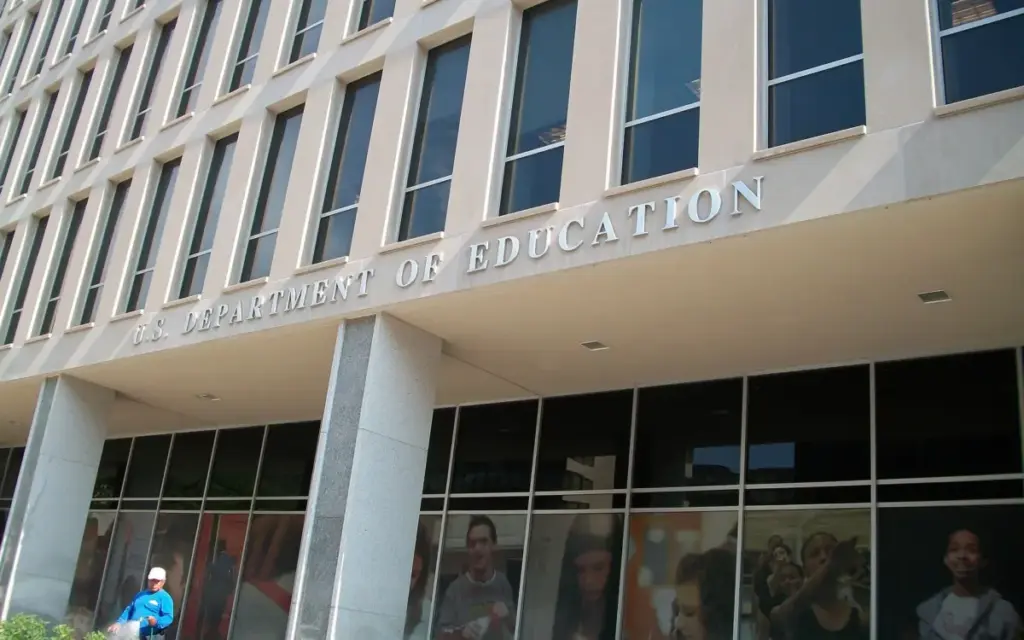
For months, education advocates, researchers, and disability rights organizations have harbored mounting concerns that the U.S. Department of Education could allow millions of dollars earmarked for specialized educational research to quietly lapse. Now, as the looming fiscal deadline approaches, a federal judge is stepping directly into the fray to demand accountability and transparency from the federal agency.
U.S. District Judge Allison D. Burroughs has formally ordered the Department of Education to provide her with a comprehensive status update by Monday detailing the current standing of the government’s critical education research funds. The judicial intervention comes in response to a lawsuit filed by stakeholders who grew increasingly alarmed by the sluggish pace of federal spending and the very real threat that vital resources would vanish back into the Treasury unspent.
According to figures cited by Judge Burroughs, approximately $180 million in funding for the Education Department’s Institute of Education Sciences—widely known as the IES, which serves as the primary federal agency responsible for education statistics, rigorous research, and comprehensive evaluation—remained entirely unallocated as of last week. With the federal fiscal year drawing to a close at the end of September, this substantial pool of money is set to expire if it is not legally obligated beforehand. While the exact portion of that $180 million specifically intended for special education remains obscured by a lack of public reporting, the broad uncertainty has sent shockwaves through the academic and advocacy communities.

The unfolding legal and administrative drama traces back to a startling report published earlier this spring, which warned that out of a $77 million government budget designated specifically for special education research and evaluation programs, a mere $11 million had actually been spoken for. The alarm raised by that report prompted a coalition of concerned groups, including the National Center for Learning Disabilities and the Massachusetts Teachers Association, to take legal action. They filed a lawsuit aimed at preventing the crucial funds from lapsing due to federal inaction or administrative delay.
In handling the litigation, Judge Burroughs noted that she initially opted to take a soft touch in the case. Her measured approach was based heavily on explicit assurances provided by the Education Department that agency officials genuinely intend to obligate the funds at issue before the strict statutory deadline arrives.
However, the federal judge made it clear that her patience is not infinite and that the agency’s promises are being closely monitored. She cautioned that if it appears, as September 30 rapidly approaches, that the defendants have misled the court and that the funds will not be properly obligated by the deadline, the court stands ready to reconsider whether there has been undue delay warranting formal injunctive relief.
Despite the agency’s formal assurances to the court, the actual operational status of the funding remains murky and difficult to pin down for outside observers. Meghan Burke, a professor of special education at Vanderbilt University, pointed out that so far this year, there have only been five awards issued from the National Center for Special Education Research, which operates as the dedicated special education funding arm of the IES. Notably, all of those grants only just began this month. According to Professor Burke, that volume of awards is markedly lower than what would be seen in a typical operational year, fueling ongoing anxiety among researchers who rely on federal grants to sustain their long-term studies.
Jacqueline Rodriguez, the chief executive officer of the National Center for Learning Disabilities, which is a key participant in the ongoing litigation, expressed a cautious outlook. While she believes that it remains realistic for the funds to be successfully released in light of the government’s explicit assurances to the federal bench, she acknowledged that advocates have been forced to operate with limited information.
"We don’t have a current number for exactly how much special education research funding remains unspent because the government has not publicly updated those figures," Rodriguez explained. Even so, she noted that recent requests for proposals have finally gone out from the agency, a development she believes was likely spurred directly by the pressure of the lawsuit.
Preventing the funding from expiring before the end of the fiscal year is not merely a bureaucratic checkbox; rather, Rodriguez emphasizes that it is a critical necessity for the wellbeing of vulnerable students nationwide.
"This funding supports research that gives us a much clearer picture of what students with disabilities are experiencing in schools and where they are not getting the support they need," Rodriguez said. "It also supports work that benefits students in general education, as well as technical assistance that helps families understand and participate in the special education process. If we don’t have that research and support, we’re making decisions without the information we need to know whether we’re actually serving students well."
When contacted for comment, the Department of Education did not respond to specific inquiries regarding how much special education research funding remains unallocated at this stage. However, a department spokesperson offered a general statement regarding the agency’s overarching plans for the fiscal year.
"IES intends to use its remaining FY25 funds to fully fund existing research grants, as well as to support other high-quality statistical and evaluation activities in service of its statutory obligations," a department spokesperson said.
The court order concerning education research funds arrives amidst a broader backdrop of legal friction and judicial scrutiny regarding the Department of Education’s financial management and grant distribution. Just recently, in a separate case brought forward by a coalition of states, a different federal judge ruled that the Education Department erred significantly in the manner in which it canceled hundreds of millions of dollars in federal grants designated for teacher training programs. Crucially, those canceled grants included vital funding intended to prepare educators to effectively work with students with disabilities.
The ruling on teacher training grants was widely hailed by education and advocacy groups as a much-needed correction. Stephanie Smith Lee, the co-director of policy and advocacy at the National Down Syndrome Congress—who previously served as the director of the Education Department’s Office of Special Education Programs under President George W. Bush—praised the legal outcome.
"The ruling is a victory for students, teachers and schools and common sense as our nation’s schools struggle with teacher training, hiring and retention," Smith Lee said.
Yet, despite that judicial victory, the legal battles are far from over. Another separate lawsuit brought by states concerning Individuals with Disabilities Education Act grants for specialized special education teacher training has yet to be decided by the courts, leaving educators and administrators waiting for further clarity on federal support structures. As the Monday deadline for the IES funding update approaches, education advocates and the federal judiciary remain watchful to ensure that millions in specialized research dollars ultimately reach the classrooms and students who depend on them.