







A groundbreaking new study from UCLA Health has unveiled a compelling connection between the microscopic world of the gut microbiome and the complex aging process of the human brain. The research suggests that the pace at which our brains age is not merely a product of genetics or environmental lifestyle factors, but may be deeply intertwined with the diverse communities of bacteria residing in our digestive systems and the chemical metabolites they produce. These findings offer a provocative new perspective on biological aging, suggesting that the neurological markers often associated with late-life decline may actually be detectable decades earlier than previously understood.
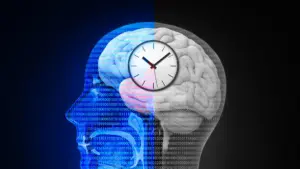
For years, neuroscientists have utilized advanced brain imaging techniques to estimate an individual’s "brain age"—a metric that frequently deviates from their chronological age. This clinical concept is vital because previous research has consistently demonstrated that when a person’s brain appears structurally or functionally "older" than their actual age, it serves as a reliable harbinger for poorer memory retention, diminished executive function, and a higher prevalence of mood disorders. Until now, however, the vast majority of studies focusing on brain age have concentrated on elderly populations or those already diagnosed with severe neurodegenerative conditions. This left a significant gap in our medical knowledge: it remained unclear whether the phenomenon of an "older-looking" brain holds clinical significance in younger, seemingly healthy adults who are yet to manifest overt symptoms of cognitive impairment.
Measuring the Biological Clock of the Brain
In a study published in the journal eBioMedicine, researchers at UCLA Health set out to address this gap by examining brain scans from nearly 1,500 adult participants, carefully divided into three distinct groups. The team employed a sophisticated scanning approach designed to measure "functional connectivity"—the way different, often distant regions of the brain communicate and synchronize with one another while the subject is at rest. By analyzing these complex networks of activity, the researchers developed a computer model capable of estimating a person’s biological brain age based on these intricate communication patterns.

The methodology was designed to move beyond traditional diagnostics. By comparing the computer-generated estimate of brain age with the participant’s actual chronological age, the researchers derived what they termed the "Brain Aging Index" (BAI). This index serves as a quantitative measure of how much a person’s brain has diverged from the expected developmental trajectory. By standardizing this index across a large cohort, the team was able to create a nuanced dataset that accounts for individual variations in brain architecture and function, providing a clearer picture of the neurological aging process than a single static scan ever could.
The Correlation Between Brain Aging, Memory, and Mood
The results of the study were striking in their consistency across all three groups. Participants who exhibited a higher Brain Aging Index—meaning their brains appeared older than their actual chronological age—consistently performed worse on standardized cognitive assessments. Specifically, these individuals struggled with tasks related to working memory and executive function. These are the critical cognitive abilities that allow humans to hold information in the mind, maintain focus, plan for the future, and organize complex tasks in daily life.
Beyond cognitive performance, the study also uncovered a significant link between the Brain Aging Index and psychological health. Individuals with a higher BAI reported higher levels of depression and related symptoms. Notably, the patterns of "accelerated" brain aging were not scattered randomly across the organ; they were repeatedly localized in brain regions specifically associated with memory and self-referential thought—the mental processes that define how individuals perceive themselves and interpret their own personal experiences. This suggests that the impact of early-stage brain aging is not merely abstract or academic, but manifests in the very functions that define an individual’s quality of life and emotional stability.
The Gut-Brain Connection: A New Frontier
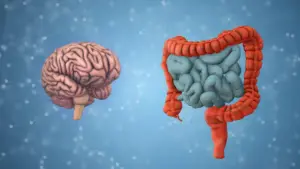
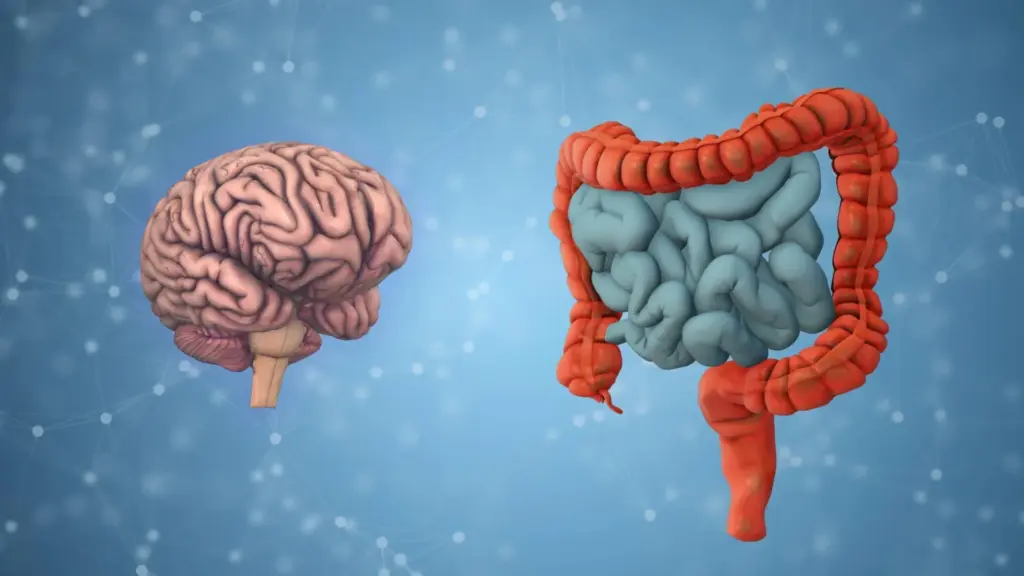
Perhaps the most innovative aspect of the UCLA research is its foray into the gut-brain axis. For one of the study groups, researchers went beyond brain scans to collect and analyze stool samples, aiming to determine if the identified differences in brain aging were biologically correlated with the composition of the gut microbiome. The results provided a compelling "smoking gun." A higher Brain Aging Index was clearly associated with the presence of specific strains of gut bacteria and the concentration of various metabolic byproducts.
Among the markers identified were certain fat molecules, a cholesterol-related compound, and notably lower levels of a hormone known as estetrol. These metabolites are not merely passive byproducts; they act as messengers within the body’s complex signaling pathways. The research team noted that these specific biological signals appear to interact with the immune system, modulate blood vessel function, influence communication between neurons, and regulate the intricate processes by which brain cells produce energy. This evidence bolsters the hypothesis that the gut is not just a digestive organ but a critical regulator of systemic health, including the longevity and vitality of the brain.
Early Detection and Future Interventions
The implications of these findings are profound, particularly regarding the window of opportunity for medical intervention. If brain aging is a process that begins far earlier than the onset of clinical symptoms, the potential for preventative care increases exponentially.
"Brain aging doesn’t suddenly begin when we get older, but the biological signals may be detectable decades earlier," explained Dr. Arpana Church, the study’s senior author and co-director of the Goodman-Luskin Microbiome Center at UCLA Health. "By linking these early brain changes with the gut microbiome and its metabolites, we are beginning to identify pathways that could ultimately help us understand who may be at risk and, importantly, where we might intervene to support healthier brain aging. This ultimately opens the door to exploring whether targeting gut health could one day support healthier brain aging."
Dr. Church emphasized that while the research is still in its developmental stages, the findings provide a roadmap for future clinical strategies. By identifying individuals who show early signs of an elevated Brain Aging Index, physicians might eventually be able to offer targeted interventions long before cognitive decline becomes irreversible. These strategies could range from dietary changes and probiotic supplementation to more advanced medical therapies aimed at optimizing the gut microbiome.
As the medical community continues to explore the gut-brain axis, this study serves as a critical bridge between two previously disparate fields of study. By demonstrating that the microscopic inhabitants of our digestive tract may dictate the health of our central nervous system, the UCLA researchers have opened a new chapter in the fight against cognitive decline. The hope, according to the research team, is that these insights will move the needle from reactive treatment of late-stage neurological conditions toward a more proactive, preventative approach to brain health that begins, quite literally, from the inside out. As research progresses, the possibility of managing gut health to preserve cognitive function remains one of the most promising frontiers in modern neurology.