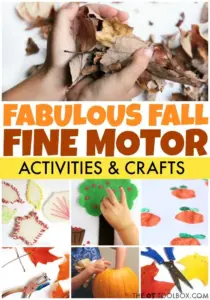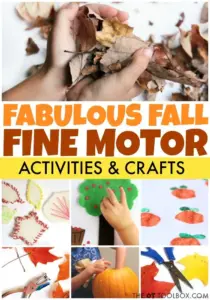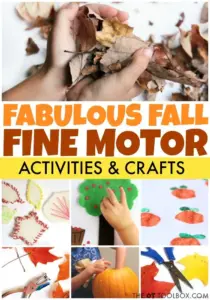








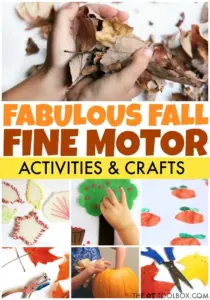
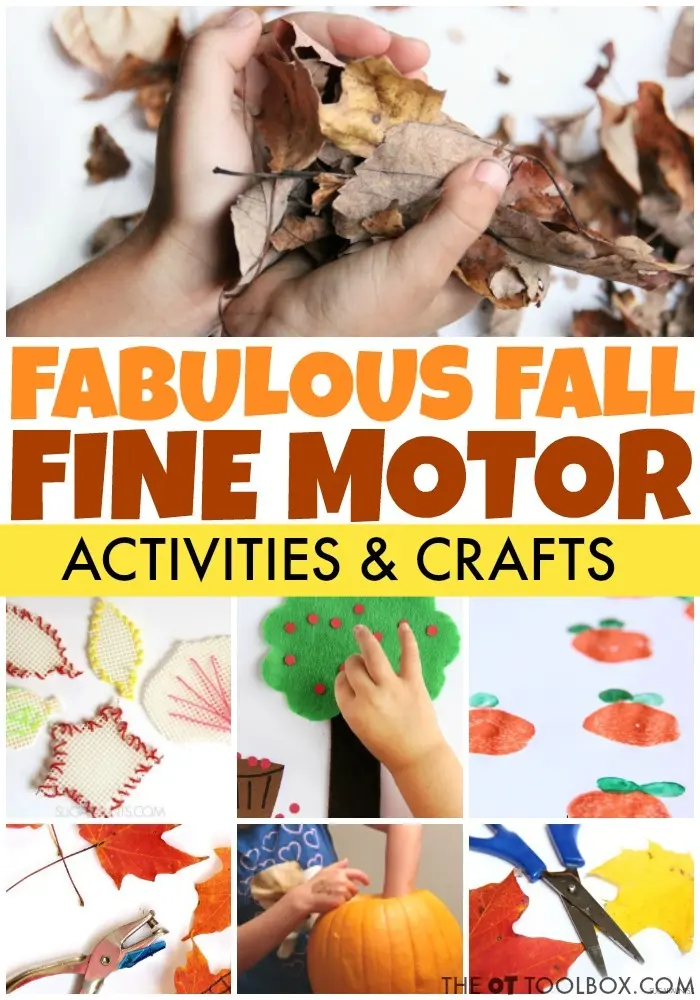
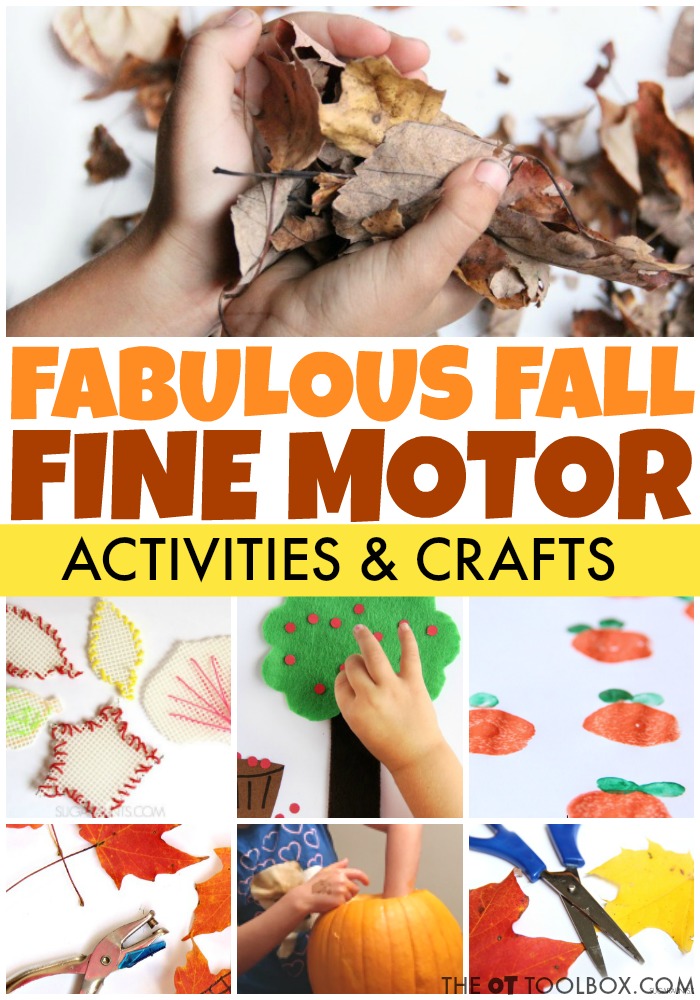
As the autumn season brings changing foliage, cooler temperatures, and a shift toward indoor learning environments, pediatric occupational therapists, educators, and parents are increasingly turning to seasonal themes to support early childhood development. Rather than selecting autumn activities merely for their festive appeal, specialists are leveraging familiar seasonal materials—such as apples, leaves, pumpkins, acorns, and farm elements—to target foundational motor competencies, hand strength, and visual-motor integration in young learners.
The transition into autumn offers a natural array of tactile and visual stimuli that can be integrated into developmental programs, play environments, and clinical therapy settings. Experts note that while seasonal crafts and sensory bins are popular, their true value lies in their ability to address specific fine motor needs, including hand strength, finger dexterity, scissor mechanics, visual-motor skills, and handwriting development. Many of these activities are designed to target multiple developmental domains simultaneously, allowing practitioners to adapt exercises to individual developmental stages.
Targeting Hand Strength Through Seasonal Manipulatives
Hand strength is a critical prerequisite for everyday tasks such as writing, using utensils, and managing clothing fasteners. Clinical specialists often utilize resistive materials to build endurance and strength in the intrinsic muscles of the hand.
Among the resources implemented in therapy programs is the apple geoboard, where children stretch rubber bands across pegs to recreate specific fruit designs. This task introduces controlled resistance to the fingers and hands while requiring precision and a controlled release, thereby supporting hand and finger strength, bilateral coordination, visual-motor integration, and motor planning. Practitioners can easily modify the challenge by adjusting the thickness and resistance of the bands or by simplifying visual templates for children who find the spatial demands too demanding.
Play dough remains a cornerstone of pediatric occupational therapy throughout the year, but autumn themes introduce new contexts for its use. Rolling, squeezing, pinching, and pressing autumn-colored dough provides varied resistance for small hand muscles, functioning as an engaging tool for grip and finger strengthening exercises. The malleable medium also delivers tactile sensory input and proprioceptive feedback. Therapists frequently incorporate hidden elements, such as miniature leaves, plastic acorns, or seasonal beads, into the dough, or pair the material with printable template cards to encourage children to shape specific autumn objects while stabilizing their wrists and developing hand arches.
Hole-punching activities represent another effective approach to building hand and gross grasp strength. By operating a handheld hole punch around the edges of a printed apple or leaf outline, children exert sustained hand force while concurrently engaging visual-motor tracking to follow a designated path. The resulting paper confetti can subsequently be incorporated into secondary fine motor tasks, such as gluing items along a pre-drawn line to reinforce eye-hand coordination.
Enhancing Manual Dexterity and Precision
Manual dexterity involves the efficient coordination of the fingers to execute small, precise movements. This complex domain relies on a combination of speed, precision, visual-motor integration, and adequate muscle strength. When dexterity breaks down, children often struggle with manipulative tasks that require refined finger movements.
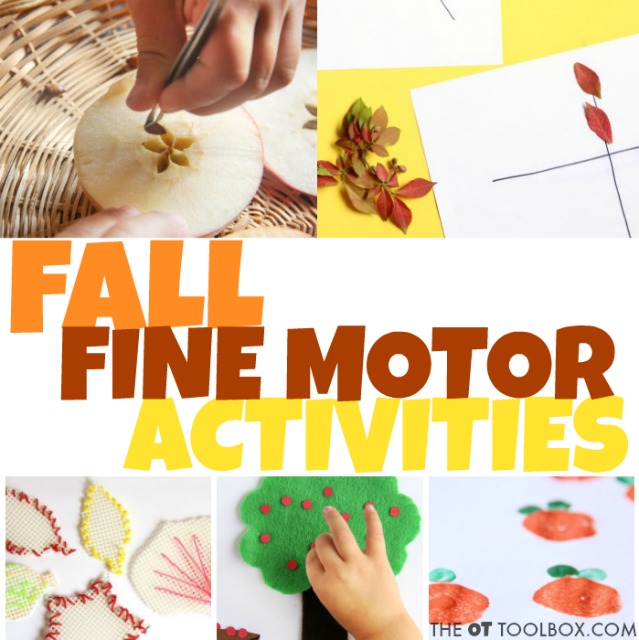
Seasonal items such as craft pom-poms, seeds, mini erasers, and paper clips frequently serve as tools to foster manual dexterity. For example, geoboard activities featuring autumn tree designs require children to use their fingertips rather than their whole hands to grasp, stretch, reposition, and release rubber bands with control.
Similarly, paper clip counting exercises—often utilizing laminated apple-themed cards—require precise fingertip movements and bilateral hand integration, as one hand stabilizes the card while the other attaches the clips. Craft pom-poms transferred via tongs or tweezers into ice cube trays or muffin tins offer another adaptable method for refining grasp precision, with practitioners modifying the difficulty by altering tool resistance or object sizes.
Scissor Mechanics and Cut-and-Paste Craft Integration
Scissor skills require the coordinated use of both hands performing distinctly different actions: the dominant hand opens and closes the scissors while the non-dominant helper hand stabilizes, turns, and guides the paper.
Autumn-themed cutting practice pages provide structured paths for children to follow, allowing therapists to evaluate cutting mechanics, paper rotation skills, and line awareness. Beyond traditional paper templates, children in regions with seasonal foliage can practice their cutting skills directly on real leaves, snipping them into small pieces or cutting along outlines. For areas without natural autumn foliage, paper leaves serve as an accessible alternative.
Cut-and-paste crafts introduce an additional layer of complexity by engaging executive functioning skills, directional compliance, and spatial planning. After cutting out various components, a child must visually determine where each piece belongs, correctly orient it, follow a multi-step assembly sequence, and apply adhesive precisely. These multi-step projects concurrently develop scissor mechanics, bilateral coordination, visual-spatial awareness, and sequencing abilities.
Integrating Visual-Motor and Handwriting Competencies
Visual-motor integration bridges visual perception and motor output. Children may possess adequate hand strength and dexterity yet still experience difficulty when a task requires them to copy a design, follow a line, locate a target, or coordinate visual input with hand movement.
Fall-themed directed drawing exercises require children to observe a visual model of an acorn, leaf, or pumpkin, plan where each stroke begins and ends, and reproduce the spatial relationships on paper. Pattern blocks combine fine motor manipulation with visual discrimination and spatial awareness, as children select, orient, and position geometric pieces to match a template. Furthermore, Seek-and-Find or I Spy worksheets encourage visual scanning, figure-ground perception, and sustained visual attention, particularly when paired with a fine motor response such as circling items, covering them with small manipulatives, or attaching clothespins to corresponding pictures.
Handwriting development is similarly supported through contextual writing tasks rather than isolated drill practice. Printable autumn writing prompts accommodate varied developmental levels within a single group or caseload. Emerging writers may focus on forming a single seasonal vocabulary word, beginning writers construct a simple sentence, developing writers respond to a short thematic prompt, and older students plan and draft complete paragraphs, allowing educators to target specific components such as line awareness, spacing, letter size, and writing endurance.
No-Prep Natural Materials and Resource Availability
Many effective fine motor interventions rely on readily available natural objects and household items. Fallen leaves can be torn, crumpled, punched, cut, sorted, or strung; acorns can be collected, counted, and transferred with tongs; and bread ties can be manipulated to strengthen small hand muscles.
As therapists and educators plan their seasonal programming, structured professional networks and membership platforms continue to provide curated, ready-to-use resources targeting fine motor skills, hand strength, scissor proficiency, visual-motor integration, handwriting, executive functioning, and sensory processing. By anchoring developmental interventions in familiar autumn experiences, professionals aim to support the foundational motor skills children require for everyday academic and self-care tasks.