





BREAKING NEWS
Applied Behavior Analysis New Research Suggests the Brain’s Survival Mechanism May Blur the Lines Between Safety and Danger 6 hours ago Child Development New Research Debunks Myths About Reading Struggles, Pointing to Auditory and Knowledge-Based Skills 7 hours ago Occupational Therapy Global Community Prepares to Honor World Occupational Therapy Day 2026 7 hours ago Speech and Language Therapy Speech and Language Kids Announces Expansion of Structured Curriculum to Transform SLP Workflow 7 hours ago Mental Health and Psychology The Paradox of Affection: Questioning the Cultural Normalization of Dog Ownership 7 hours ago Pediatric Healthcare The Dual Challenge: Navigating the Pandemic and the Global Infodemic 7 hours ago Assistive Technology Higher Education Faces a Pivotal Choice as AI Threatens to Codify Exclusion for Students with Disabilities 7 hours ago Sensory Processing Empowering Children Through Emotional Regulation: The Impact of "Size of the Problem" Strategies 7 hours ago Applied Behavior Analysis New Research Suggests the Brain’s Survival Mechanism May Blur the Lines Between Safety and Danger 6 hours ago Child Development New Research Debunks Myths About Reading Struggles, Pointing to Auditory and Knowledge-Based Skills 7 hours ago Occupational Therapy Global Community Prepares to Honor World Occupational Therapy Day 2026 7 hours ago Speech and Language Therapy Speech and Language Kids Announces Expansion of Structured Curriculum to Transform SLP Workflow 7 hours ago Mental Health and Psychology The Paradox of Affection: Questioning the Cultural Normalization of Dog Ownership 7 hours ago Pediatric Healthcare The Dual Challenge: Navigating the Pandemic and the Global Infodemic 7 hours ago Assistive Technology Higher Education Faces a Pivotal Choice as AI Threatens to Codify Exclusion for Students with Disabilities 7 hours ago Sensory Processing Empowering Children Through Emotional Regulation: The Impact of "Size of the Problem" Strategies 7 hours ago
Stories
New Research Suggests the Brain’s Survival Mechanism May Blur the Lines Between Safety and Danger
New Research Debunks Myths About Reading Struggles, Pointing to Auditory and Knowledge-Based Skills
Global Community Prepares to Honor World Occupational Therapy Day 2026
Speech and Language Kids Announces Expansion of Structured Curriculum to Transform SLP Workflow
The Paradox of Affection: Questioning the Cultural Normalization of Dog Ownership
The Dual Challenge: Navigating the Pandemic and the Global Infodemic
Higher Education Faces a Pivotal Choice as AI Threatens to Codify Exclusion for Students with Disabilities
Empowering Children Through Emotional Regulation: The Impact of "Size of the Problem" Strategies
New Comprehensive Voting Guide Empowers Voters with Disabilities Ahead of Midterm Elections
Finding Your Voice Through Resistance: How Intentional Living Navigates Uncertainty, Grief, and Growth

Tag: brain

267 posts

Standard

Beyond the Mono-Cult: How Neurodiversity Activists and Systems Thinkers Are Reimagining Biology, Culture, and Human Distress

Many scientists fail to acknowledge the extent to which their disciplinary paradigms remain deeply influenced by the cultural frames of the colonial era. According to neurodiversity and disability activists, the modern mental health crisis is not merely a biological failure, but a symptom of a terminally diseased institutional landscape. As global industrial societies grapple with…

Read more
Standard

Rethinking Tribalism: How Modern Psychology Misunderstands Human-Scale Collaboration

In our contemporary world, the concept of tribalism is overwhelmingly burdened with negative connotations. It is frequently treated as a synonym for tribal bias—an inherently undesirable psychological trait that distorts objective reality. However, a deeper and more rigorous analysis reveals that this modern antipathy toward tribalism is the product of superficial research combined with a…

Read more
Standard

Dual Origins: Stanford Researchers Discover the Brain Is Built from Two Distinct Evolutionary Systems

For decades, the central dogma of developmental neurobiology has held that the human brain is a monolithic entity—a single, unified organ arising from a common pool of progenitor cells. Under this established model, the forebrain, midbrain, and hindbrain were thought to trace their lineage back to the same developmental starting point, evolving in tandem as…

Read more
Standard

Beyond Competition: How Human-Scale Collaboration and Mutual Aid Offer a Path Forward for Society

The human capacity for language fundamentally serves to improve understanding and trust, fostering collaboration instead of competition. This core anthropological insight directly contradicts capitalist interpretations of evolution and supports the broader notion of human collaboration as our species’ true survival mechanism. Yet, modern society’s hierarchical structures and conventional wealth creation methods continue to perpetuate widespread…

Read more
Standard

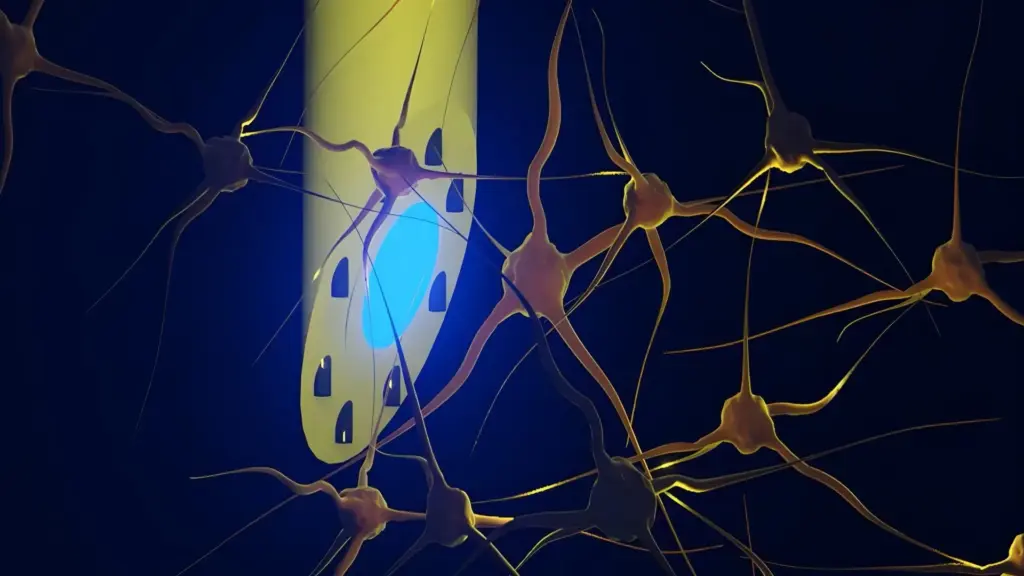
New Microfluidic "Axialtrode" Implant Offers Breakthrough in Precise Brain Mapping and Therapy

A revolutionary leap in neurotechnology has emerged from an international collaboration between the Technical University of Denmark (DTU), the University of Copenhagen, and University College London. Researchers have successfully developed a cutting-edge, needle-thin brain implant capable of unprecedented multi-modal interaction with neural tissue. Known as the microfluidic Axialtrode (mAxialtrode), this device promises to transform how…

Read more
Standard

New Alzheimer’s Research Reveals How APOE4 Genetic Risk Alters Brain Function Early in Life

For millions of people worldwide, the APOE4 gene variant represents the most significant genetic risk factor for the development of Alzheimer’s disease. While the correlation between this gene and the eventual onset of dementia has been well-documented for decades, the precise mechanisms of how it initiates the long-term decline of cognitive health have remained shrouded…

Read more
Standard

Scientists Uncover the Biological "Scar" of Childhood Trauma in the Brain

Severe stress experienced during childhood acts as a silent architect of the human brain, fundamentally altering its blueprint and increasing a person’s lifelong vulnerability to anxiety, depression, and other mood disorders. For decades, clinicians and researchers have observed the correlation between early-life adversity and later mental health struggles, yet the precise biological mechanism behind this…

Read more
Standard

Living Life in "Hard Mode": The Fight for Autistic Culture, Rights-Centric Education, and the Blind Spots of Modern Policy

In the current edition of the Aotearoa New Zealand Autism Guideline, the existence of Autistic culture is not mentioned with a single word. Despite major updates that reflect a growing awareness of neurodiversity—including ongoing advocacy toward a comprehensive ban on Applied Behaviour Analysis (ABA) and related forms of conversion therapy—understanding Autistic people and Autistic culture…

Read more
Standard

Beyond the ‘Sandwich Model’: New Research Challenges How We Think About Brain Decision-Making

For decades, the standard narrative regarding the human brain has been one of sequential efficiency: we perceive the world, we deliberate on that information, and finally, we execute an action. It is a model that feels intuitively correct, mirroring our personal experience of weighing desires, beliefs, and intentions before choosing a path. However, according to…

Read more