






BREAKING NEWS
Applied Behavior Analysis Chronic Back Pain Becomes Part of the Self: New Brain Research Reveals Why Traditional Treatments Fail 32 minutes ago Child Development The Consciousness Gap: Why Humans Refuse to Grant AI a Mind, Even When It Acts Like Us 33 minutes ago Speech and Language Therapy Decoding Communication: A Strategic Approach to Supporting Children and Teens in Mastering Question Skills 36 minutes ago Mental Health and Psychology The Empathy Paradox: Assessing the Psychological Impact of AI in Human Emotional Support 37 minutes ago Neurodiversity Living in "Hard Mode": The Omission of Autistic Culture and the Push for Rights-Centric Education 45 minutes ago Behavioral Health The Burden of the "Identified Patient": How Family Systems Scapegoat Sensitive Children 46 minutes ago Inclusive Education How a Rare Gene Mutation Connected One Boy’s Autism to Parkinson’s Disease Research 47 minutes ago Pediatric Research WHO Chief Praises Spain’s Decisive Action and Resilience in Turning the Tide Against COVID-19 48 minutes ago Applied Behavior Analysis Chronic Back Pain Becomes Part of the Self: New Brain Research Reveals Why Traditional Treatments Fail 32 minutes ago Child Development The Consciousness Gap: Why Humans Refuse to Grant AI a Mind, Even When It Acts Like Us 33 minutes ago Speech and Language Therapy Decoding Communication: A Strategic Approach to Supporting Children and Teens in Mastering Question Skills 36 minutes ago Mental Health and Psychology The Empathy Paradox: Assessing the Psychological Impact of AI in Human Emotional Support 37 minutes ago Neurodiversity Living in "Hard Mode": The Omission of Autistic Culture and the Push for Rights-Centric Education 45 minutes ago Behavioral Health The Burden of the "Identified Patient": How Family Systems Scapegoat Sensitive Children 46 minutes ago Inclusive Education How a Rare Gene Mutation Connected One Boy’s Autism to Parkinson’s Disease Research 47 minutes ago Pediatric Research WHO Chief Praises Spain’s Decisive Action and Resilience in Turning the Tide Against COVID-19 48 minutes ago
Stories
Chronic Back Pain Becomes Part of the Self: New Brain Research Reveals Why Traditional Treatments Fail
The Consciousness Gap: Why Humans Refuse to Grant AI a Mind, Even When It Acts Like Us
Decoding Communication: A Strategic Approach to Supporting Children and Teens in Mastering Question Skills
The Empathy Paradox: Assessing the Psychological Impact of AI in Human Emotional Support
Living in "Hard Mode": The Omission of Autistic Culture and the Push for Rights-Centric Education
The Burden of the "Identified Patient": How Family Systems Scapegoat Sensitive Children
How a Rare Gene Mutation Connected One Boy’s Autism to Parkinson’s Disease Research
WHO Chief Praises Spain’s Decisive Action and Resilience in Turning the Tide Against COVID-19
Breakthrough Brain Analysis Links Amyloid Clearance to Reduced Tau and Delayed Alzheimer’s Progression
Common Brain Signal Disruption May Unify Diverse Symptoms of Schizophrenia

Tag: intervention

159 posts

Standard

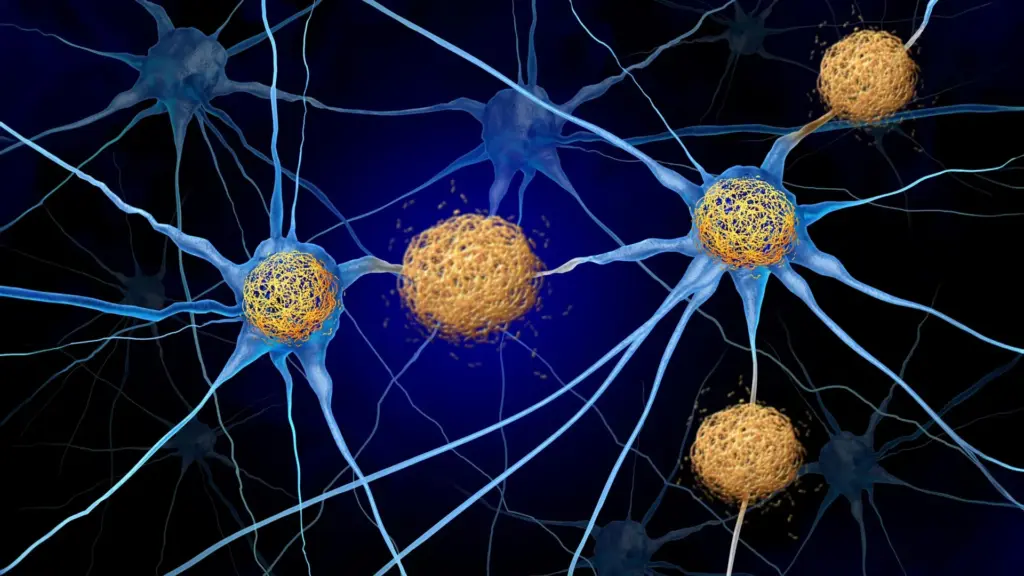
Genetic "Shield" Against Alzheimer’s: Researchers Uncover Mechanism Protecting the Brain’s Blood Vessels

For decades, the medical community has grappled with a confounding mystery: why do some individuals, despite carrying the strongest known genetic risk factor for Alzheimer’s disease, remain cognitively vibrant well into their eighties and nineties? While the presence of the APOE ε4 gene variant significantly elevates an individual’s susceptibility to the neurodegenerative condition, it does…
Read more
Standard

New Research Points to Immune System Intervention as a Potential Strategy Against Alzheimer’s Neurodegeneration

Protecting brain cells from destruction remains one of the most formidable hurdles in the global effort to treat Alzheimer’s disease and a spectrum of related neurodegenerative conditions collectively known as tauopathies. These disorders are characterized by the accumulation of abnormal tangles of a protein called tau within the brain’s architecture. As these tangles proliferate, nearby…

Read more
Standard

Deciphering the Blueprint: Why Marmoset Brains Lack the Folds of Human Complexity

Most primates are characterized by their expansive, highly complex brains, often described as possessing a surface marked by a dense topography of folds and grooves. This intricate architecture, known as gyrencephaly, is a hallmark of primate evolution, allowing for the massive expansion of the cerebral cortex—the seat of higher cognitive function—within the confines of the…

Read more
Standard

Rethinking the Brain’s Command Center: New Study Reveals the Locus Coeruleus as a Precise Signaling Network

Deep within the brainstem lies a minuscule cluster of nerve cells that wields an influence far exceeding its modest size. Known as the locus coeruleus (LC)—a name derived from the Latin for "blue place" due to its distinct pigmentation—this region has long been viewed by neuroscientists as the brain’s primary broadcast station. Despite containing only…

Read more
Standard

Beyond the "Foghorn": New Research Reveals Precision Signaling in the Brain’s Stress-Response Hub

Deep within the human brainstem lies a tiny, unassuming cluster of neurons known as the locus coeruleus (LC). Its name, derived from the Latin for "blue place," belies the immense power it wields over our cognitive and physical lives. Despite accounting for only a minuscule fraction of the brain’s billions of neurons, the LC serves…

Read more
Standard

New Research Identifies Immune Pathway to Halt Alzheimer’s Brain Cell Loss

Protecting brain cells from the devastating effects of neurodegeneration remains the "holy grail" of modern medicine. For decades, the primary focus of Alzheimer’s disease research has been the removal of abnormal protein aggregates—specifically amyloid plaques and tau tangles—that accumulate in the brains of patients. However, a groundbreaking study from the Washington University School of Medicine…

Read more
Standard

Decoding the Smooth Brain: Scientists Uncover Cellular Mechanisms Behind Primate Brain Evolution

Most primates are characterized by their expansive, complex brains, which are typically defined by a surface topography of intricate folds and grooves. This architectural complexity is often cited as the biological foundation for the sophisticated cognitive abilities observed across the primate order. However, the common marmoset (Callithrix jacchus) stands out as a striking evolutionary anomaly.…

Read more