





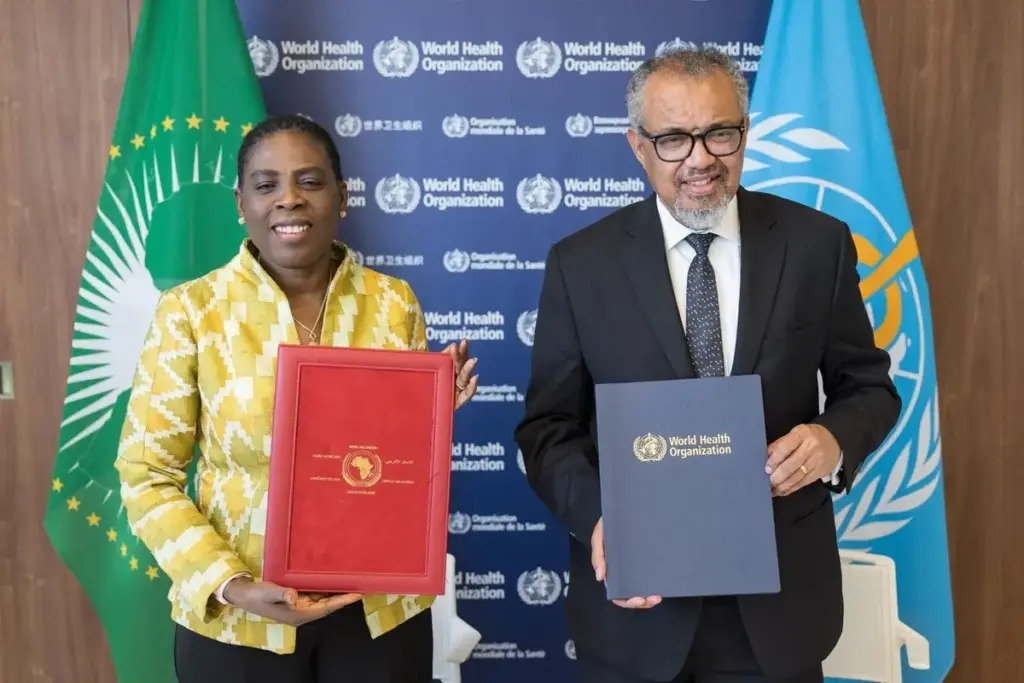
GENEVA — In a definitive move aimed at reshaping the future of healthcare across the African continent, the World Health Organization (WHO) and the African Union (AU) Commission have formally renewed their longstanding strategic partnership. Against the backdrop of the 78th World Health Assembly in Geneva, leaders from both international bodies gathered to sign an updated Memorandum of Understanding (MoU), cementing a shared commitment to advancing health security, universal health coverage, and sustainable development.
The newly minted agreement arrives at a critical juncture for the global health landscape, characterized by unprecedented financial challenges and shifting international priorities. By reinforcing institutional ties, the renewed partnership underscores the African Union’s growing leadership in fostering collective action, inclusive regional partnerships, and systemic resilience. Furthermore, the framework positions the Department of Health, Humanitarian Affairs, and Social Development of the AU Commission directly at the center of the continent’s ambitious health policy implementation efforts.
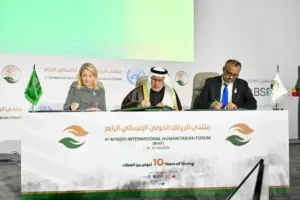
The high-level signing ceremony featured key leaders from both organizations. The agreement was officially executed by Her Excellency Ambassador Amma Adomaa Twum-Amoah, Commissioner for Health, Humanitarian Affairs and Social Development, who signed on behalf of His Excellency Mahmoud Ali Youssouf, Chairperson of the African Union Commission. They were joined by Dr. Tedros Adhanom Ghebreyesus, Director-General of the World Health Organization. Together, the signatories marked a defining moment for primary healthcare delivery and universal health coverage across member states, signaling a united front against persistent and emerging health threats.
Addressing attendees following the signing, Commissioner Twum-Amoah elaborated on the profound strategic importance of the renewed pact and highlighted the vital role the African Union continues to play in shaping the continent’s broader health landscape. She noted that the agreement heralds a completely new chapter in cooperation between the two continental and global institutions.
"This Agreement marks a new chapter in AU–WHO cooperation," Commissioner Twum-Amoah stated during her remarks. "By working together more closely, we can better respond to the health needs of our populations and ensure that no one is left behind. The African Union values WHO’s central and leading role in global health and looks forward to deepening this strategic partnership in support of our shared goals."
Emphasizing the urgency of structural financial and developmental reform, she added a compelling call to action for regional leaders and international stakeholders alike: "We need to move from budgeting for survival to planning for health sovereignty."
Building solidly upon the foundational framework established by the preceding 2019 Memorandum of Understanding, the updated agreement significantly streamlines and strengthens collaborative efforts across all official African Union entities. It purposefully aligns institutional initiatives in full support of Africa’s articulated health priorities, effectively setting the stage for a heightened level of seamless cooperation between the WHO and the AU. Additionally, the document explicitly reaffirms the WHO’s central technical and normative leadership role in both global and regional health architecture, alongside its steadfast commitment to supporting the AU and its specialized institutions in achieving the health-related Sustainable Development Goals.
The timing of this renewed agreement is widely regarded as profoundly significant by international observers and public health experts alike. It reflects the African Union’s increasingly elevated voice and influential position in global health governance—a diplomatic and structural shift notably bolstered by the AU’s historic inclusion as a permanent member of the G20. At the same time, the MoU highlights the WHO’s ongoing, indispensable role as a trusted technical and operational partner to governments across the developing world.
Dr. Tedros Adhanom Ghebreyesus echoed these sentiments, stressing that the collaboration is designed to meet the immediate, pressing realities faced by millions of vulnerable individuals across Africa. He pointed directly to the growing pressures exerted by international financial realignments and diminishing developmental budgets.
"This renewed agreement comes at a critical time, as cuts to bilateral aid imperil the health of millions in Africa," Dr. Tedros warned. "It reflects our determination to translate our partnership into tangible results for the people of Africa, and support countries to leave behind the era of aid dependency and transition to sustainable self-reliance. We are proud to stand with the African Union in driving forward the health priorities of the continent."
The comprehensive Memorandum outlines targeted areas of collaborative focus designed to address systemic vulnerabilities, enhance epidemiological surveillance, strengthen regulatory frameworks for local manufacturing of medicines and vaccines, and reinforce health systems from the community level upward. This strategic alignment aims to empower national governments to take full ownership of their public health outcomes.
Ultimately, the renewed MoU injects vital new momentum into regional and multilateral cooperation frameworks. By uniting administrative expertise, technical rigor, and high-level political will, the WHO and the AU Commission aim to effectively tackle Africa’s most pressing health challenges, ensuring that policy commitments translate into meaningful, lasting, and equitable results for communities across the entire continent.
For further information regarding the implementation of the renewed Memorandum of Understanding, inquiries may be directed to Professor Julio Rakotonirina, Director of the Department of Health, Humanitarian Affairs and Social Development at the African Union Commission via email at [email protected], or to Ms. Stéphanie Seydoux, Director and DG Envoy for Multilateral Affairs at the World Health Organization via email at [email protected]. Additional media coordination is managed jointly by the WHO Media Team and Mr. King David Cartey of the African Union Commission.