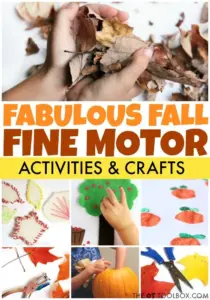








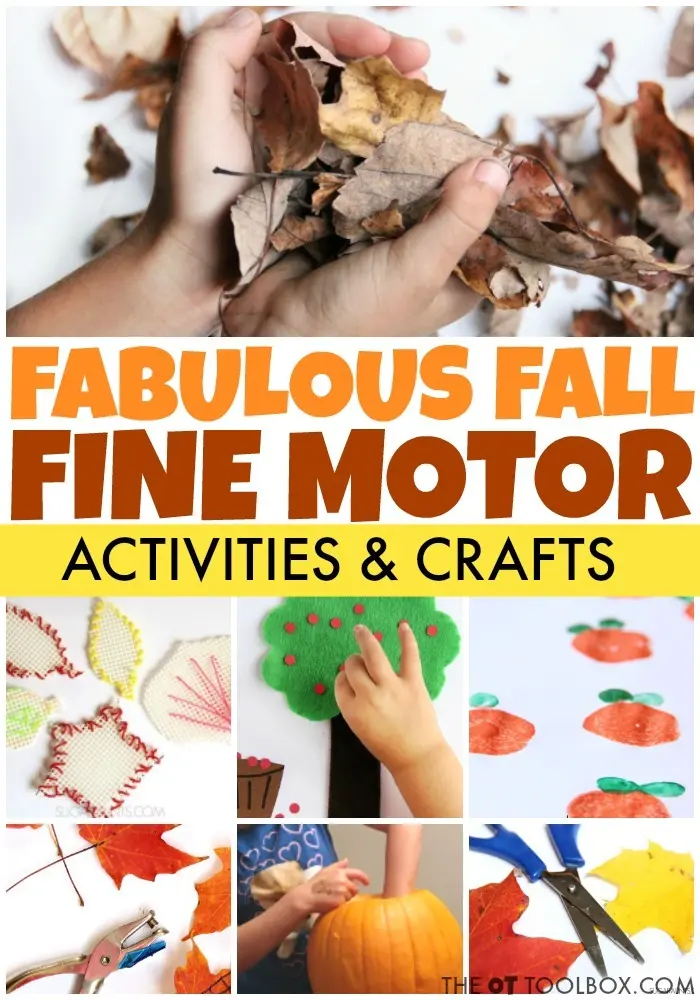
As the leaves begin to change color and crisp autumn air settles in, occupational therapists, educators, and parents are turning to seasonal themes to engage children in developmental exercises. From apples and pumpkins to falling leaves and farm harvests, autumn provides a rich sensory backdrop for working on essential fine motor skills. Rather than selecting seasonal activities purely for entertainment, professionals are utilizing targeted autumn-themed projects to address specific motor needs, ranging from hand strength and finger dexterity to scissor proficiency, visual-motor integration, and handwriting development.
The transition into fall brings familiar sensory experiences, including the crunch of leaves underfoot and the textures of natural materials like acorns, gourds, and seeds. These elements serve as practical tools in pediatric therapy and early childhood education. By incorporating seasonal elements into structured play, therapists can help children build the foundational muscle strength and coordination required for everyday tasks such as buttoning clothing, managing zippers, tying shoes, and holding a pencil with a proper tripod grasp.
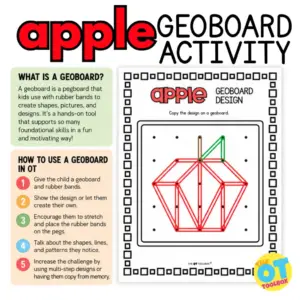
To address specific developmental targets, practitioners often categorize autumn activities based on the exact motor skills they reinforce. Hand strength, for instance, can be actively developed through resistive materials and tools. Activities such as stretching rubber bands across apple-themed geoboards provide dynamic resistance to the fingers and hands while simultaneously challenging bilateral coordination and visual-motor planning. Therapists frequently adapt these exercises by modifying the thickness of the bands or simplifying visual patterns to match a child’s current capability.
Play dough remains a cornerstone of pediatric occupational therapy regardless of the season, but autumn variations—such as hiding miniature leaves, plastic acorns, or colored beads within the dough—add a seasonal twist. Kneading, rolling, squeezing, and pinching soft yet resistive dough engages the intrinsic muscles of the hand, promotes arch development, and provides proprioceptive sensory feedback. Similarly, utilizing handheld hole punches on paper apple cutouts or real autumn leaves demands sustained hand force, encouraging the gross grasp and finger isolation necessary for advanced manipulative tasks.
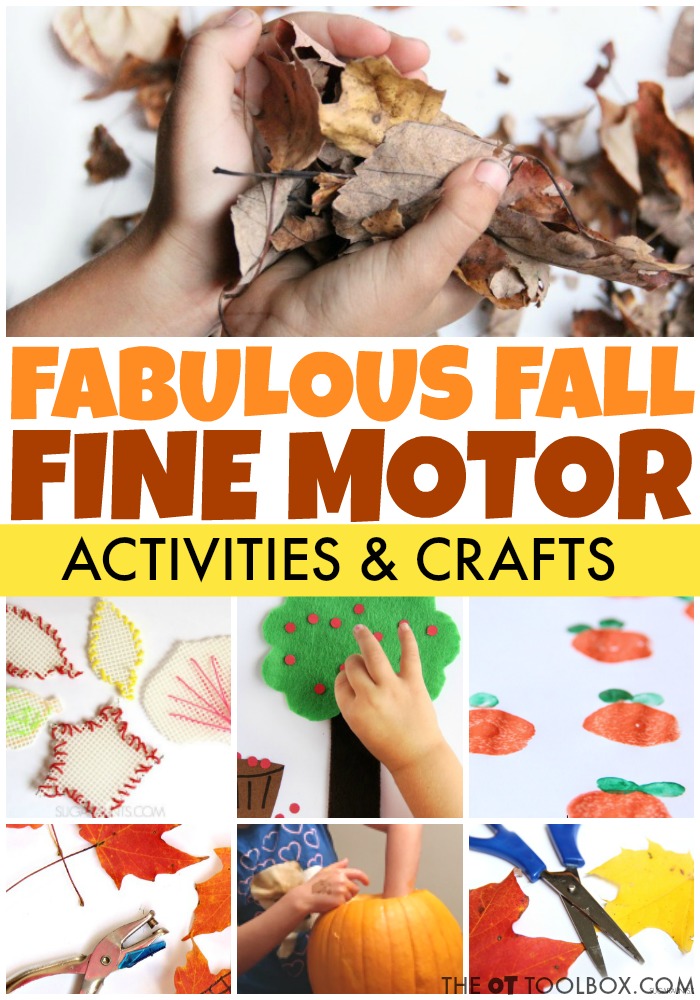
Manual dexterity, which involves the efficient and precise movement of the fingers, requires a combination of speed, coordination, and strength. Autumn manipulatives such as craft pom-poms, seeds, mini erasers, and paper clips transform standard sorting and counting exercises into precision-focused tasks. For example, using tongs or tweezers to transfer fall-colored pom-poms into partitioned trays refines a child’s pincer grasp and eye-hand coordination. Attaching paper clips to laminated counting cards or manipulating rubber bands around individual pegs on fall tree geoboards encourages children to rely on their fingertips rather than grasping with the entire hand.
Scissor proficiency represents another critical developmental milestone that benefits from seasonal motifs. Cutting along designated lines on apple-themed practice sheets or snipping the edges of real autumn leaves requires the hands to work in asymmetric coordination. While one hand continuously opens and closes the scissors, the stabilizing hand must rotate and guide the paper. Occupational therapists often assess bilateral integration, shoulder stability, and line awareness during these cutting exercises. More complex tasks, such as farm-themed cut-and-paste crafts, introduce executive functioning components, requiring children to cut out specific shapes, visually determine their spatial orientation, follow a multi-step assembly sequence, and apply glue accurately.
Visual-motor integration frequently underpins academic tasks like writing and drawing. Even children with adequate hand strength may struggle when asked to copy a design, follow a structured line, or coordinate visual input with hand movement. Autumn-themed directed drawing pages, pattern block designs, and seek-and-find or "I Spy" activities address these challenges by prompting children to observe a model, plan their movements, and reproduce spatial relationships. Integrating fine motor elements—such as circling found objects, covering them with small manipulatives, or attaching clothespins to corresponding pictures—bridges visual scanning exercises with tactile manipulation.
Handwriting instruction also gains engagement when tied to seasonal writing prompts. Rather than practicing isolated letter formation on blank sheets, children can utilize structured prompt cards designed for varying developmental stages. Emerging writers may focus on forming a single autumn-related vocabulary word, while beginning and developing writers construct complete sentences, respond to thematic questions, or plan short descriptive paragraphs. This approach allows educators and therapists to address specific handwriting components, including line awareness, letter spacing, sizing, and endurance, within a meaningful context.
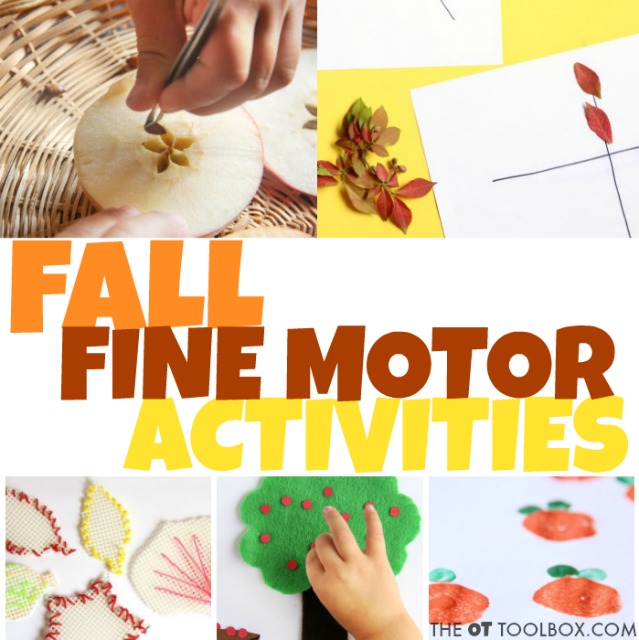
Beyond structured printables and specialized supplies, no-prep seasonal items found outdoors or around the home offer spontaneous opportunities for fine motor practice. Fallen leaves can be torn, crumpled, punched, cut, sorted, or strung. Acorns and pumpkin seeds can be scooped, counted, transferred, or dyed with liquid watercolors to create vibrant sorting materials and window suncatchers. Even everyday household objects, such as plastic bread ties, can be repurposed into manipulative crafts that challenge finger dexterity and grasp strength.
As professionals plan their seasonal therapy sessions and classroom activities, the availability of comprehensive, ready-to-use resources simplifies the integration of these developmental strategies. By combining evidence-based occupational therapy principles with the natural appeal of the autumn season, practitioners can help children build the physical competence and confidence needed for long-term academic and functional success.