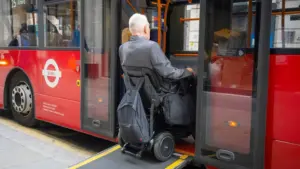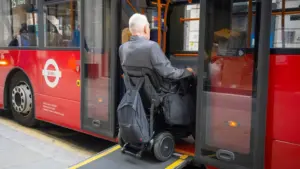






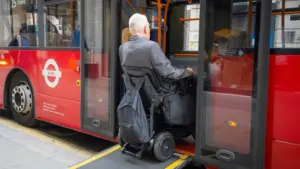


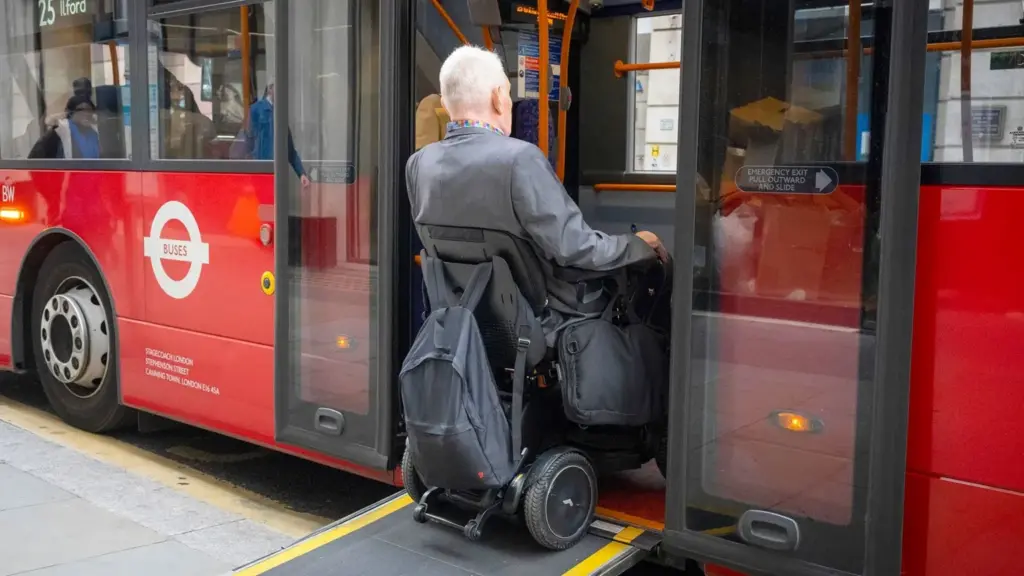
Starting April 1, disabled people across England will be able to travel by bus for free at any time of day, marking a monumental shift in public transit accessibility. Previously, free bus passes were strictly restricted to off-peak hours on weekdays—specifically between 09:30 and 23:00. This long-standing limitation created significant barriers for pass holders attempting to commute to standard morning jobs, secure early appointments, or attend late-night cultural and social events. The complete removal of these time limits will directly benefit an estimated one million people nationwide, effectively transforming the national concessionary bus pass from a restricted daytime convenience into a true full-time lifeline.
The landmark policy follows a highly successful trial period implemented within Greater Manchester’s integrated “Bee Network.” It also responds directly to years of relentless campaigning by leading disability rights organizations, including Scope and Transport for All. Advocates have widely celebrated the government’s move, praising it for finally eliminating an unfair and frustrating “postcode lottery” system, where the validity of a transit pass often depended heavily on confusing local municipal rules rather than national standards. However, while disability organizations have welcomed the end of peak-hour restrictions, they emphasize that this reform represents only one vital step forward. They note that eligibility requirements across different regional authorities still require broader standardization to ensure complete fairness.
To make the program permanent and nationwide, the £60 million scheme is being funded jointly through the Department for Transport and the Department for Work and Pensions. Government officials are framing the major transit reform as an essential workforce and cost-of-living initiative. This policy joins existing national transit measures, such as the popular nationwide £2 single-fare cap, and successfully brings England into alignment with similar 24/7 concessionary transit programs that have already been operating successfully in Scotland and Wales.
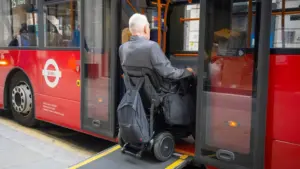
Global Takeaways: How Other Countries Can Make Accessible Commuting Possible
Making daily commuting genuinely accessible, reliable, and affordable for disabled citizens requires a thoughtful combination of progressive policy design, modern digital systems, and targeted public investment. As nations around the world grapple with urban mobility, public transit equity has increasingly moved to the forefront of national infrastructure debates.
Why Was the UK Able to Do It?
The UK’s successful expansion of its concessionary bus pass scheme was made possible by a convergence of political will, sustained grassroots advocacy, and targeted funding partnerships between central government departments. By pooling resources from both the Department for Transport and the Department for Work and Pensions, the government was able to underwrite the financial impact on regional transit operators. Furthermore, empirical evidence gathered from localized trials, such as the Bee Network pilot in Greater Manchester, provided policymakers with clear data demonstrating the social and economic benefits of removing peak-hour barriers. This combination of localized proof-of-concept testing and high-level financial commitment created the ideal environment for a nationwide policy rollout.
Does It Depend on Existing Infrastructure?
Yes, heavily. Free transit passes only work if the public transport network is physically and technologically accessible to begin with. Without foundational infrastructure improvements, free fares alone cannot solve the mobility challenges faced by disabled passengers. Key infrastructure requirements include low-floor buses with functioning wheelchair ramps, audible and visual next-stop announcements, real-time digital passenger information boards, and step-free access at transit hubs. Furthermore, bus drivers and station personnel must receive thorough, ongoing disability awareness and operational training to ensure that vehicles and stations are welcoming and safely navigable for all travelers, regardless of their specific physical or sensory needs.
What Is Needed to Make Commuting Affordable for People with Disabilities?
Achieving true affordability and accessibility in public transportation requires structural policy commitments that go beyond simply subsidizing fares. Governments must establish unified national frameworks that eliminate regional disparities in pass eligibility, ensuring that a citizen’s rights do not change depending on where they live. Additionally, funding models must sustainably support transit operators so that expanded access does not lead to reduced service frequencies or deteriorating fleet conditions. Integrating concessionary travel schemes with broader cost-of-living support measures ensures that disabled individuals can actively participate in the workforce, education, and community life without facing prohibitive financial penalties for their mobility needs.