






BREAKING NEWS
Applied Behavior Analysis New Research Suggests the Brain’s Survival Mechanism May Blur the Lines Between Safety and Danger 5 hours ago Child Development New Research Debunks Myths About Reading Struggles, Pointing to Auditory and Knowledge-Based Skills 5 hours ago Occupational Therapy Global Community Prepares to Honor World Occupational Therapy Day 2026 5 hours ago Speech and Language Therapy Speech and Language Kids Announces Expansion of Structured Curriculum to Transform SLP Workflow 5 hours ago Mental Health and Psychology The Paradox of Affection: Questioning the Cultural Normalization of Dog Ownership 5 hours ago Pediatric Healthcare The Dual Challenge: Navigating the Pandemic and the Global Infodemic 5 hours ago Assistive Technology Higher Education Faces a Pivotal Choice as AI Threatens to Codify Exclusion for Students with Disabilities 5 hours ago Sensory Processing Empowering Children Through Emotional Regulation: The Impact of "Size of the Problem" Strategies 5 hours ago Applied Behavior Analysis New Research Suggests the Brain’s Survival Mechanism May Blur the Lines Between Safety and Danger 5 hours ago Child Development New Research Debunks Myths About Reading Struggles, Pointing to Auditory and Knowledge-Based Skills 5 hours ago Occupational Therapy Global Community Prepares to Honor World Occupational Therapy Day 2026 5 hours ago Speech and Language Therapy Speech and Language Kids Announces Expansion of Structured Curriculum to Transform SLP Workflow 5 hours ago Mental Health and Psychology The Paradox of Affection: Questioning the Cultural Normalization of Dog Ownership 5 hours ago Pediatric Healthcare The Dual Challenge: Navigating the Pandemic and the Global Infodemic 5 hours ago Assistive Technology Higher Education Faces a Pivotal Choice as AI Threatens to Codify Exclusion for Students with Disabilities 5 hours ago Sensory Processing Empowering Children Through Emotional Regulation: The Impact of "Size of the Problem" Strategies 5 hours ago
Stories
New Research Suggests the Brain’s Survival Mechanism May Blur the Lines Between Safety and Danger
New Research Debunks Myths About Reading Struggles, Pointing to Auditory and Knowledge-Based Skills
Global Community Prepares to Honor World Occupational Therapy Day 2026
Speech and Language Kids Announces Expansion of Structured Curriculum to Transform SLP Workflow
The Paradox of Affection: Questioning the Cultural Normalization of Dog Ownership
The Dual Challenge: Navigating the Pandemic and the Global Infodemic
Higher Education Faces a Pivotal Choice as AI Threatens to Codify Exclusion for Students with Disabilities
Empowering Children Through Emotional Regulation: The Impact of "Size of the Problem" Strategies
New Comprehensive Voting Guide Empowers Voters with Disabilities Ahead of Midterm Elections
Finding Your Voice Through Resistance: How Intentional Living Navigates Uncertainty, Grief, and Growth

Tag: beyond

156 posts

Standard

Beyond the "Foghorn": New Research Reveals Precision Signaling in the Brain’s Stress-Response Hub

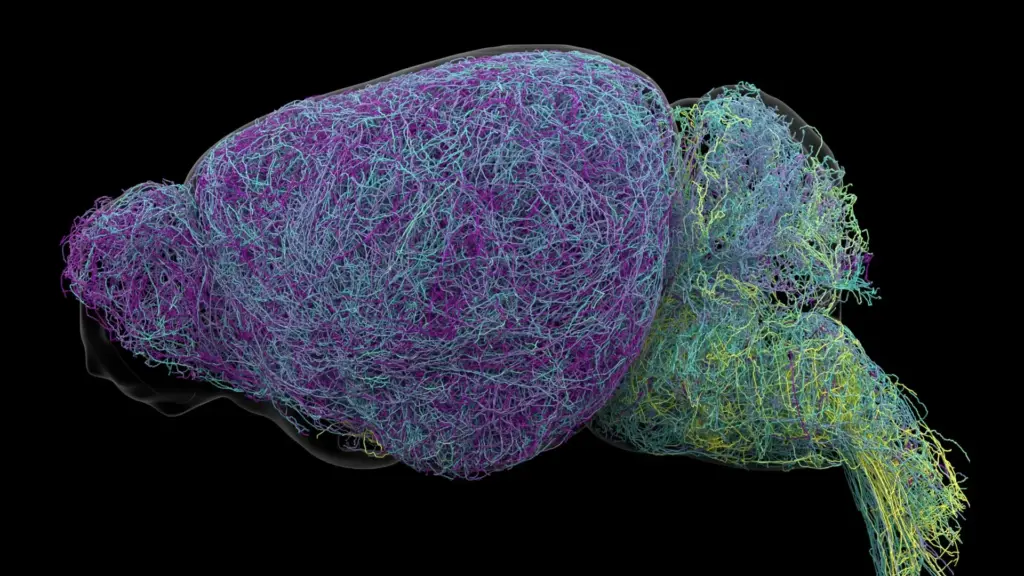
Deep within the human brainstem lies a tiny, unassuming cluster of neurons known as the locus coeruleus (LC). Its name, derived from the Latin for "blue place," belies the immense power it wields over our cognitive and physical lives. Despite accounting for only a minuscule fraction of the brain’s billions of neurons, the LC serves…


Read more
Standard

Beyond the Label: Reframing Dyslexia as a Continuum of Processing Inefficiencies

Dyslexia, a term frequently heard in classrooms and boardrooms alike, remains one of the most misunderstood phenomena in modern education. Affecting approximately one in five individuals, this brain-based reading difficulty is not merely an academic hurdle for students; it is a widespread literacy challenge that touches every school district and, by extension, impacts every taxpayer.…

Read more
Standard

Beyond the Surface Symptoms: Reframing Dyslexia as a Language-Processing Inefficiency

As educators, researchers, and policymakers mark Dyslexia Awareness Month, a growing movement within the cognitive sciences is challenging long-held assumptions about one of the most common learning challenges in modern education. Dyslexia, a brain-based reading difficulty, currently impacts an estimated one in five individuals, according to data from the Yale Center for Dyslexia and Creativity.…

Read more
Standard

Beyond Homo Economicus: Reimagining Life, Relational Philosophy, and Ecologies of Care

Core ideas within Buddhist and Daoist spiritual traditions are deeply reflective of the commonalities found across many human-scale indigenous cultures. A compassionate framework of love as vulnerable, mutual knowing is remarkably compatible with a panpsychic relational philosophy. Ultimately, everyone wants their experiences to be taken seriously. We are embodied spirits, compelled to make sense of…

Read more
Standard

Beyond Decline: New Research Challenges the Narrative of Cognitive Aging

For generations, the narrative surrounding human aging has been dominated by a singular, somber theme: the gradual, inevitable erosion of the mind. Memory lapses, slowed processing speeds, and the diminishing ability to recall specific details have long been framed as the defining characteristics of growing older. However, a growing body of research from the University…

Read more
Standard

Beyond Homo Economicus: Reimagining Human Scale, Relational Ecology, and Cultural Metamorphosis

The core ideas embedded within ancient spiritual traditions such as Buddhism and Daoism share striking commonalities with the relational principles found across human-scale indigenous cultures. At a time when modern industrial societies grapple with widespread ecological degradation and systemic institutional burnout, philosophers and neurodiversity advocates are pointing toward a compassionate framework of love—defined as vulnerable…

Read more
Standard

Beyond Decline: Why the Aging Brain Is Wired for Wisdom

For generations, the narrative surrounding the aging brain has been one of inevitable erosion. As the calendar pages turn, society has conditioned us to expect a steady decline in cognitive function, characterized by lapses in memory, a slower processing speed, and an overall reduction in mental sharpness. We often view these changes as a downward…

Read more
Standard

Beyond Decline: Why the Aging Brain Is Wired for Wisdom

For generations, the narrative surrounding the aging human brain has been one of inevitable erosion. We are often told that as the candles on the birthday cake multiply, our cognitive faculties—specifically our memory and mental processing speed—are destined to fray. This perspective paints the aging brain as a decaying vessel, slowly losing the sharpness that…

Read more