







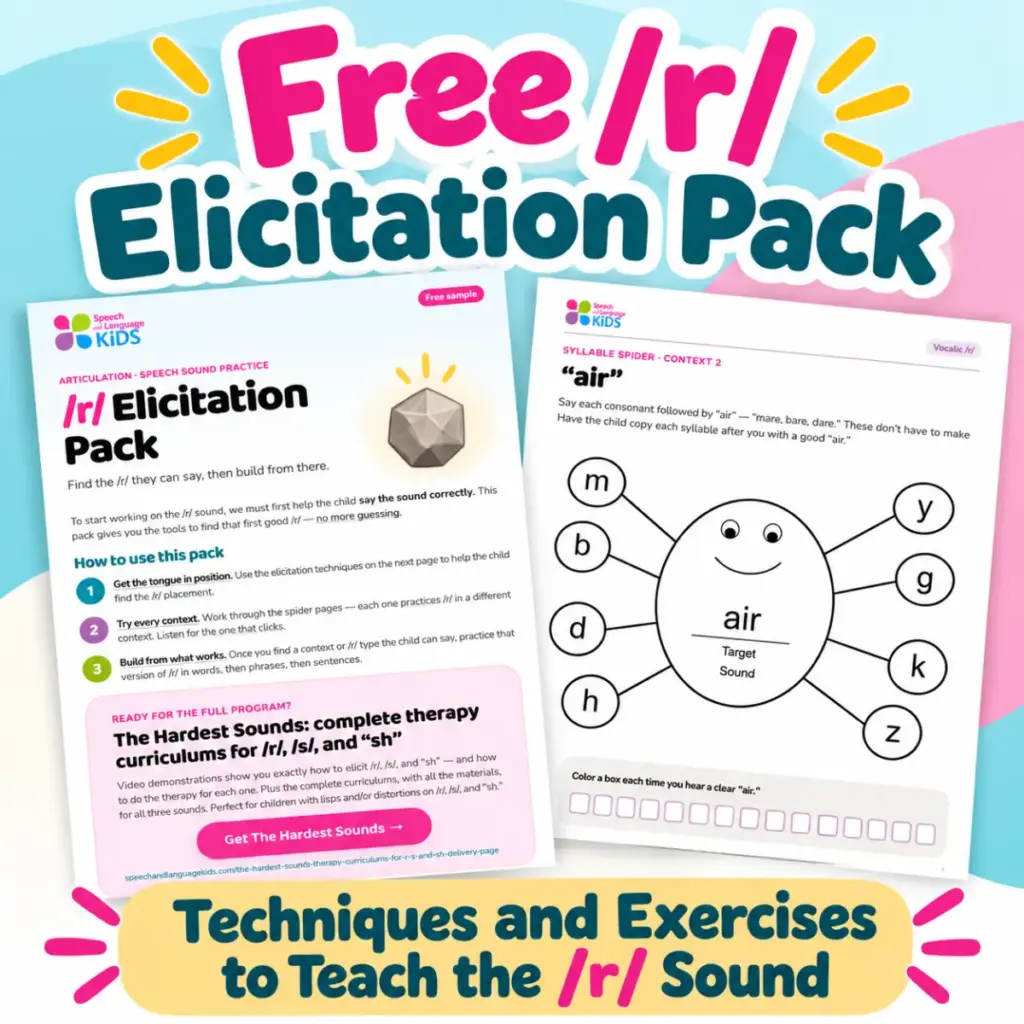
For many speech-language pathologists, parents, and educators, the /r/ sound represents one of the most significant hurdles in articulation therapy. Because the sound is notoriously difficult to visualize and requires precise, nuanced placement of the articulators—the tongue, lips, and jaw—it often becomes a point of frustration for both the instructor and the student. To address this common clinical challenge, new resources have been released, including a specialized elicitation pack designed to streamline the process of teaching this complex phoneme to children and teenagers.
The /r/ sound is often categorized as a "late-developing" sound in pediatric speech acquisition, and its complexity lies in its variability. Unlike sounds that involve a simple contact point, such as a "p" or "t," the /r/ sound requires the tongue to achieve a specific tension and position that is largely hidden within the mouth. This invisibility makes it exceptionally difficult for a child to imitate a teacher simply by watching them. When a student cannot see what they are supposed to mimic, they are often left to guess, which can lead to the development of compensatory errors that become harder to correct over time.
The Critical Role of Elicitation in Speech Therapy
Before a child can be expected to use the /r/ sound in connected speech or even within simple words, they must first master the production of the sound in isolation. This foundational step is known as elicitation. Elicitation is the process of helping a student discover the specific motor movements required to produce a clear, consistent sound. Without this solid base, attempting to progress to words, phrases, or conversational speech often proves ineffective, as the student is trying to build a structure on an unstable foundation.
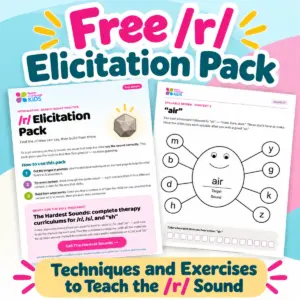
The newly released /r/ Elicitation Pack focuses on this precise stage of intervention. By providing a structured collection of exercises and strategies, the pack aims to help therapists and parents guide students through the trial-and-error process of finding the correct tongue and jaw placement. The philosophy behind this resource is that by isolating the sound, the student can focus entirely on the physical mechanics of the movement without the added cognitive load of processing vocabulary or sentence structure. Once the student understands how to achieve the "shape" of the sound, the transition into broader articulation therapy becomes significantly more manageable.

Educational experts emphasize that there is no "one-size-fits-all" approach to speech therapy. Every child possesses unique oral-motor strengths and weaknesses. Consequently, a successful elicitation strategy often requires a variety of tools. The resources provided in this new pack include diverse techniques designed to accommodate different learning styles, ensuring that if one method fails to resonate with a student, the practitioner has alternative strategies available to try. This versatility is essential for maintaining student engagement and confidence, as repeated failure in speech therapy can quickly lead to anxiety or disinterest.
Expert Strategies for Complex Phonemes
To further support practitioners, supplemental video content has been introduced to demonstrate these elicitation strategies in a practical, real-world context. Visualizing the techniques in action provides an essential bridge between theory and practice. Seeing how a professional adjusts their approach in response to a student’s immediate feedback can provide invaluable insights for those who may be struggling to break through a plateau in a student’s progress.
The challenges associated with the /r/ sound are part of a broader set of phonological difficulties that often require more intensive intervention. Beyond the /r/, sounds like /s/ and "sh" are also frequently cited as the most stubborn obstacles in articulation therapy. These sounds, much like the /r/, require a high level of breath control and precise tongue-to-palate contact. When a student struggles with these sounds simultaneously, the impact on their overall intelligibility can be significant, potentially affecting their social interactions and academic performance.
A Comprehensive Approach to Articulation
Recognizing that the /r/ sound is rarely an isolated concern, there is an increasing demand for more comprehensive curricula that address these "hardest sounds" as a cohesive unit. A structured therapy program, such as the one recently highlighted for the /r/, /s/, and "sh" sounds, offers a roadmap for long-term progress. By organizing the intervention into a clear, logical sequence, these programs help ensure that no steps are skipped and that the student moves through the developmental hierarchy at an appropriate pace.

The integration of a structured curriculum is particularly beneficial for parents who are attempting to support their child’s speech development at home. While professional speech therapy remains the gold standard, the consistency afforded by home practice can accelerate the acquisition of these difficult sounds. However, parents often report feeling overwhelmed by the technical nature of articulation therapy. By utilizing professional-grade, easy-to-understand resources, caregivers can act as effective partners in the therapeutic process, reinforcing the techniques learned during clinical sessions in a low-pressure, supportive environment.
The shift toward providing accessible, expert-led materials reflects a broader trend in the speech-language pathology field: the democratization of clinical strategies. By making these resources available to a wider audience, the hope is to reduce the duration of time students spend in therapy and to provide them with the tools they need to communicate with clarity and confidence. As more research emerges on the efficacy of various motor-based and sensory-based elicitation techniques, these curricula continue to evolve, incorporating evidence-based practices that prioritize the student’s needs.
For those navigating the complexities of articulation disorders, the availability of these targeted resources serves as a vital tool. Whether a student is just beginning their journey toward mastering the /r/ sound or is struggling to overcome long-standing habits, a combination of specialized elicitation techniques and a structured, long-term curriculum provides the best opportunity for success. As these methods continue to gain traction, the focus remains on transforming one of the most daunting aspects of speech therapy into a series of achievable, rewarding milestones for students, therapists, and families alike.