







BREAKING NEWS
Applied Behavior Analysis Hidden Defenders: Could Immature Neurons Explain Why Some Brains Resist Alzheimer’s? 5 hours ago Child Development New Brain Study Reveals Fundamental Differences in How Autistic Children Perceive Faces 5 hours ago Applied Behavior Analysis The Ancient Legacy: Why Our Brains Are Wired to the Opposite Side of the Body 13 hours ago Sensory Processing New Initiative Seeks to Transform Anxiety Management with a Structured Coping Skills Printable and Data Tracker 13 hours ago Behavioral Health The Science of Hope: Landmark 14-Year Study Reveals Its Profound Impact on Health, Wealth, and Longevity 13 hours ago Pediatric Research WHO to Roll Out Learning and Monitoring Tools to Improve Service Provision During Pandemic 13 hours ago Child Welfare and Advocacy Children’s Defense Fund-California to Host Long Beach Forum Highlighting Decade of Education Equity Advocacy 13 hours ago Applied Behavior Analysis Ultra-Processed Foods May Rewire Children’s Brains Toward Weight Gain, Study Finds 21 hours ago Applied Behavior Analysis Hidden Defenders: Could Immature Neurons Explain Why Some Brains Resist Alzheimer’s? 5 hours ago Child Development New Brain Study Reveals Fundamental Differences in How Autistic Children Perceive Faces 5 hours ago Applied Behavior Analysis The Ancient Legacy: Why Our Brains Are Wired to the Opposite Side of the Body 13 hours ago Sensory Processing New Initiative Seeks to Transform Anxiety Management with a Structured Coping Skills Printable and Data Tracker 13 hours ago Behavioral Health The Science of Hope: Landmark 14-Year Study Reveals Its Profound Impact on Health, Wealth, and Longevity 13 hours ago Pediatric Research WHO to Roll Out Learning and Monitoring Tools to Improve Service Provision During Pandemic 13 hours ago Child Welfare and Advocacy Children’s Defense Fund-California to Host Long Beach Forum Highlighting Decade of Education Equity Advocacy 13 hours ago Applied Behavior Analysis Ultra-Processed Foods May Rewire Children’s Brains Toward Weight Gain, Study Finds 21 hours ago
Stories
Hidden Defenders: Could Immature Neurons Explain Why Some Brains Resist Alzheimer’s?
New Brain Study Reveals Fundamental Differences in How Autistic Children Perceive Faces
The Ancient Legacy: Why Our Brains Are Wired to the Opposite Side of the Body
New Initiative Seeks to Transform Anxiety Management with a Structured Coping Skills Printable and Data Tracker
The Science of Hope: Landmark 14-Year Study Reveals Its Profound Impact on Health, Wealth, and Longevity
WHO to Roll Out Learning and Monitoring Tools to Improve Service Provision During Pandemic
Children’s Defense Fund-California to Host Long Beach Forum Highlighting Decade of Education Equity Advocacy
Ultra-Processed Foods May Rewire Children’s Brains Toward Weight Gain, Study Finds
Protein Linked to Youth May Help Restore Aging Brain Function, Study Finds
Idaho Families in Crisis as Paid Caregiver Program Remains Defunct

Tag: behavior

155 posts

Standard

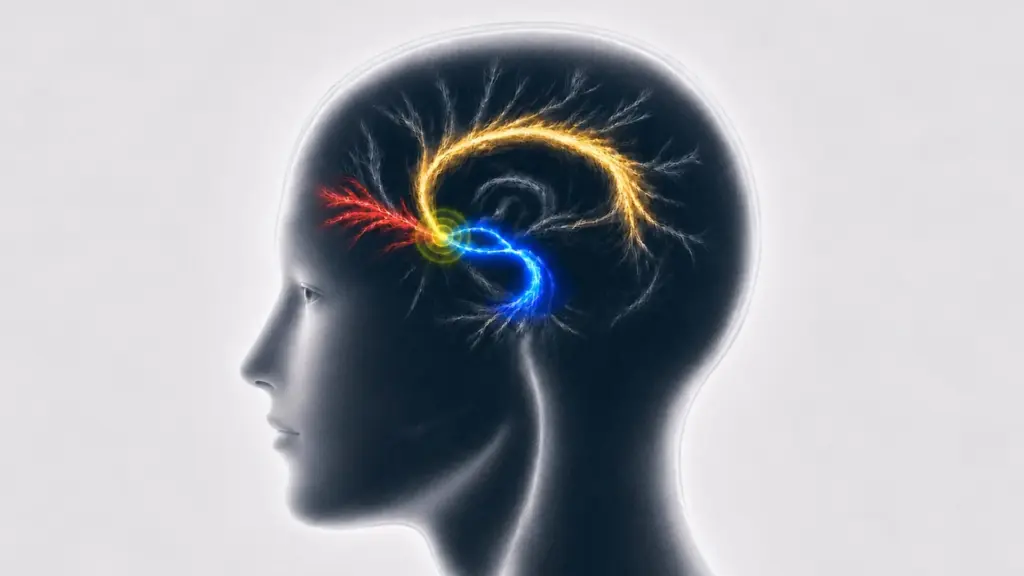
Beyond Awareness: Research Reveals the Unconscious Brain’s Hidden Language Processing

Even when a patient is fully submerged in the state of medically induced general anesthesia—a condition characterized by a total lack of subjective experience—the human brain remains remarkably busy. New research from Baylor College of Medicine suggests that beneath the silence of unconsciousness, the brain is far from dormant. It continues to process complex auditory…

Read more
Standard

Mapping the Mind: New Study Identifies Critical Brain Connections for Treating Severe Depression with Deep Brain Stimulation

For millions of individuals living with severe, treatment-resistant depression, conventional therapies—ranging from medication regimens to psychotherapy—often fail to provide meaningful or lasting relief. In the quest to address this persistent and debilitating condition, researchers at the Icahn School of Medicine at Mount Sinai have made a significant breakthrough. A new study, published October 1 in…

Read more
Standard

Psychedelic Insight: Psilocybin Found to Selectively Mute Aggression in Mangrove Rivulus Fish

In a surprising discovery that adds a new dimension to our understanding of neurobiology, researchers have found that psilocybin—the psychoactive compound derived from more than 200 species of fungi—can exert a precise, calming influence on the behavior of aggressive fish. While psilocybin has long been studied for its profound effects on human mood, perception, and…

Read more
Standard

Soy-Derived Compound Shows Promise in Mitigating Brain and Cardiovascular Damage from High-Salt Diets

The modern global diet is increasingly characterized by high levels of sodium, a nutritional reality that has long been recognized as a primary driver of hypertension and cardiovascular disease. However, as public health officials continue to battle the silent epidemic of high blood pressure, new research is highlighting that the dangers of excessive salt consumption…

Read more
Standard

Immune System Overreaction Identified as Key Driver of Sleep Disruption in Alzheimer’s Disease

In a significant pivot for Alzheimer’s research, scientists at the University of Kentucky have uncovered an unexpected mechanism behind the profound sleep disturbances that plague millions of patients. The study, published in the journal Alzheimer’s & Dementia, suggests that the cognitive decline and nocturnal restlessness associated with the disease may not be caused solely by…

Read more
Standard

Genetic "Shield" Against Alzheimer’s: Researchers Uncover Mechanism Protecting the Brain’s Blood Vessels

For decades, the medical community has grappled with a confounding mystery: why do some individuals, despite carrying the strongest known genetic risk factor for Alzheimer’s disease, remain cognitively vibrant well into their eighties and nineties? While the presence of the APOE ε4 gene variant significantly elevates an individual’s susceptibility to the neurodegenerative condition, it does…

Read more
Standard

New Research Points to Immune System Intervention as a Potential Strategy Against Alzheimer’s Neurodegeneration

Protecting brain cells from destruction remains one of the most formidable hurdles in the global effort to treat Alzheimer’s disease and a spectrum of related neurodegenerative conditions collectively known as tauopathies. These disorders are characterized by the accumulation of abnormal tangles of a protein called tau within the brain’s architecture. As these tangles proliferate, nearby…

Read more
Standard

Deciphering the Blueprint: Why Marmoset Brains Lack the Folds of Human Complexity

Most primates are characterized by their expansive, highly complex brains, often described as possessing a surface marked by a dense topography of folds and grooves. This intricate architecture, known as gyrencephaly, is a hallmark of primate evolution, allowing for the massive expansion of the cerebral cortex—the seat of higher cognitive function—within the confines of the…

Read more
Standard

Rethinking the Brain’s Command Center: New Study Reveals the Locus Coeruleus as a Precise Signaling Network

Deep within the brainstem lies a minuscule cluster of nerve cells that wields an influence far exceeding its modest size. Known as the locus coeruleus (LC)—a name derived from the Latin for "blue place" due to its distinct pigmentation—this region has long been viewed by neuroscientists as the brain’s primary broadcast station. Despite containing only…

Read more