








In an ideal world, children would maintain constant focus, breeze through everyday tasks with ease, and navigate transitions without emotional outbursts or temper tantrums. Every parent, educator, and therapist knows, however, that reality looks quite different. Children frequently experience moments of dysregulation, finding themselves temporarily out of sync as they navigate the complex demands of growing up, learning, and participating in daily routines.
While behavioral challenges and emotional meltdowns are a normal part of childhood development, adults often search for effective tools to help restore calm and balance. According to pediatric occupational therapy experts, one of the most powerful and accessible resources available for organizing a dysregulated nervous system is known simply as "heavy work."
Heavy work encompasses a wide variety of activities that require active exertion from the body’s muscles and joints. These tasks involve movements like pushing, pulling, lifting, jumping, and even heavy oral-motor input, all of which stimulate the proprioceptive system. When muscles and joints encounter resistance, sensory receptors transmit feedback directly to the brain, providing a deeply calming and organizing effect that helps children regain their equilibrium.

The proprioceptive system acts as a universal and powerful regulator within the human body. As children move and exert physical effort, this system receives continuous messages, allowing the brain to understand how much force is required for a specific task. Whether a child needs to handle a fragile object gently or lift a heavy basket across a room, proprioception provides the necessary body awareness. This complex internal feedback loop ensures that the brain receives accurate information from joints and muscles, allowing individuals to understand where their bodies are positioned in space.
Because of its broad influence, heavy work can effectively even out disturbances across other sensory systems. It can be used strategically to elevate low energy levels or calm high-energy states, guiding children toward a comfortable, regulated space where they can successfully interact with their environment.
The beauty of heavy work lies in its versatility and ease of integration into daily routines across homes, classrooms, and therapy clinics. Incorporating these activities regularly contributes significantly to the healthy development of a child’s sensory processing skills while equipping them with self-regulation tools they can eventually use independently.
Experts suggest that the frequency of heavy work input should be tailored to the individual child, taking into account their unique sensory profile, preferences, and responses. Many families find success by weaving heavy work into morning routines before school, after-school arrivals to help decompress, and even bedtime rituals to encourage a restful physical state. In educational settings, teachers can integrate whole-class sensory movement breaks at regular intervals throughout the day to support collective focus and participation.
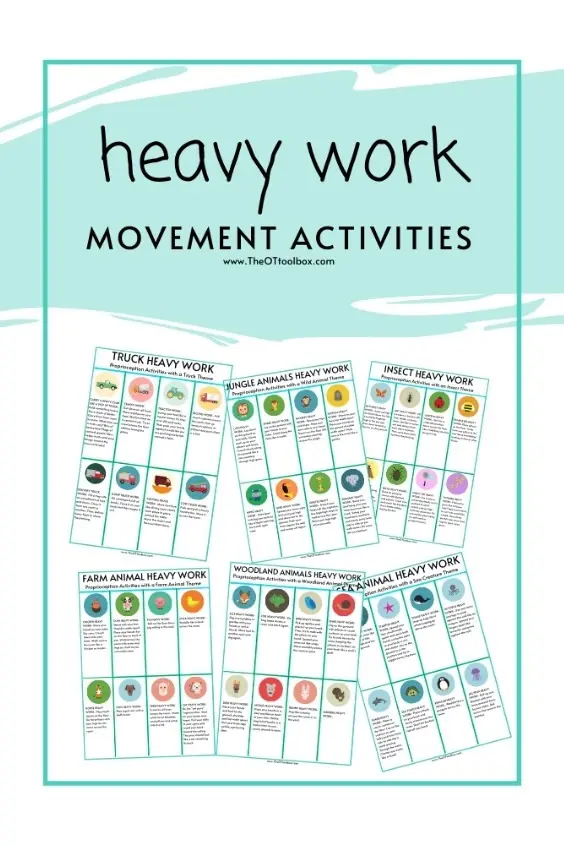
Heavy work strategies range from simple, equipment-free movements to more structured physical tasks. Pushing a heavy basket, performing wall push-ups, or pushing against a chair all provide the necessary resistance to activate muscle and joint receptors. These movements generate organizing feedback that stabilizes the nervous system and enhances attention span for academic and social tasks.
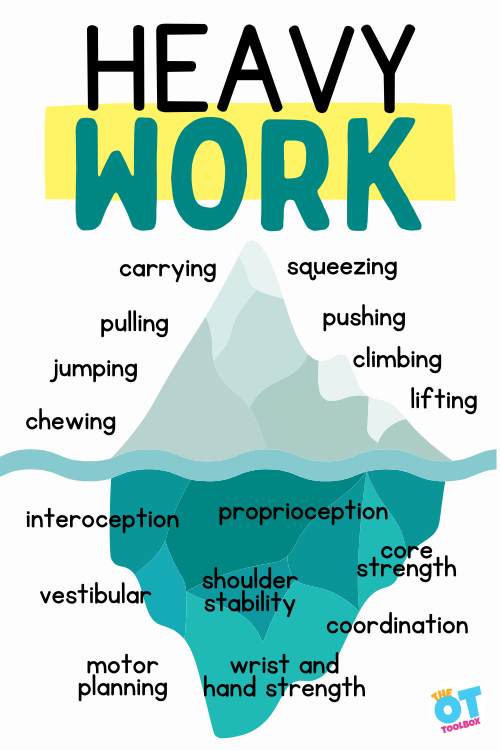
The mechanics of heavy work involve both visible actions and underlying developmental skills. Surface-level activities include actions like pushing heavy objects, pulling during games of tug-of-war, lifting weighted backpacks, jumping on trampolines, and engaging in animal walks like bear crawls or crab walks. Beneath these observable behaviors lie vital neurological and physical components, including core stability, motor planning, postural control, and spatial awareness. These foundational elements work in tandem with physical exertion to foster the calming and regulating outcomes observed by parents and educators.

As caregivers look for ways to manage disruptions in daily schedules—particularly during seasonal transitions like summer break when routines shift and screen time often increases—heavy work remains a practical solution. Occupational therapists emphasize that while digital devices may offer temporary distraction, excessive screen time can sometimes exacerbate dysregulation in children. Introducing physical tasks, outdoor play, and functional household chores provides a constructive alternative that naturally engages the proprioceptive system.
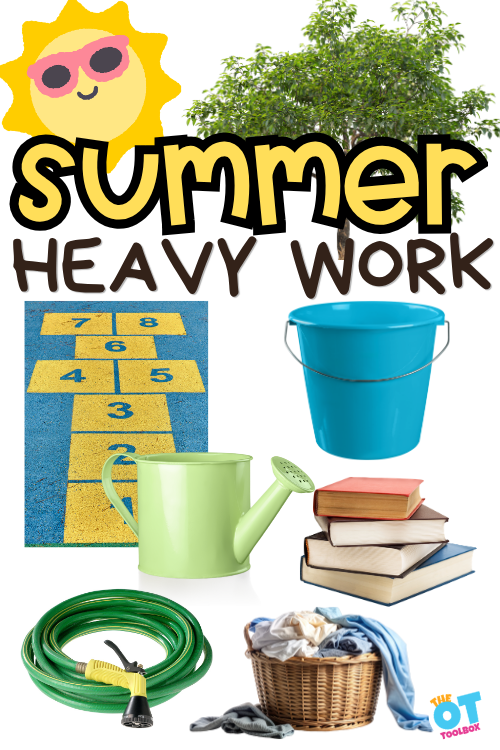
Outdoor chores and yard work offer natural opportunities for heavy work while teaching responsibility and independence. Tasks such as pulling a wagon filled with gardening supplies, pushing a lawnmower, raking leaves, or carrying watering cans provide substantial resistance for large muscle groups. Similarly, community-based outings can incorporate heavy movement, whether children are carrying their own groceries, pushing shopping carts, or navigating playground equipment that challenges upper body strength and core stability.

Backyard play and water activities further expand the possibilities for sensory integration during warmer months. Playground climbing, swimming, playing in sprinklers, and navigating uneven terrain at beaches or parks all stimulate the joints and muscles, encouraging robust motor development alongside emotional regulation. Indoor household tasks, such as carrying laundry baskets, loading groceries, and rearranging furniture, offer similar benefits when outdoor play is not feasible.
By thoughtfully incorporating heavy work into play, chores, and daily transitions, adults can significantly support a child’s neurological health. These movement-based strategies not only keep children active and engaged but also build the foundational self-regulation skills necessary for lifelong learning and well-being.