









For many children, the classroom experience is defined by a persistent, frustrating barrier: no matter how much they study or how much instruction they receive, mathematics remains an elusive challenge. While their peers may grasp arithmetic concepts with relative ease, these children struggle with problems that should, by all developmental accounts, be well within their reach. For years, educators and parents have looked for the root cause of this disparity, often focusing on a child’s grasp of numerical values. However, groundbreaking new research from Stanford University suggests that the answer lies far deeper than a simple misunderstanding of numbers, pointing instead to the complex ways the brain selects and manages strategies for solving problems.
The study, led by Oliver Lasnick and his colleagues at Stanford and recently published in the journal JNeurosci, sheds new light on developmental dyscalculia—a condition characterized by ongoing, severe difficulty with mathematical problem-solving. While the scientific community has recognized dyscalculia for decades, the specific cognitive and neurological mechanisms driving the condition have remained largely opaque. By observing 68 children between the ages of 8 and 10, the Stanford team has managed to bridge the gap between behavioral observations and neural activity, offering a sophisticated look at why some children find math so persistently taxing.
Why Some Children Struggle With Math Strategies
To understand the mechanics of the struggle, the research team went beyond simple test scores. They analyzed the "strategy landscape" of the participants, examining not just whether a child arrived at the correct answer, but the cognitive path they took to get there. In mathematics, success is rarely a single-track endeavor. A student might solve an addition problem by counting on their fingers—a rudimentary but effective approach for beginners—or they might utilize a more sophisticated method, such as decomposing numbers into familiar tens or relying on memorized arithmetic facts.

As mathematical problems grow in complexity, the ability to pivot between these strategies becomes essential. A student must be able to recognize when a "counting" approach is no longer efficient and when a higher-level abstract strategy is required. The Stanford study revealed that this specific ability—cognitive flexibility—is where children with dyscalculia face their greatest hurdles.
The findings were stark: children diagnosed with developmental dyscalculia were consistently less effective at deploying a range of mathematical strategies. They showed a marked latency in shifting between methods, often sticking to less efficient techniques long after they had become counterproductive. Furthermore, when the difficulty of the mathematical task increased, these children were notably less responsive, struggling to adapt their internal approach to meet the new demands of the problem.
Perhaps most tellingly, the study tracked the children’s progress over time. In a typical learning trajectory, children naturally become more adept at selecting the most efficient tool for a given problem as they gain experience. However, the children in the study with dyscalculia did not show this expected improvement. This stagnation suggests that their difficulty is not merely a failure of calculation or memory retrieval, but a fundamental challenge in the executive process of "strategy selection"—the mental "triage" that happens before a calculation even begins.
Brain Activity Reveals New Clues to Math Difficulties
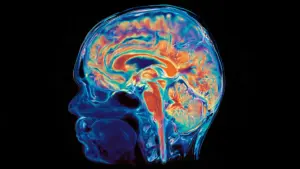
To understand why these behavioral differences occurred, the researchers utilized neuroimaging to observe the brains of the children as they engaged with various math tasks. By mapping brain activity during these sessions, the team discovered that the differences were not merely behavioral quirks but were deeply rooted in distinct neural systems.
The research team identified specific patterns of brain activity that separated children with dyscalculia from their more mathematically skilled peers. These patterns were not random fluctuations; rather, they served as powerful predictors of performance. The neural signatures observed in the study directly correlated with how effectively a child could count and, crucially, how fluidly they could switch between different problem-solving approaches.
This finding brings the concept of "executive functions" to the forefront of the discussion on dyscalculia. Executive functions are the high-level cognitive processes that allow humans to organize information, maintain focus, hold multiple variables in working memory, and—most importantly—pivot when a chosen strategy proves ineffective. In the context of a math test, these functions are the invisible gears turning behind the scenes: they allow a student to keep track of place values, compare potential solutions, and recognize the exact moment when a shift in strategy is necessary.
The Stanford data suggests that when these executive systems are not functioning optimally, the entire process of learning mathematics becomes a series of disjointed, high-effort attempts rather than a fluid, developmental progression. It appears that for children with dyscalculia, the "mental workspace" required to manage these executive demands is often overwhelmed, leaving little cognitive capacity left for the actual math at hand.
Understanding Why Math Struggles Differ Between Children
While the findings are a significant step forward, the researchers are careful to emphasize that the neural patterns they observed do not necessarily represent a "cause" in a simple, linear sense. Instead, they provide a clearer picture of the complex, multi-layered nature of the condition. The study highlights that developmental dyscalculia is not a monolithic disorder. It does not look the same in every child, and it is likely not caused by a single, isolated malfunction.
"Importantly, this study also emphasizes the individual variability observed in dyscalculia, further demonstrating that the disorder reflects cognitive and neural dysfunction across multiple processes," says Oliver Lasnick.
This variability is a crucial takeaway for educators and clinicians. Because different children may experience dyscalculia through different combinations of executive function deficits, a "one-size-fits-all" intervention is unlikely to succeed. For one child, the bottleneck might be in working memory, preventing them from holding the numbers long enough to apply a strategy. For another, the issue might be in cognitive flexibility, causing them to get "stuck" on a single, inefficient method.
The Stanford study serves as a call to action for the field of education. It suggests that we must look beyond the final answer on a worksheet. A child who produces the wrong answer after attempting a sophisticated strategy is in a very different position than a child who produces the wrong answer because they lacked the cognitive flexibility to move beyond counting. By focusing on the process of problem-solving—how children choose their strategies and adapt to shifting demands—researchers hope to eventually move toward more personalized support.
This research does not provide a cure, but it provides a map. By connecting observable, real-world mathematical struggles with measurable, internal brain activity, the Stanford team has demystified one of the most persistent hurdles in early childhood education. As scientists continue to explore the nuances of these neural networks, the goal remains clear: to develop better, more targeted identification and support systems that recognize the unique cognitive profiles of every child, ensuring that a difficulty with math does not become a permanent barrier to academic and personal success. For the children who have long felt that the language of numbers is written in a code they cannot crack, this research offers the first real hope of being understood.