

BREAKING NEWS
Applied Behavior Analysis The Active Unconscious: How the Brain Continues to Process Language Under General Anesthesia 1 hour ago Child Development Yale Researchers Uncover How Stress Hormones Fine-Tune the Brain for Emotional Memory 1 hour ago Pediatric Healthcare Emergency Medical Supplies Airlifted to Beirut as Health System Faces Catastrophic Strain 3 hours ago Applied Behavior Analysis Precision Neuromodulation: Mount Sinai Researchers Identify Key Brain Pathways for Treating Severe Depression 9 hours ago Child Development New Research Links Alzheimer’s-Related Protein to Disrupted Sleep Patterns and Memory Decline 9 hours ago Occupational Therapy The Growing Essential Role of Occupational Therapy in Aging-in-Place Initiatives 9 hours ago Mental Health and Psychology The Architect of Choice: Viktor Frankl and the Power of the Internal Space 9 hours ago Pediatric Research Honoring Real-Life Heroes: World Humanitarian Day Shines a Light on Frontline Workers Amid Global Crises and COVID-19 10 hours ago Applied Behavior Analysis The Active Unconscious: How the Brain Continues to Process Language Under General Anesthesia 1 hour ago Child Development Yale Researchers Uncover How Stress Hormones Fine-Tune the Brain for Emotional Memory 1 hour ago Pediatric Healthcare Emergency Medical Supplies Airlifted to Beirut as Health System Faces Catastrophic Strain 3 hours ago Applied Behavior Analysis Precision Neuromodulation: Mount Sinai Researchers Identify Key Brain Pathways for Treating Severe Depression 9 hours ago Child Development New Research Links Alzheimer’s-Related Protein to Disrupted Sleep Patterns and Memory Decline 9 hours ago Occupational Therapy The Growing Essential Role of Occupational Therapy in Aging-in-Place Initiatives 9 hours ago Mental Health and Psychology The Architect of Choice: Viktor Frankl and the Power of the Internal Space 9 hours ago Pediatric Research Honoring Real-Life Heroes: World Humanitarian Day Shines a Light on Frontline Workers Amid Global Crises and COVID-19 10 hours ago
Stories
The Active Unconscious: How the Brain Continues to Process Language Under General Anesthesia
Yale Researchers Uncover How Stress Hormones Fine-Tune the Brain for Emotional Memory
Emergency Medical Supplies Airlifted to Beirut as Health System Faces Catastrophic Strain
Precision Neuromodulation: Mount Sinai Researchers Identify Key Brain Pathways for Treating Severe Depression
New Research Links Alzheimer’s-Related Protein to Disrupted Sleep Patterns and Memory Decline
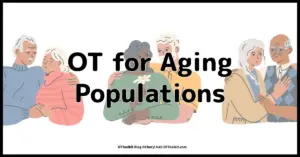
The Growing Essential Role of Occupational Therapy in Aging-in-Place Initiatives
The Architect of Choice: Viktor Frankl and the Power of the Internal Space
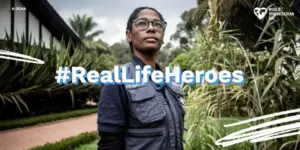
Honoring Real-Life Heroes: World Humanitarian Day Shines a Light on Frontline Workers Amid Global Crises and COVID-19
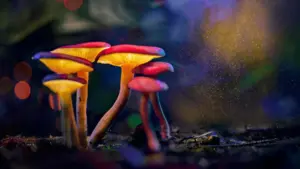
Psychedelic Compound Psilocybin Found to Mute Aggressive Outbursts in Mangrove Rivulus Fish
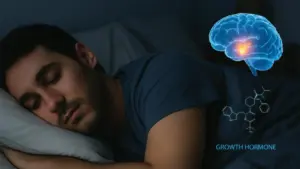
Researchers Uncover the Neural Circuitry Linking Deep Sleep to Growth Hormone Regulation

Tag: neurodiversity

91 posts

Standard

Beyond Homo Economicus: Rebuilding Ecologies of Care, Intersectional Solidarity, and Human-Scale Commitments

Underneath the surface of internalised ableism, a quiet truth persists: no one truly wants to be seen and heard by the masses. Instead, people prefer to be understood and loved deeply by a few, while naturally harbouring the desire to love and help others. According to cultural commentators and neurodivergent advocates, this fundamental yearning is…


Read more
Standard

Cultivating Ecologies of Care: Autistic Culture and the Path to Cultural Metamorphosis

In an era defined by a soaring demand for peer support and reliable emotional support, the limits of modern mental health infrastructure are routinely pushed past their breaking point. This strain is visible across mental health statistics, escalating burnout rates, and the quantitative and qualitative findings of AutCollab Research. Driven by the common reality of…

Read more
Standard

We Are Embodied Spirits: Reimagining Life, Culture, and Relational Ecologies Beyond the Industrial Paradigm

Core ideas within Buddhist and Daoist spiritual traditions are deeply reflective of the commonalities found across many human-scale indigenous cultures. A compassionate framework of love, understood as vulnerable mutual knowing, is inherently compatible with a panpsychic relational philosophy. Ultimately, everyone wants their experience to be taken seriously. We are embodied spirits, compelled to make sense…

Read more
Standard

New Global Research Reveals Widespread Psychological Unsafety Among Neurodivergent Adults and Children in Modern Society

Our individually unique nervous systems and sensitivities develop and evolve over the course of our lives, shaped by our surrounding environments. New participatory research findings released by the Autistic Collaboration Trust and sponsored by S23M reveal a profound disconnect between modern institutional structures and human sensitivities, showing that 85% of neurodivergent adults often or always…

Read more
Standard

Beyond the Mono-Cult: How Neurodiversity Activists and Systems Thinkers Are Reimagining Biology, Culture, and Human Distress

Many scientists fail to acknowledge the extent to which their disciplinary paradigms remain deeply influenced by the cultural frames of the colonial era. According to neurodiversity and disability activists, the modern mental health crisis is not merely a biological failure, but a symptom of a terminally diseased institutional landscape. As global industrial societies grapple with…

Read more
Standard

Rethinking Tribalism: How Modern Psychology Misunderstands Human-Scale Collaboration

In our contemporary world, the concept of tribalism is overwhelmingly burdened with negative connotations. It is frequently treated as a synonym for tribal bias—an inherently undesirable psychological trait that distorts objective reality. However, a deeper and more rigorous analysis reveals that this modern antipathy toward tribalism is the product of superficial research combined with a…

Read more
Standard

Beyond Competition: How Human-Scale Collaboration and Mutual Aid Offer a Path Forward for Society

The human capacity for language fundamentally serves to improve understanding and trust, fostering collaboration instead of competition. This core anthropological insight directly contradicts capitalist interpretations of evolution and supports the broader notion of human collaboration as our species’ true survival mechanism. Yet, modern society’s hierarchical structures and conventional wealth creation methods continue to perpetuate widespread…

Read more
Standard

Living Life in "Hard Mode": The Fight for Autistic Culture, Rights-Centric Education, and the Blind Spots of Modern Policy

In the current edition of the Aotearoa New Zealand Autism Guideline, the existence of Autistic culture is not mentioned with a single word. Despite major updates that reflect a growing awareness of neurodiversity—including ongoing advocacy toward a comprehensive ban on Applied Behaviour Analysis (ABA) and related forms of conversion therapy—understanding Autistic people and Autistic culture…

Read more
Standard

Beyond the WEIRD Spectacle: How Neurodivergent Perspectives Challenge the Growth-Obsessed Empire

In the Western, Educated, Industrialized, Rich, and Democratic world—collectively known as the WEIRD sphere—society operates precisely within what French philosopher Guy Debord once attempted to describe as "The Society of the Spectacle." Within this framework, the reality presented to the public via mass media and social platforms has been meticulously engineered to fit the exacting…

Read more
Standard

Beyond Hierarchies: How Autistic Culture and Relational Living Challenge the State Religion of "Homo Economicus"

Many autistic individuals experience profound difficulty in perceiving or navigating the world through hierarchical frameworks. According to contemporary insights into human evolutionary paths and neurodiversity, this cognitive trait reflects innate human collaborative cultural capabilities combined with a significantly reduced capacity to sustain ongoing cognitive dissonance. This reduced tolerance for contradiction stems from uncommon sensory and…

Read more