



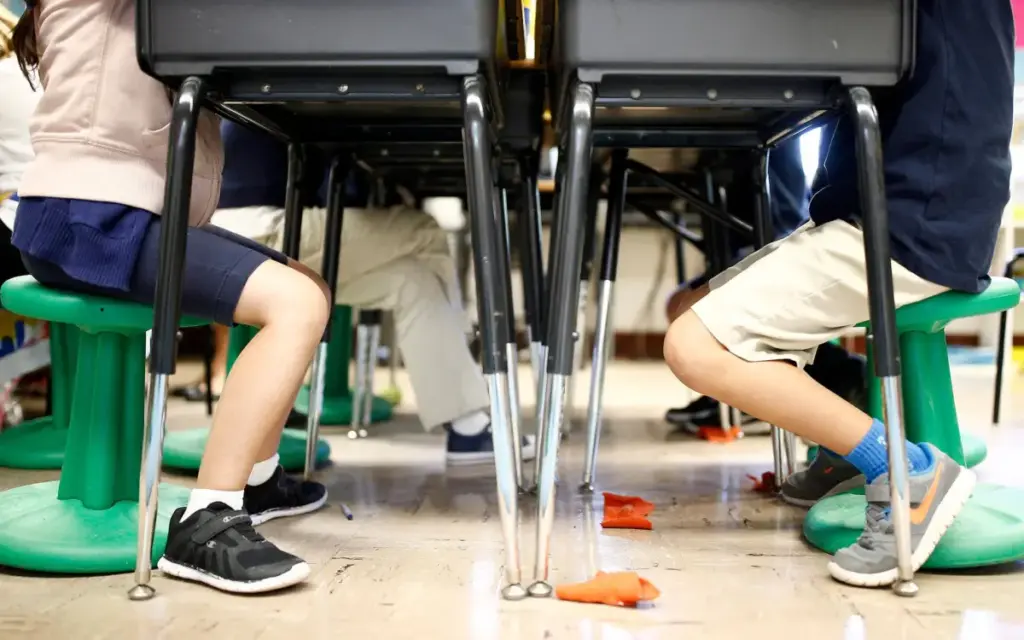
A growing number of students in the nation’s public school system are identified as having disabilities, according to comprehensive new data released by the federal government, yet these children continue to face disproportionately high rates of physical restraint, seclusion, and other forms of exclusionary discipline compared to their non-disabled peers.
The findings are part of the latest civil rights data collection published by the U.S. Department of Education, providing an extensive look into the operational and disciplinary realities of American public education. According to the federal data, students with disabilities now account for 19% of the nearly 50 million children enrolled in public schools across the country. This metric reflects an upward trend in identification and service provision compared to previous years, highlighting a shifting demographic landscape within classrooms nationwide.
A closer examination of the federal figures reveals that about 15% of public school students receive specialized educational services under the Individuals with Disabilities Education Act, commonly known as IDEA. Meanwhile, another 4% of students receive accommodations and services under Section 504 of the Rehabilitation Act of 1973, which ensures that students with physical or mental impairments that substantially limit a major life activity are afforded equal access to an education.
The newly released report is built upon comprehensive data submissions from 17,591 school districts, encompassing more than 97,000 individual schools across the United States for the 2023–2024 academic year. While the U.S. Department of Education initially made raw figures available to the public in August, the agency has now published a detailed analytical report highlighting key trends, disparities, and systemic patterns observed nationwide.
The Office for Civil Rights, a division within the Education Department, typically conducts this expansive civil rights data collection on a biennial basis. The survey mandates participation from all public school districts, charter schools, alternative learning environments, juvenile justice facilities, and other educational entities that receive federal financial assistance. The reporting mandates cover a vast array of metrics, ranging from overall student enrollment and advanced course access to teacher equity and disciplinary practices.
The share of students with disabilities captured in this latest report represents a notable increase compared to prior years. In the preceding civil rights data collection cycle, students with disabilities accounted for approximately 17% of the total public school population. The climb to 19% underscores a continuing national trajectory toward higher identification rates of neurodivergent, learning-disabled, and physically impaired students within the public school infrastructure.
According to the federal report, roughly 7.6 million students spanning from preschool through high school received specialized support services under IDEA during the 2023–2024 academic year. Demographic breakdowns within the data indicate a notable gender imbalance among those served, with boys accounting for roughly two-thirds of all students receiving support through individualized education programs.
Despite legal protections designed to guarantee a free and appropriate public education in the least restrictive environment, children with disabilities remain exceptionally vulnerable to harsh disciplinary measures. The federal data underscores a profound disconnect between the intended protections of special education laws and the day-to-day realities experienced by students in classrooms across the country.
While children with individualized education programs represent just 15% of the total public school population, they bear a disproportionate brunt of extreme physical interventions. Specifically, these students account for an astonishing 68% of all children who experience seclusion—a practice wherein a student is forcibly isolated in a room or area from which they are prevented from leaving. Furthermore, students with IEPs make up 73% of all children who are subjected to physical restraint by school personnel.
The disparities extend deep into traditional disciplinary actions as well. Children with individualized education programs account for approximately a quarter of all students who receive either in-school or out-of-school suspensions. Additionally, this same demographic represents 23% of all students who face formal expulsion from their educational institutions. These staggering percentages demonstrate that students with special education needs are disciplined at rates far exceeding their representation in the overall student body.
These persistent disparities have drawn sharp criticism from advocacy organizations and civil rights watchdogs who monitor the implementation of federal education laws. Denise Marshall, chief executive officer of the Council of Parent Attorneys and Advocates, a prominent national nonprofit organization dedicated to protecting the civil and educational rights of students with disabilities and their families, emphasized the gravity of the federal findings.
Marshall pointed out that the data reflects systemic issues that have plagued the educational system for decades, noting that vulnerable populations continue to bear the heaviest penalties within school discipline frameworks. Students with disabilities, alongside Black students, continue to be subjected to disproportionately high levels of exclusionary discipline, physical restraint, and involuntary seclusion, according to advocates.
Marshall argued that every instance in which a school relies on suspension, restraint, or seclusion represents a fundamental breakdown in the educational process. When a child is removed from the classroom or subjected to physical intervention, they are denied instructional time, signaling that the existing support program has failed to meet their behavioral or emotional needs. Furthermore, advocacy groups emphasize that schools possess access to proven, evidence-based behavioral alternatives that prioritize positive intervention and support over punitive measures, making the heavy reliance on restraint and seclusion entirely unnecessary.
Experts and advocates stress that simply gathering and publishing national civil rights data is only a preliminary step toward meaningful reform. Transforming these statistics into actionable policy changes requires sustained oversight, accountability, and a firm commitment from school districts to adopt proactive, supportive frameworks that foster inclusive and safe learning environments for all children.